
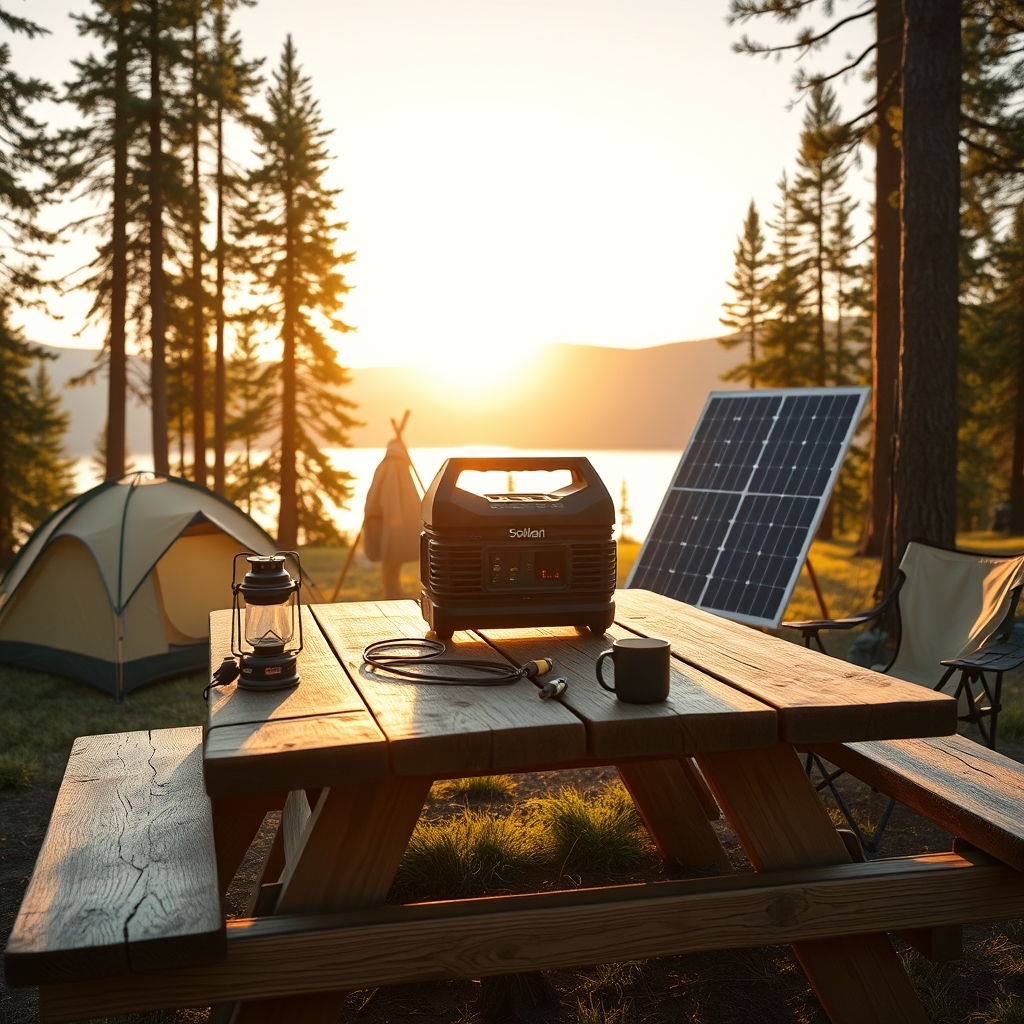
Solar camping generator options have exploded in popularity—but most buyers overlook the critical difference between rated watt-hours (Wh) and real-world runtime. This guide skips the hype and dives right into how much quiet, fuel-free off-grid power you’ll actually get for camping.
Key Takeaways
- Rated Wh is not usable Wh: Always check real-world tested capacity for a solar camping generator, not just what the spec sheet says.
- Charging speed matters as much as capacity: Fast solar input and real AC charge times decide how practical your power station is for multi-day trips.
- Weight, port selection, and durability are make-or-break for campers: Match your power station’s specs to your real campsite load and use-case.
- Why choose a solar camping generator (quick decision criteria)
- Market-leading models (real-world runtime and charge stats)
- Real-world usable capacity vs rated Wh (the critical insight)
- Most common user complaints (and how to avoid them)
- Technical specs that actually matter for off-grid camping (practical thresholds)
- Charging speed and solar input — realistic expectations and strategies
- How to size a system for common camping setups (quick calculators/examples)
- Practical buying checklist (what to test/ask before you buy)
- Final recommendation and quick picks (one-line winners)
- FAQ
Why choose a solar camping generator (quick decision criteria)
For campers, vanlifers, and overlanders, a solar generator for camping delivers silent, fuel-free power without the hassle of gas, fumes, or ongoing maintenance. When you choose a portable solar power station for camping, you get:
- Silent operation — powering fridges, laptops, lights, and small appliances with zero noise.
- No messy refueling — just sunlight and charging flexibility (solar, AC, or 12V car input).
- Predictable, repeatable runtimes — as long as you size the battery to your load and duration.
- Cleaner and safer than gasoline generators around kids or pets.
The main tradeoffs? More capacity means more weight and bulk. Faster charging usually means buying higher-watt solar arrays, which cost more—and real charging times depend on sun strength and angle.
According to user research, “campers want reliable off-grid power for camping without fuel or noise,” but often mistake rated Wh for what they’ll actually get on a trip. The right portable solar power station for camping delivers what your real gear needs in the field, not just in marketing brochures.
Market-leading models (real-world runtime and charge stats)
Here’s how 2024’s top portable solar camping generator models stack up on real-world tested runtime, charging, and weight—not just optimistic spec sheets.
| Model | Rated Wh | Tested Wh (34W) | Tested Wh (380W) | Usable Hours (low/high load) | Weight (lb) | Max Output W | Full Charge Time |
|---|---|---|---|---|---|---|---|
| Jackery Explorer 2000 v2 | 2,042 | – | 1,710 | 8–9 / 2.5 | ≈43 | 2,200 | 2–2.5 h (solar/AC) |
| EcoFlow Delta 2 | 1,024 | 690 (18.6 h) | 900 (2.3 h) | 18.6 / 2.3 | 27 | 1,800 | 1.6–2.6 h |
| Anker SOLIX C1000 | 1,056 | 650 (17.3 h) | 950 (2.6 h) | 17.3 / 2.6 | 28.5 | 1,800 | 1.3–1.4 h |
| Bluetti AC180 | 1,152 | 620 (15.1 h) | 980 (2.7 h) | 15.1 / 2.7 | 37 | 1,800 | 2.5–4.0 h |
| EcoFlow RIVER 2 Pro | 768 | – | – | – | 17 | 800 | 1.1–1.3 h (AC) |
See how new camping gear trends influence power needs →
- Jackery Explorer 2000 v2: ≈2,042 Wh rated (~1,710 Wh usable). Delivers 8–9 hours at a 200 W load, 2.5 hours at 380 W.
- EcoFlow Delta 2: ≈1,024 Wh rated; tested 690 Wh at 34 W (18.6 h), 900 Wh at 380 W (2.3 h).
- Anker SOLIX C1000: 1,056 Wh rated; 650 Wh at 34 W (17.3 h), 950 Wh at 380 W (2.6 h).
- Bluetti AC180: 1,152 Wh rated; 620 Wh at low draw (15.1 h), 980 Wh at high draw (2.7 h).
- EcoFlow RIVER 2 Pro: 768 Wh, 800 W output, about 17 lb; full charge just over an hour (The Manual).
These models represent the best portable power station options for outdoor use in 2024—compare actual tested runtimes, not just listed battery size.
Real-world usable capacity vs rated Wh (the critical insight)
Here’s what most sales pages skip: the tested usable Wh you’ll get out of your camping solar battery is often substantially lower than the advertised rating.
Why? Every solar camping generator loses some energy to inverter inefficiency, voltage conversion, and battery chemistry—especially at lower power draws. This is why tested Wh is crucial. At real camping loads (say, powering a fridge at 34 W), actual delivered energy can be 54 percent to 67 percent of the battery’s spec. At higher loads (running a coffee maker or induction cooktop at 380 W+), efficiency improves, but still rarely tops 90 percent.
For example:
- Anker SOLIX C1000: 1,056 Wh rated, but only 650 Wh (62 percent) delivered at 34 W; 950 Wh (90 percent) at 380 W.
- Bluetti AC180: 1,152 Wh rated, but 620 Wh (54 percent) delivered at low draw, 980 Wh (85 percent) at high draw (Outdoor Life).
This variation means spec sheets are a starting point only. Always look for real-use test results for usable watt-hours—and if they’re missing, expect roughly half to two-thirds of the rating for all-day fridge/lights/charging use.
Learn how much Wh you really need for a given trip →
Most common user complaints (and how to avoid them)
Real campers, overlanders, and backpackers consistently highlight these problems in reviews of off grid power station gear:
- Slow solar-panel charging: Even “fast” charging models often take multiple hours in real sun, especially if your panels aren’t angled toward the sun or you only have partial wattage connected (Popular Science).
- Heavy weight: Any portable solar power station camping model above about 30 lb is usually “car camping only.” Forget about hauling it for backpacking or long walks into camp.
- Lower usable capacity over time: Cheaper batteries (non-LiFePO4) can lose usable Wh faster with repeated cycles.
- Limited AC outlets/ports: Some models have plenty of power but only one or two AC ports, forcing you to ration appliances.
- Durability concerns: Some enclosures crack, warp, or leak dust/water in real overland environments.
How to avoid these issues?
- Pick units with high max solar input and use angled, clean panels sized to the model’s limits.
- For multi-day or off-grid trips, buy LiFePO4 battery chemistry for cycle life and safety.
- Consider adding expansion batteries or portable panels if your model supports it.
- Use rugged, foam-lined cases for transit or dirty/sandy campgrounds.
Check more practical gear tips for comfortable outdoor adventures →
Technical specs that actually matter for off-grid camping (practical thresholds)
When choosing your next camping solar battery or portable power station for outdoor trips, focus first on:
- Usable Wh (runtime): Directly determines how long your gear runs. Most campers need 300 to 1,200 Wh for weekend lengths.
- Continuous inverter rating (W): Supports appliances—mini-fridges, cooktops, coffee makers—look for at least 600 to 1,200 W for most camping needs.
- Max solar input (W): Controls how fast you can recharge from sunlight. Typical ranges: 200 W (entry-level) to 600 W+ (premium).
- Battery chemistry: LiFePO4 lasts 4,000+ cycles and is more stable/safer than regular lithium-ion. Prioritize it for reliability.
- Port variety: Ensure you have the needed AC, USB A/C PD, and 12 V outputs—for powering everything from CPAPs to laptops.
- Weight: Under 20 lb for short trips, 29–37 lb for more capacity, but decide what you’ll actually carry.
- Charge time (solar and AC): Fast AC charging (1–2 hours for mid-size units) saves your trip if clouds roll in.
Real-world example: The 17 lb EcoFlow RIVER 2 Pro (768 Wh, 800 W) is perfect for weekenders and those prioritizing mobility. Longer off-grid or vanlife? The Jackery Explorer 2000 v2 (≈2,042 Wh) supplies days’ worth of runtime, but at more than twice the weight—and price.
Explore camping essentials and how gear choices impact solar sizing →
Charging speed and solar input — realistic expectations and strategies
Charging your portable solar power station camping device “fast” in the field comes down to two numbers: how many input watts it supports and how much actual sun you get in an average day. Even top models rarely match their marketing claims in regular conditions. Plan for the following:
- Max solar input: Most models support 200 to 600 W. Jackery 2000 Pro claims 2 hours with 6×200W panels, but real tests found 2.5 hours in cloud-interrupted sun (Popular Science).
- AC fast charging: EcoFlow RIVER 2 Pro can hit full from the wall in just over one hour (The Manual review).
- Realistic solar charging: Expect charge times to be 25–50 percent longer in camp compared to marketing numbers, especially when not using max rated panels or with imperfect angles.
- Panel placement strategy: Get the panels up off the ground and angled toward the sun. Parallel two panels if your unit supports it—just don’t exceed the model’s max input.
Practical tips for smarter off-grid gear charging →
How to size a system for common camping setups (quick calculators/examples)
There’s no “one-size-fits-all” off grid power station for camping. Use these proven templates:
- Light overnight (hiking, small devices): 300 Wh, ~10 lb station (i.e. EcoFlow River Mini or comparable). Enough to charge phones, lights, small laptops for a single night—SolarReviews.
- Weekend trip (fridge + devices): 700 Wh, 20 lb; look for an inverter of at least 600–800 W. Good for running a portable fridge 24–30 hours plus lights/charging.
- Multi-day/vanlife (appliances, all gear): 1,000–1,200 Wh, 29–34 lb, inverter rating 1,200–1,800 W. This covers running a fridge, cooking midday, lights, laptops, cameras, even some power tools (look at Jackery Explorer 2000 v2 or Bluetti AC180 class).
See ways to reduce your portable power needs with simpler gear →
Practical buying checklist (what to test/ask before you buy)
Before buying or reviewing any camping solar battery station:
- Confirm real tested usable Wh at both low (fridge) and high (appliance) draws.
- Verify inverter: continuous watts, surge watts, and how much it delivers over a whole charge.
- Check maximum solar input (W) and measured time-to-full on both solar and AC—and test with panel partial shade.
- Prioritize LiFePO4 battery chemistry for longer life (4,000+ cycles) and safety.
- Check weight and actual carry comfort—EcoFlow RIVER 2 Pro is about 17 lb, Bluetti AC180 is 37 lb. Know before you lift.
- Count available AC, 12V, USB-A, USB-C PD ports and match to your gear.
- Compare actual durability in real camping or overland settings—read long-term user reviews (some models have enclosure cracks or warping in sun/dust).
Checklist: how to prep your campsite and power gear for real-world use →
Final recommendation and quick picks (one-line winners)
Matching your solar camping generator to your real-world trip style—and knowing what to actually expect—makes the difference between frustration and freedom. Here are the practical, tested winners for each major scenario:
- Lightweight or value: EcoFlow RIVER 2 Pro — 768 Wh, 800 W output, ~17 lb, full AC charge just over an hour.
- Large capacity/off-grid: Jackery Explorer 2000 v2 — ≈2,042 Wh (≈1,710 Wh usable with tested loads), runs a fridge or small appliances 8–9 hours at 200 W.
- Balanced midweight: EcoFlow Delta 2 — ≈1,024 Wh; tested 690 Wh at 34 W (18.6 h) and ~900 Wh at 380 W (2.3 h).
Your camping and vanlife adventures are only as carefree as your solar camping generator is reliable—compare real tested specs, prioritize practical features, and travel with confidence.
FAQ
How much capacity do I need in a solar camping generator for a 2–3 day trip?
Most campers find 700 to 1,000 Wh (watt-hours) is enough to run a portable fridge, lights, phone, and small laptop for a weekend. For solo hikers or simple overnights, 300 Wh usually covers essentials (see sizing tips above).
Do I really need LiFePO4 battery chemistry, or is regular lithium-ion OK?
LiFePO4 (Lithium Iron Phosphate) batteries are much more durable—lasting 4,000+ cycles—and are safer, especially in off-grid or high-heat situations. Regular lithium-ion is lighter, but won’t last as long for frequent campers.
Why does my power station deliver less runtime than the advertised capacity?
Usable Wh is reduced by inverter and voltage losses—especially at lower power draws (like a fridge). Expect 54–67 percent of rated Wh for light use, and 85–90 percent at high loads. Always look for real-life test results.
How fast can a portable solar power station actually recharge in the field?
Most can recharge in 2–4 hours on max solar input (full sun, max-rated panels), but real times are usually longer—expect 2.5–5 hours depending on weather, panel size, and station limits. Fast AC recharging is much quicker (1–1.5 hours).
What’s the best way to extend runtime in cloudy conditions?
Add more solar panels if your model supports parallel input, charge at every chance with car or grid power, and minimize unnecessary loads. For longer trips, consider a station that allows expansion batteries.
—
[…] To avoid buying blind, focus on a solar camping generator’s practical specifications: AC and solar recharge duration, battery size (measured in watt-hours), continuous and surge wattage, and true portability. Internal component quality, battery chemistry (LiFePO4 vs NMC), and warranty matter too, but only if the unit is fundamentally fit for your needs. If you want a deeper look at why e.g. battery chemistry and wattages matter, see our deep dive on solar generator runtimes. […]
[…] For more power safety tips at camp, see our in-depth post on solar camping generators. […]
[…] USB-rechargeable LED lanterns largely push these features, but the gap between advertised and real-world performance remains wide. When buying a lantern for tent lighting, cross-test published specs with trustworthy user reviews and, if possible, independent test results. Many of these criteria also apply to solar-powered camping gear. […]