
### Blog Post:
Portable camping shower upgrades can make the difference between a weekend to remember and a frustrating mess. But most buyers waste money chasing numbers or gadgets that let them down in real use. Below, you’ll learn what matters: real-world reliability, cost over time, and pitfalls most reviews skip. Cut through the noise and avoid buyer’s regret.
Key Takeaways
- Buy based on your true trip needs — not flashy specs or marketing claims.
- Battery powered and USB camping showers sound convenient, but frequent complaints around pressure, runtime, and leaks are common if you go cheap or skip maintenance.
- Long-term reliability and easy cleaning matter more than headline flow rates or tank size, especially if you camp regularly.
- Quick summary — pick the right shower for your trip
- What buyers actually complain about (so you can avoid those pitfalls)
- The buying checklist — 8 things to check before you buy
- Types compared — pros/cons and the right context
- Real specs that matter — realistic flow, runtime, and capacity
- Durability and failure modes competitors don’t explore
- Maintenance & cleaning routine (step-by-step)
- Safety & electronics — what to check before you plug or dunk
- Performance tips for edge conditions
- Best picks by use-case (concise recommendations)
- Short buyer’s decision flow (3 questions to conclude the article)
- Quick FAQ
Quick summary — pick the right shower for your trip
Not sure which portable camping shower fits your style? Here’s the fastest route: For single-day rinses or solo minimalists, grab a Solar/Collapsible Bag (2–10 liters, 0.6–0.9 gallons per minute). Multi-day solo or couples should look at a battery-powered or usb camping shower (10–20 liters, 0.7–1.2 gpm). Family car campers and van-lifers need a pressurized tank or propane-heated unit in the 10–38 liter, 1–1.5 gpm range. In 2024, most models fall into one of these three performance tiers — so pick what matches your trip, not just the biggest tank you can find.
What buyers actually complain about (so you can avoid those pitfalls)
Thousands of buyer reviews each year reveal what the marketing pitches won’t: even the most popular battery powered camping shower and usb camping shower models run into avoidable, repeating problems. Common real-world complaints in 2023–2024:
- Weak pressure: Many units average just 0.6–1.2 gpm, barely enough to rinse thick mud or shampoo.
- Short run-time: Models with 5,000–6,000 mAh batteries almost always run under 90 minutes on one charge.
- Clumsy charging: Submerged or awkwardly placed USB ports quickly corrode or get ruined.
- Leaks and pump noise: Cheap seals and noisy pumps aren’t just annoying — they make field use harder and shorten lifespan.
- Mold and mildew: Collapsible bag showers often develop mold inside the bag or hose if left damp between uses.
Source: Best Portable Camping Showers — thewildguides.com
The buying checklist — 8 things to check before you buy
Before you hit purchase on another outdoor shower for camping, run through this quick checklist — these are the specs that determine real reliability and cost over the years:
- Flow rate: Under 0.7 gpm = slow. Over 1.0 gpm = decent pressure for mud, sand, or longer hair.
- Runtime and battery size: 0.5–2 hours (USB models); 1–3 hours (larger, rechargeable or pressurized units).
- Water capacity: 2–10L for ultralight; 10–38L for more than rinses.
- Charging options: USB-C is less prone to corrosion than micro-USB. Some accept 12V car power as a backup.
- Ingress protection/port placement: Look for IPX7 or better. Avoid any charging port that can get submerged.
- Pump warranty/support: A 1–2 year warranty is worth real money, since pumps wear out faster than tanks.
- Material quality/UV resistance: UV-resistant plastics and reinforced hoses last longer in sun, saltwater, and sand.
- Ease of cleaning: Wide mouth/zip top bags and simple hoses for scrubbing and draining.
If this checklist seems long, remember that many outdoor shower for camping complaints stem from just a couple neglected details.
Research shows: Smaller USB units run 30–120 minutes, and lightweight bags typically push just 0.6–0.9 gpm. Bigger systems provide more power — but often cost more and weigh more. (outdoorgearlab.com)
Types compared — pros/cons and the right context
Let’s break down the five options you’ll find on any campsite, van buildout, or gear shelf in 2024 — and when each makes the most sense for portable shower bag camping or shower for van life:
| Type | Flow (gpm) | Capacity (L) | Runtime | Price Range | Best Use Case |
|---|---|---|---|---|---|
| Solar/Collapsible Bag | 0.6–0.9 | 2–10 | 1–2 showers (gravity-fed) |
$30–$80 | Solo, daytrips, backpacker “just enough to rinse” |
| Battery/USB Submersible | 0.7–1.2 | Detachable* (10–20) | 30–90 min per charge | $40–$120 | Solo/couples, light van/overland, pet/gear wash |
| Self-pressurized Hand Pump | 1.0–1.3 | 10–22 | Until tank’s empty (pump as you go) |
$80–$180 | Family car camp, gear wash, rugged, van/overland |
| 12V Car Plug Units | 0.7–1.5 | External source | Car battery limited | $70–$160 | Van/overland, extended off-grid, car/truck |
| Propane-Heated Tankless | 1.2–1.6 | Continuous | Propane limited | $150–$350 | Multi-person, long trips, comfort-focused van life |
*Requires separate bucket/jug for water source
Price ranges from fieldandstream.com (2024)
Real specs that matter — realistic flow, runtime and capacity
Here’s how to sniff out reality vs. marketing fiction. Most portable camping shower buyers see a spec sheet, but only a few translate those numbers to “how will this work after three dusty days at a remote site?”
- Real flow rates: 0.6–1.2 gpm is standard for battery models. Under 0.8 gpm? You’ll be fighting weak pressure.
- Tank size and shower time: Roughly 4L per basic person rinse. A 10L bag = 2 normal showers or one “full shampoo and all gear” rinse.
- Battery specs: 5,000–6,000 mAh gives 30–90 minutes real use before recharge. Numbers above that? Rare outside pricier tanks.
- Continuous hot water: Only available with propane (plus more complexity and cost).
For most, runtime comes down to battery size versus your daily water budget. Buy for real usage — a family of four in a van should never trust a $40 bag shower for more than one day.
Cited: campcomfortguide.com — Best Portable Camping Shower
Durability and failure modes competitors don’t explore
This section may save you the most money and headaches. From batteries that degrade to hoses that split, most reviews gloss over these problems — but they show up fast after a season of real travel:
- Battery cycle decline: Lithium cells in your battery powered camping shower can lose up to 30% of original runtime after 1–2 years of use and partial drain/recharge cycles, especially with budget brands.
- Seals and hose aging: Sun, saltwater, and sand age seals and hoses fast. UV-resistant plastics matter; clear vinyl does not.
- Pump burnout and noise: Cheap, featherweight pumps wear out if run dry or left submerged too long (especially with silt/sand in natural water sources).
- Charging port disasters: USB camping shower units with poorly placed ports are infamous for accidental submersion and irreversible failure.
- Mold and mildew: Water left inside any bag or hose can turn into a stinky, unhealthy mess in just 48 hours. Wide-mouth or zip-top bags make cleaning much easier.
- Environmental conditions: Cold inlet water means lower pressure and weaker shower; altitude can impact pump performance, especially in submersible styles.
Do not expect the “bottom shelf” units to last more than a couple of heavy-use weekends. Reliable models with robust seals, protected charging ports, and proven pumps cost more up front but save you headaches (and extra gear runs) in the long haul. For more tips about avoiding rookie gear mistakes, see our post Camping Season Kicks Off: Outdoor Enthusiasts Embrace Simpler Adventures.
Maintenance & cleaning routine (step-by-step)
Even the best portable shower bag camping setup or usb camping shower can turn gross or unreliable if ignored after a trip. Here’s a simple, fast after-trip routine most people skip until they regret it:
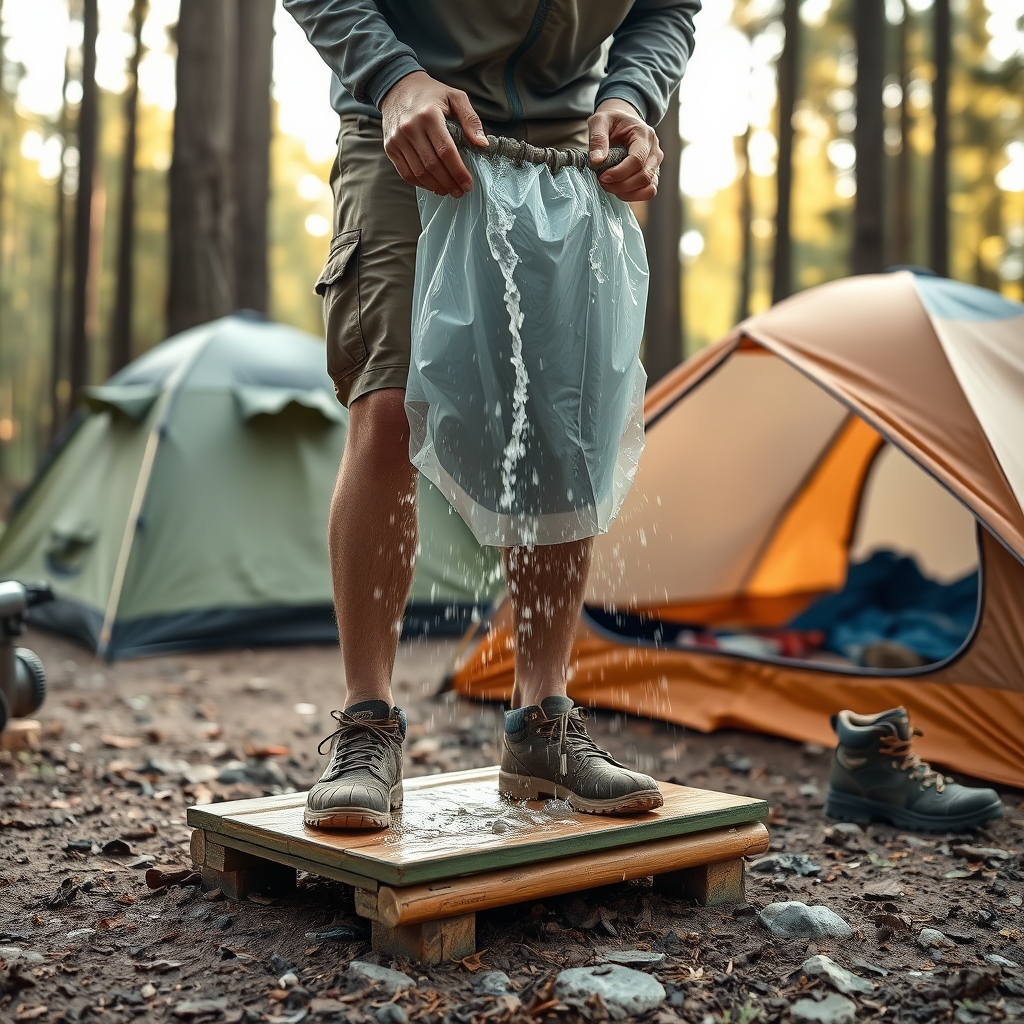
- Drain every drop of water post-use (including pump lines and hoses).
- Invert and air-dry all soft tanks and hoses (do not seal them damp).
- Flush bag interiors and pump components with a vinegar-water solution every 2–3 uses.
- Inspect all seals for leaks and replace any showing cracks or discoloration.
- Store batteries partially charged — and recharge fully just before the next trip.
- Never store the shower in direct sunlight or extreme cold for extended periods.
- Winter: Drain and bring pumps/batteries indoors to prevent freeze damage.
For more tips on making camping gear last longer, read our guides to solar camping generator maintenance — many principles overlap.
Safety & electronics — what to check before you plug or dunk
Mixing water, batteries, and electronics introduces more risk than most realize. Here are rules to follow before dunking your usb camping shower or a usb camping shower:
- Only use pumps and chargers rated IPX7 (waterproof up to 1 meter for 30 minutes) or higher. Skip any model with exposed ports near the waterline.
- Never charge while using or near a water source unless specifically rated for concurrent charge/use (rare).
- Look for third-party safety certifications (CE, UL). If absent, consider another model.
- Submersible USB pumps often lack true waterproofing; test in a sink before field use.
- Clean all port seals with isopropyl alcohol occasionally to prevent grit-related leakage.
For more power safety tips at camp, see our in-depth post on solar camping generators.
Recent reviews flag charging port failures as the leading electrical failure mode, yet few mainstream reviews talk safety certifications or real-world dunking. Don’t be caught off guard.
Performance tips for edge conditions
Nature doesn’t run like your kitchen. Even the best outdoor shower for camping will underperform in extreme cold, dirty lakes, or high-altitude conditions. Here’s how to adapt:
- Cold water inlets: Lower shower pressure and runtime — preheat your source in the sun or on the stove for better comfort and battery life.
- Altitude: Pumps lose pressure above 6,000 feet as air expands inside tanks. Pick manual or pressurized models at elevation.
- Salt/sand exposure: Use inline mesh filters on the pump intake and always rinse both pump and tank with fresh water after each trip to extend life.
- Natural sources: Filter all water before use; even clear streams can hide grit that kills pumps quickly.
More advanced campers rely on inline water purification or pre-pump bucket settling for lake/river water sources. If your use-case is car camping or off-grid van life, this mitigates premature failure. If you’re new to this style of camping, see our guide, Camping Season Kicks Off: Outdoor Enthusiasts Embrace Simpler Adventures, for more context. For advice specific to power needs, see solar generator for camping.
Best picks by use-case (concise recommendations)
- Day hiker: Sea to Summit Pocket Shower — small, lightweight, 10L bag, simple gravity-fed. Prioritize weight and pack size.
- Solo backpacker/car camper: Ivation Portable Outdoor Shower — USB-rechargeable, 1.2 gpm, 60–90 min runtime. Prioritize flow and USB convenience.
- Overland or family van life: WaterPORT Weekender or RinseKit PRO — 16L pressurized, 1.5 gpm, up to 3 hours. Prioritize capacity and pressure.
- Multi-person/family, extended trips: Eccotemp Propane Tankless — continuous hot water, 1.5 gpm, 150–$350. Prioritize runtime and on-demand heating.
If you camp with three or more, prioritize systems delivering 1–1.5 gpm with at least 10 liters of capacity and semi-continuous run allowances.
For ultralight solo users, keep it under 10L and accept a lower flow rate for easier packing and maintenance.
Source: Eccotemp – Best Camping Shower
Short buyer’s decision flow (3 questions to conclude the article)
- Will you use your shower mainly for daytime rinses or after-dip washes? Yes: Choose a basic solar/pressure bag (2–10L, 0.6–0.9 gpm, $30–$80).
- Do you need a true multi-day solution but hate complexity? Yes: Go with a rechargeable battery/pressurized tank (10–38L, 1–1.5 gpm, $80–$180).
- Do you need real hot water or to cover multiple people for multi-day van life? Yes: Invest in a premium propane or tankless heated shower (continuous, 1–1.5 gpm, $150–$350).
Still not sure? Focus on what makes you more comfortable or solves your current frustration, not just what looks best in an online review. For more buyer’s guides, check out our portable power station guide for van/truck setups.

Quick FAQ
How long will a portable camping shower run?
A small battery-powered shower (5,000–6,000 mAh) runs 30 to 90 minutes per charge. Larger tanks or pressurized pumps last up to 3 hours. Propane-heated models can run as long as you have water and propane.
Is the spray powerful enough to rinse off mud or shampoo?
Most portable showers offer 0.6–1.2 gpm. For thick hair, stubborn mud or gear, target above 1.0 gpm and higher-pressure tanks.
Can I get hot water out of my portable shower?
Only propane-heated or tankless models deliver true hot showers. Otherwise, preheat water before filling bags, or use a solar-heated bag on sunny days.
How do I avoid mold or mildew inside my camping shower?
Immediately drain, flush with a vinegar-water mix, and dry all parts after use. Leave everything open to air and sunlight before storage.
Is it safe to charge or use a USB camping shower near water?
No, unless the unit is IPX7-rated and specifically designed for use near water. Never charge a shower while it is actively submerged or even damp unless confirmed safe by the manufacturer’s manual.
[…] can also check out our portable camping shower guide for pro tips on squeezing the most comfort into any backcountry camp […]