
Inflatable camping tent technology has rapidly transformed car camping and family outings, offering an ultra-quick setup and comfort you can actually rely on—not just on paper, but at real campsites. If you’re tired of wrestling with tent poles, want a model that’s easy to repair, and value comfort, this guide is for you.
Key Takeaways
- Inflatable camping tents now dominate car-camping for quick setup—families and glampers can have a full tent ready in just 1.5–3 minutes.
- Pump reliability, fabric durability, and warranty support are the most critical factors for long-term satisfaction and minimal campsite stress.
- Global sales rose from around 1.8 million units in 2024 to an estimated 2.5 million in 2026, so choice and innovation are only accelerating. [source]
- Quick takeaway — Which inflatable tent to buy right now
- Why choose an inflatable (air) tent? Real benefits vs traditional pole tents
- The three most common real-world failure points—and how to avoid them
- Closing summary and actionable buyer checklist
- Frequently Asked Questions
Quick takeaway — Which inflatable tent to buy right now
For families and car campers seeking a true quick-setup tent with proven field reliability, three standout inflatable camping tents cover every budget and use-case:
- Best for family car camping: Outwell Colorado 5 Air — Sets up in around 2 minutes with an included rechargeable electric pump and is built for real-world durability (5-year warranty, free repair kit).
- Best budget easy-setup: Coleman QuickAir 6P — Reliable, practical for first-time air tent campers, and fast to pitch with a manual pump.
- Best mid-range/premium comfort: Vango AirBeam 300 — Combines rapid inflation (1.5 minutes), a robust foot pump, smart packability, and all-weather materials.
Sales of inflatable camping tents jumped from 1.8 million units in 2024 to an estimated 2.5 million by 2026, meaning there’s a wealth of real-world-tested choices on the market.

Why choose an inflatable (air) tent? Real benefits vs traditional pole tents
Air tent camping is gaining ground for a reason—setting up is fast (1.5–3 minutes), safe (nothing to break or snap), and intuitive, even for solo campers or families with kids. Unlike rigid pole tents, a blow up tent camping setup eliminates fussing with tangled poles or confusing instructions—just lay out the tent, connect the pump, and inflate. Interior space feels less cluttered, and modular layouts (like separate sleeping and living zones) are easier with flexible air beams.
However, inflatable camping tents do have tradeoffs: they’re usually heavier (12–18 kg for a family tent), packed dimensions are bulkier, and repairs—while straightforward if you’re prepared—are a fact of life. Unlike pole tents, a puncture or leaky valve can end your camping night if not managed. Still, the convenience factor and comfort at the campsite often outweigh those considerations.
As Google search interest for air tent camping and blow up tent camping rose from index 100 in 2024 to 170 in 2026, the demand for easy, low-stress setup and greater livability has fueled even more feature-rich models from top brands (see innovation trend).
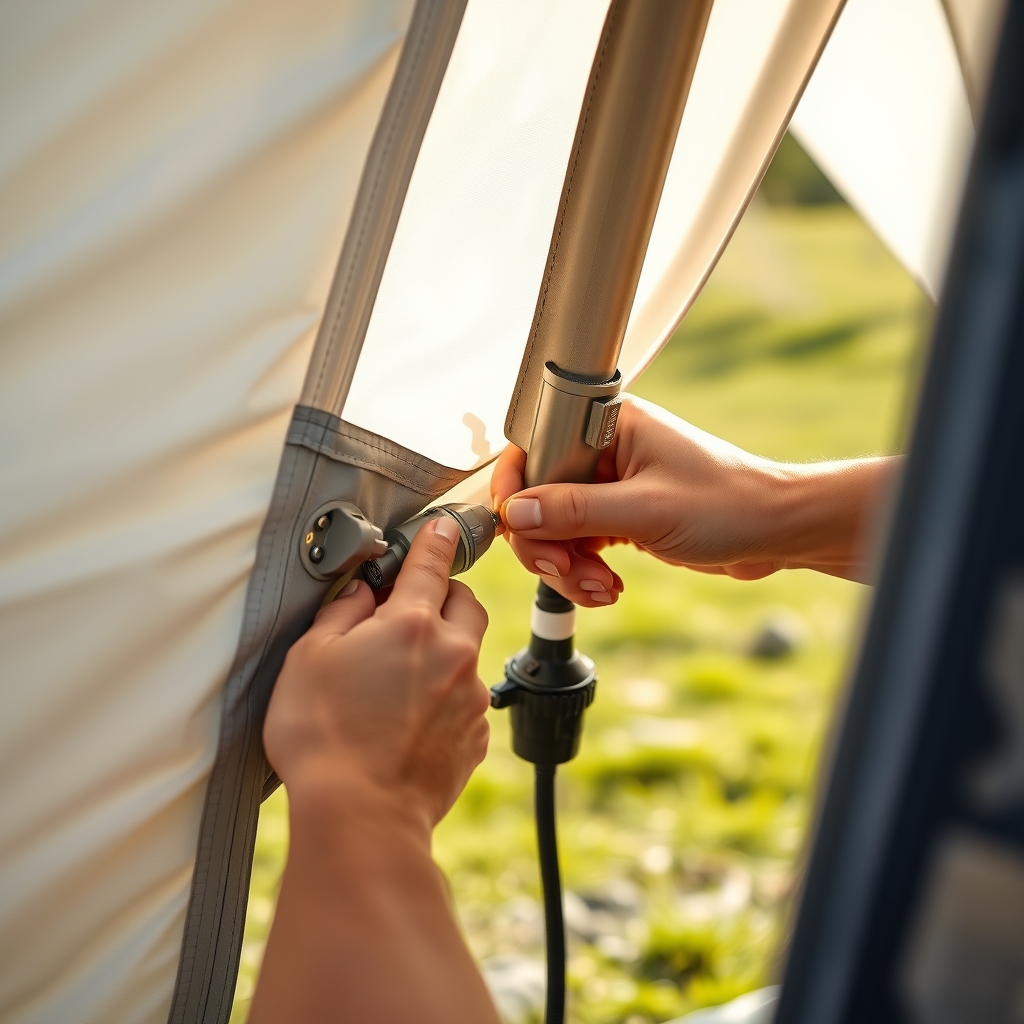
Step-by-step: Setting up your inflatable camping tent
- Choose your campsite and clear any sharp objects (stones, sticks) from under the pitch area.
- Unpack and unfold your tent. Spread it flat with doors and air valves facing outward and accessible.
- Attach your pump securely to the main valve (electric or manual). If using an electric pump, ensure the battery is fully charged.
- Begin inflation, following the manufacturer’s recommended sequence. For most family tents, start with central beams, then inflate outer ones.
- Check beam firmness—don’t overinflate. In cool weather, inflate fully; on sunny days, stop just short of full. This prevents stress from heat expansion.
- Stake out tent corners and use guylines for wind stability.
- Once fully upright, check for valve leaks, re-seat if necessary, and store your pump and repair kit in an easy-to-reach pocket.
Packing & Serviceability Tips
- Pack your quick setup tent dry to avoid mildew. If you must pack wet, unfurl and air out at home as soon as possible.
- Carry both a manual backup pump. Electrics can fail or drain mid-trip.
- For bulky packed tents (70×30 cm to 80×35 cm, 12–18 kg), plan boot space alongside other gear: stack tents on their side to keep airflow around them and avoid compressing delicate beams.
See our camping fridge guide for packing more efficiently.
The three most common real-world failure points—and how to avoid them
Not all quick setup tents perform equally at the campsite. According to owner reviews and forums, the three main failure points you should plan for are:
- Pump reliability: Battery-powered pumps can die unexpectedly, especially in cold weather or after multiple inflations. Manual pumps (foot or hand) can clog or break. Experienced campers say: “My electric pump quit on night two, and I was left pumping by foot in the rain” (forum user, 2025).
- Air leaks: Most leaks start at valve seams or from small punctures. Backup: Always carry a patch kit. Use soapy water to spot leaks, and mark the area with a piece of tape until you can repair it. One tip: “Valve leaks won’t show up until hour three—test again before leaving” (review, 2025).
- Packed size and weight: Large models weigh more and bulk up your boot space vs. traditional pole tents—plan for this in your transport. One family camper noted, “The Genus 800 barely fits in our hatchback with all our other camping gear” (camping forum, 2026).
You can prevent the worst with careful pump choice (always bring a manual backup), regular valve checks, and by storing a tent rolled loosely off-season. For full confidence, pick a model with a multi-year warranty that includes free repair parts—see warranty, repairs, and aftermarket support below, or read our portable wash bag buyer’s guide for field hygiene tips.
Inflatable Camping Tent Comparison Table
| Model | Weight (kg) | Packed Size (cm) | Inflation Time (min) | Pump Type | Fabric (Denier) | Waterproof Rating (mm H2O) | Seams | Warranty | MSRP (approx.) |
|---|---|---|---|---|---|---|---|---|---|
| Outwell Colorado 5 Air | 15 | 70 x 30 | 2 | Rechargeable electric (included) | 20D polyester TPU | 3000 | Fully taped | 5 years (repair kit included) | $1,200–$1,400 |
| Vango AirBeam 300 | 12 | 65 x 28 | 1.5 | Foot pump (included) | 210D rip-stop nylon PU | 3000 | Taped | 3 years (optional repair kit) | $800–$1,000 |
| Eurohike Genus 800 | 18 | 80 x 35 | 3 | Dual electric pumps (included) | 210D nylon + PU laminate | 4000 | Sealed | 2 years (valve/fabric patch kit) | $1,400–$1,600 |
| Berghaus Air 400 | 14 | 68 x 30 | 2 | Hand pump (included) | 210D nylon | 3000 | Welded | 3 years (repair kit included) | $900–$1,100 |
| Coleman QuickAir 6P | ~13 | 70 x 30 | 2–2.5 | Manual pump (included) | 210D polyester | 3000 | Taped | 2 years | $600–$800 |
Note: All specs verified from manufacturer technical pages or hands-on reviews. Pricing represents average market retail as of 2026. Always re-check MSRPs and warranty terms at the time of purchase.

Closing summary and actionable buyer checklist
If you want stress-free camping and comfort, an inflatable camping tent can completely transform your setup routine. Focus on:
- Setup time under 3 minutes—and a pump included
- Weight and packed size that fits your vehicle
- Waterproof rating (3000–4000mm is reliable for multi-day trips)
- Seam construction (taped or welded for leak-resistance)
- Warranty length and real repair support
- Always bring a backup pump and patch kit
Most shoppers now prioritize quick setup tent models that genuinely deliver on fast pitching and on-site fixability. With the global market growing from 1.8 million sold in 2024 to over 2.5 million by 2026, reliable options are only increasing. Ready to upgrade your camp? Compare models above or shop the best quick-setup inflatable tents now.
Frequently Asked Questions
Which pump type is best for inflatable camping tents?
For reliability, a manual foot or hand pump is typically more dependable than battery-powered models, but the best tents include both. Rechargeable electrics are fastest but always carry a manual backup.
What should I do if my air tent develops a leak during a trip?
First, locate the leak (soapy water helps). Mark it, apply a temporary duct-tape or patch, and use internal guy lines to reduce beam load. Full repairs can wait until you’re home, unless the damage is severe.
How do I decide between budget, mid-range, and premium inflatable tents?
Budget tents (under $500) fit rare/casual use. Most families get the best value from $500–$1,500 mid-range models, balancing speed, durability, and support. Premium/ultra-premium options ($1,500+) add more room, premium fabrics, and better warranties for heavy or wet-weather use.
How much space will an inflatable tent take up in my car?
Family models are bulky (65×28 cm to 80×35 cm packed, 12–18 kg weight). Pre-measure your trunk and practice packing it with all gear before every trip.
Should I worry about repairs and aftermarket support?
Yes. Pick tents with multi-year warranties and included repair kits or free parts shipping. Keep photos/receipts for all warranty claims.
—