
Portable camping fridge reliability makes or breaks long trips—if you depend on cold food, treating your fridge like any continuous-power appliance is the difference between feast and failure. Here’s how overlanders, van-lifers, and long-trip campers can sidestep common breakdowns and realistically plan batteries and solar for stress-free, off-grid use.
Key Takeaways
- Portable camping fridges need continuous, stable power—skimping on battery or solar leads to spoiled food and ruined trips.
- Common failures are not just spec-related: seals, fans, connections, and voltage settings often cause outages in the field.
- Plan for 35–40 hours runtime per 1,000 Wh at 20W use and maintain your gear using a practical checklist—preventing most issues before they strand you.
- Why choose a portable camping fridge for extended trips
- Most common malfunctions and durability complaints (what actually fails)
- Real-world power consumption: what you’ll actually draw
- Expected battery runtimes—sizing batteries and power stations for multi-day trips
- Sizing solar + battery to reliably cover extended use
- Maintenance routines to prevent mold, condensation, and mechanical failure
- Troubleshooting common electrical/voltage issues in the field
- Noise, vibration and long-term wear—what to expect
- The credibility gap—manufacturer claims vs measured consumption
- Buying checklist and minimum spec recommendations by trip length
- Warranty, repair logistics and spare-parts planning
- Practical field checklist (pre-trip, daily, emergency fixes)
- How to test and evaluate a fridge before you buy (hands-on store/bench tests)
- Quick recommendations (90‑second summary for skimmers)
- FAQ
Why choose a portable camping fridge for extended trips
A portable camping fridge does more than keep food cold—it eliminates the constant stress of chasing ice, melting messes, and surprise spoilage. Compared to basic ice coolers and small thermoelectric units, compressor-driven 12V fridges offer true set-and-forget cold storage for 3–14 days (or more), ensuring fresh food and fewer supply runs.
But they’re not magic. A decent portable camping fridge draws real power 24/7, so you must plan battery or solar carefully. Tradeoffs exist: performance models chill faster and deeper but can eat up battery time, while ultra-light units may sacrifice cooling or durability. Top buying guides usually highlight short-term runtime or specs, but miss the reality that your fridge must survive continuous cycling, bumpy roads, and sometimes brutal heat or cold. Think of it as a long-haul appliance, not a “set it and forget it” box.
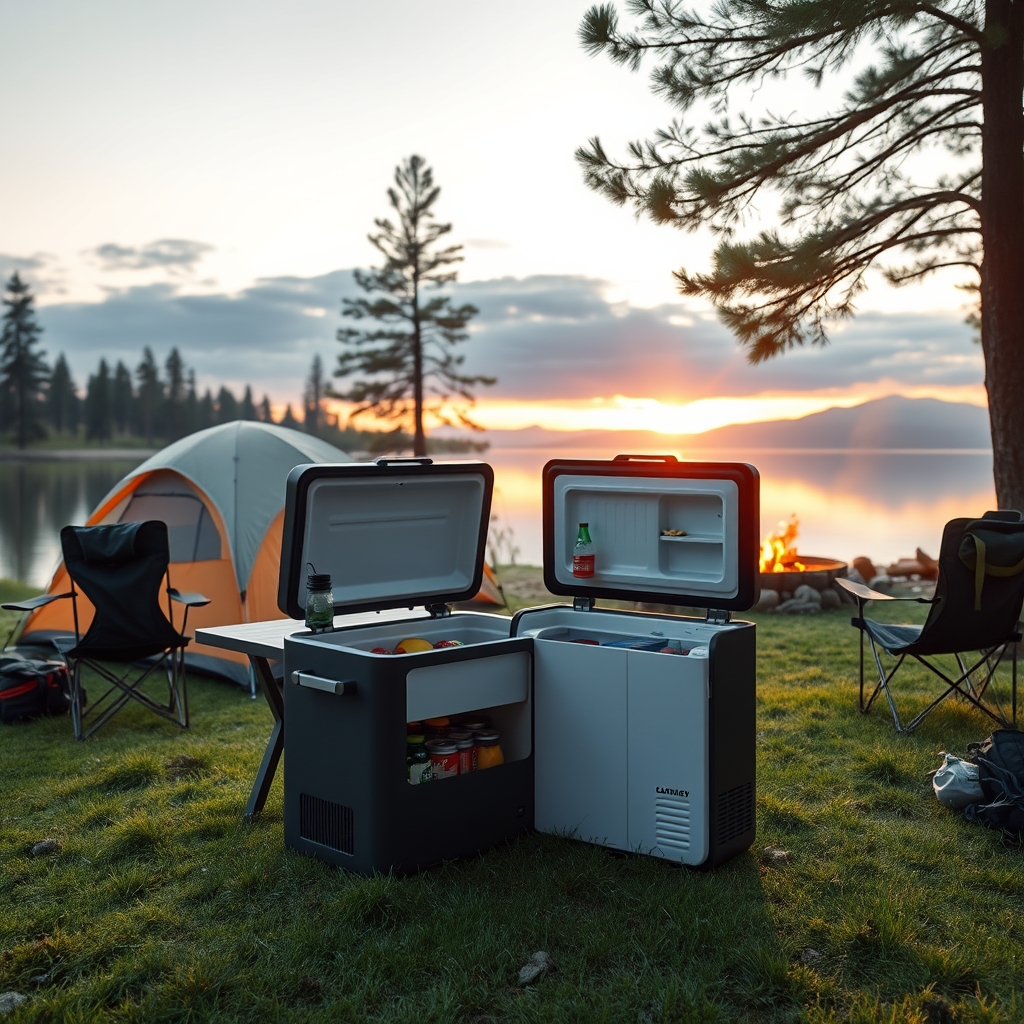
Most common malfunctions and durability complaints (what actually fails)
Real-world overlanding and van-life campers report failures that aren’t obvious on a spec sheet. Here are the issues you’re most likely to face:
- Compressor or fan doesn’t start: Fridge lights up but won’t cool. Usually caused by battery protection setting or low voltage. A leading field complaint—see BougeRV’s troubleshooting guide.
- Overheating power cables or adapters: Undersized connectors or loose plugs get hot or fail, especially after long drives.
- Noisy operation: Rattling fans or motors worsen over time.
- Leaking seals and condensation: Imperfect gaskets let warm air in, creating puddles and mold risk. Especially troublesome for units marketed as camping fridge freezers.
- Lid latches, hinges, and wheels break: Cheap or undersized hardware cracks under vibration on rough roads.
- “F1” and voltage-protection shutdowns: The fridge protects itself from low voltage by disabling the compressor—often the core cause of “lights on, no cold” panics. See this GearJunkie review for recurring build-quality complaints.
If you want to avoid these, get hands-on: check cable thickness, seals, hinge strength, and the noise during a cooling cycle before you commit.
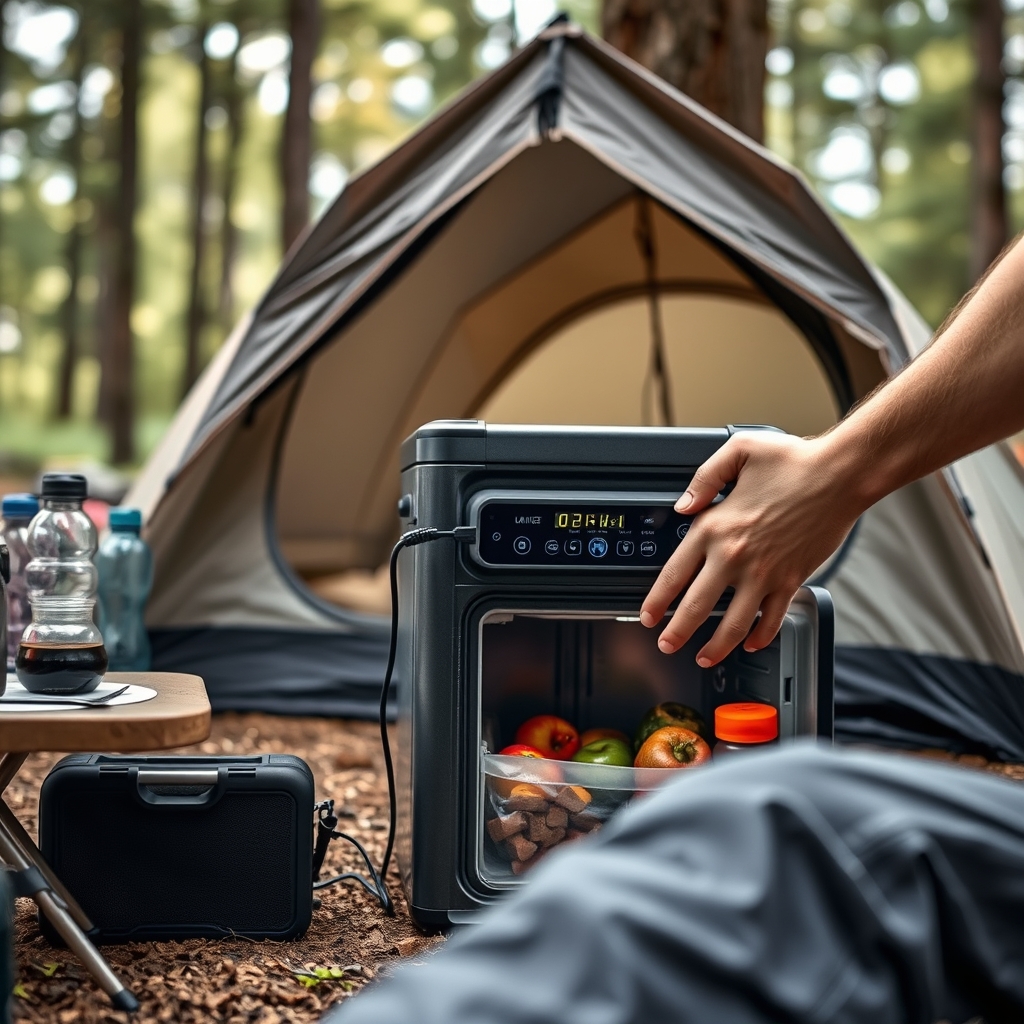
Real-world power consumption: what you’ll actually draw
Manufacturers often list “maximum” draw, but your real needs depend on size, climate, and use. Here’s what overlanders and van-lifers actually see:
- Small 20–30L units: 18–30W peak, but averaged over 24 hours, 0.5A–1A (6–12W) at 25°C. In hot weather, double those.
- Medium (40–55L, top-load): Average 1A (≈12W). Flagship units like the Dometic CFX series: 20W (1.7A) typical cycling, with peaks over 45W during cooldowns.
- Large/dual-zone, residential-style: 70–85W while cooling, settle to 1.5–2A as they stabilize.
- Bumpy trails, hot days, and heavy usage: Expect 20–50% higher draw as air leaks and compressor cycles more often.
Test in your own rig—use a plug-in wattmeter between your battery powered cooler and battery for a real-world, trip-specific baseline.
Expected battery runtimes—sizing batteries and power stations for multi-day trips
Sizing battery capacity for your portable camping fridge (or battery powered cooler) means looking beyond the spec sheet’s “max amp draw.” Start with your fridge’s real average watt use and avoid draining any battery below 50% Depth of Discharge (for lead-acid; 80% is OK for most LiFePO4 units).
| Battery/Power Station | Capacity (Wh) | Average Load (W) | Runtime (hr, 80% usable) | Recommended Trip Length |
|---|---|---|---|---|
| Small Portable (Jackery 300, EcoFlow River) | 300 Wh | 20 W | ~12 h | Day/overnight |
| Medium Power Station (Jackery 1000, GoalZero 1000X) | 1000 Wh | 20 W | ~40 h | Weekend (2 days) |
| AGM/Lead Acid (100Ah @12V) | 1200 Wh (600 usable) | 12 W | ~50 h (2 days, safe limit) | Weekend/3-day |
| LiFePO4 (100Ah @12V) | 1280 Wh (1024 usable) | 12 W | ~85 h (3.5 days) | 3–5 day |
For a week-long trip, size battery and solar to handle at least 40–60 hours of no-sun operation—rain clouds happen. Get more on off-grid battery sizing in our solar generator for camping guide.
See more battery tips and energy benchmarks at GeneratorChecker’s runtime comparison.
Sizing solar + battery to reliably cover extended use
Matching your 12v cooler camping fridge (or portable fridge for van life) power needs to your solar means real math. Here’s a practical approach campers use:
- Daily Power (Wh) = Fridge Wattage × 24: E.g., 20W × 24 = 480Wh/day
- Divide by Sun-Hours: If you get 5 sun-hours/day, a 100W panel gives 500Wh/day—just enough, assuming 100% efficiency.
- Account for 75% system efficiency: So, 100W panel actually yields 375Wh. You’d want a 150W–200W solar panel for real reliability.
- Choose a battery that bridges cloudy days: For a week off-grid, size for 2–3 days’ autonomy.
System Example 1 (weekend): 40L fridge (~12W avg). 300Wh portable station = ~1.5 days. Minimal solar needed.
System Example 2 (week-long): 50L fridge (20W avg). 1,000Wh battery + 200W solar; supports fridge plus lights/devices, buffers for clouds.
Many guides skip these real-world numbers. Learn more in our off grid power station guide.
Maintenance routines to prevent mold, condensation, and mechanical failure
Owning a portable camping fridge or camping fridge freezer means ongoing care—not just an annual spring cleaning. Here’s a reliable routine:
- Before each trip: Clean interior, check seals for cracks, tighten lid latches, and inspect power cables/connectors for corrosion or wear.
- On trip: Daily wipe-down of condensation, monitor fridge temperature and voltage input, look/listen for odd noises. Keep vents clear of dust and debris.
- After trip: Fully defrost/clean, dry all gaskets and recesses, and store the lid propped open to prevent mold.
- Long-term/Seasonal: Update firmware (if available), relubricate hinges, and inspect wheels/casters.
Consistent attention weekly or monthly (especially during long travel seasons) not only prevents breakdowns, but also preserves warranty coverage and performance. For more trip-length hygiene, see our portable camping shower checklist.
Troubleshooting common electrical/voltage issues in the field
When your 12v cooler camping fridge or battery powered cooler stops cooling but still has lights on, the cause is almost always a power issue, not a dead fridge. Field troubleshooting steps:
- Check voltage at the fridge plug—if under 11.5V, battery is too low or cable is undersized.
- Reset battery protection level (set to “medium” or “low” if safe); see owner’s manual for steps.
- Test fuses and cable ends; try a backup cable if available.
- If “F1” or a voltage code appears, disconnect from power for 5 minutes, then reconnect. If problem returns, keep food cold with ice and switch to alternative storage.
Most battery powered coolers can be safely run directly from vehicle alternator or a portable generator in a pinch. See more field repair details in our bug repellent camping guide for multipurpose gear checklists.
Noise, vibration and long-term wear—what to expect
Over time, portable camping fridge fans and compressors can get louder, especially when seals or bushings loosen from vibration. Expect:
- Mild hum or buzz at startup (normal).
- Clicking or rattles after months on corrugated roads (check loose screws and wheels).
- Lid hinges and wheels: Cheap hardware may fail within a season—check monthly, carry spares.
- Noise reduction: Place fridge on foam mat or rubber feet to absorb vibration and keep noise down at night.
Top guides skip long-term noise issues. Build your own inspection rhythm: check hinges, wheels, and seals for stress each week on extended adventures.
The credibility gap—manufacturer claims vs measured consumption
Electric cooler camping specs are “best case” numbers, often in lab settings. Real-world use, repeated door-openings, warm sun or shade, and rough roads all increase power draw.
How to ground-truth a battery powered cooler before trusting it for a week:
- Fully charge your power source, plug in the fridge, and fill with room temp items.
- Run for 24 hours in real camp conditions (shade, summer cabin, van interior).
- Measure consumed watt-hours with a plug-in meter.
- Double this number to estimate margin for heat waves, clouds, or emergencies.
Research shows real consumption is often 20–30% higher than published specs—even in well-rated units [Lab Test Review].
Buying checklist and minimum spec recommendations by trip length
Use this field-proven checklist to select the right portable camping fridge or 12v cooler camping fridge for your needs:
- Rated watt draw and average cycling power (not just “peak” or “max”).
- Compressor brand and warranty coverage (LG, Secop/Danfoss preferred for long-haul reliability).
- Gasket and seal quality (inspect in-store).
- Robust latches and lid hinges—avoid anything with small plastic clips.
- Wheel strength, handle build, and ease of carrying (especially if you off-road).
- Noise (ask for dB specs or test in person).
- DC input fuse size/connector type and power cable robustness.
Minimum model capacity and power targets:
Weekend (48h): 30–40L, max 20W, 300–500Wh battery.
3–5 days: 40–60L, 20–30W, 1,000Wh battery or 100Ah @12V.
One week+: Dual-zone or residential style, >60L, 25–80W, 1,500–2,000Wh battery plus 200W solar panels.
Use field runtime benchmarks—1,000Wh = 35–40h for a 20W fridge. Align with your actual trip and food cold storage needs.
Warranty, repair logistics and spare-parts planning
Warranty and parts support are often afterthoughts in top articles, but for portable fridge for van life users, they’re critical:
- Warranty length: Aim for 2–5 years on the compressor and key electronics, not just “one year full” coverage.
- Where is service provided? Some brands only support US or specific countries for warranty returns.
- Spares to carry: Main fuse, DC power cable, lid latch, and a small tube of gasket silicone.
- Documentation: Keep digital/paper backup of your serial, purchase, and manual in case connectivity is lost.
For more on keeping your entire kit running, see our camping lantern buyer’s guide.
Practical field checklist (pre-trip, daily, emergency fixes)
Use or print this list before you leave and during your trip:
- Pre-Trip: Clean and sanitize. Test fridge in “overnight” mode on your battery. Inspect all power wires and connectors. Pre-chill if possible.
- Daily: Check battery voltage (should be >12V under load). Wipe away interior condensation. Verify temperature and listen for odd noises.
- Emergency: If compressor won’t start, check fuse, try external power, reset voltage level. If failure persists, pack perishables with ice or use a backup cooler.
Being systematic means fewer surprises and less spoiled food—most failed fridges were sending warning signs you can spot early. For more daily gear checks, see our ultralight camping chair guide.
How to test and evaluate a fridge before you buy (hands-on store/bench tests)
Do not trust specs alone—here’s how to test a portable camping fridge or 12v cooler camping fridge pre-purchase:
- Plug in and listen for compressor/fan noise; dude, strange rattles = future breakdowns.
- Use a simple plug-in wattmeter to measure both idle and compressor cycling wattage.
- Poke and pull on hinges, latches, and wheels—feel for excess flex or weak plastic.
- Ask to run the fridge for a 20–30 minute test. Record initial and stabilized power draw.
- Simulate seal quality by inserting a thin slip of paper at several points—should be hard to pull out with lid closed.
Typical models range from ~12W to 85W in real-world use, depending on class—choose not only by mode but by actual draw you observe. If possible, insist on a “day test” at home before your big expedition.
Quick recommendations (90‑second summary for skimmers)
- Weekend campers: Any reliable 30–40L portable camping fridge, max 20W draw, with a 500Wh battery is more than enough for two days.
- Van-lifers/3–5 days: 40–60L fridge, 1,000Wh+ battery, 100–200W solar panel—they’ll bridge cloudy weather with food safety to spare.
- Off-grid overlanders (week+): Dual-battery with 1,500–2,000Wh, beefy 200W+ solar setup, and at least one spare cable. Always plan at least 20–25% energy margin above calculated needs.
- One-line caution: A 20W battery powered cooler runs about 35–40 hours on a 1,000Wh station—size up for heatwaves or cloudy weeks!
FAQ
How long will a 100Ah 12V battery run a typical camping fridge?
At an average 1A (≈12W) draw, you’ll get about 4–5 days (50% Depth of Discharge) or up to 7–8 days (80% DoD with LiFePO4). Always size for less to allow margin for warm weather or extra usage. See
“Expected battery runtimes” above for more detail.
What do I do if my fridge lights up but won’t cool?
Check the battery protection setting and battery voltage. “F1” or similar errors mean low or unstable voltage. Inspect fuses, cables, then try a backup power source. See detailed steps in the “Troubleshooting” section.
Can I run a portable fridge for van life off a single 12V leisure battery?
Yes, but only for a limited time. A standard 100Ah AGM battery will run a 1A fridge for about 4–5 days at 50% DoD. Add solar or a second battery for true off-grid reliability.
How accurate are manufacturer spec sheets for power use?
Usually optimistic—real-world field use typically draws 20–30% more power than claimed, due to cycling, usage, and temperature swings. Always test with YOUR battery before a big trip.
What maintenance does a camping fridge freezer need?
After every trip, fully clean and dry; periodically inspect seals, cables, wheels, and latches for wear. Wipe condensation, check firmware, and store with lid propped open to prevent mold.