
compact camping cooking kit shopping gets much easier when you judge a set by how you actually cook at camp, not by how many pieces are stuffed into the bag.
A good kit should boil water fast, handle at least one real meal, nest cleanly into dead space inside your tote or backpack, and stay easy to wash when the campsite is cold, dark, and windy. That matters whether you are building a simple backpacking cooking set for freeze-dried meals or a small car-camping kitchen for coffee, oats, pasta, and skillet dinners.
Key Takeaways
- Buy for your real meal style first, then weight and price.
- One deep pot and one useful lid beat a bulky set full of filler pieces.
- Hard-anodized aluminum is the sweet spot for most campers; titanium is best when every ounce matters.
- Check nesting, stove stability, handle security, and cleanup before you pay for extras.
- Food safety and wildlife-safe storage matter just as much as cook speed.
Table of Contents
Why a Compact Camping Cooking Kit Works Better at Camp
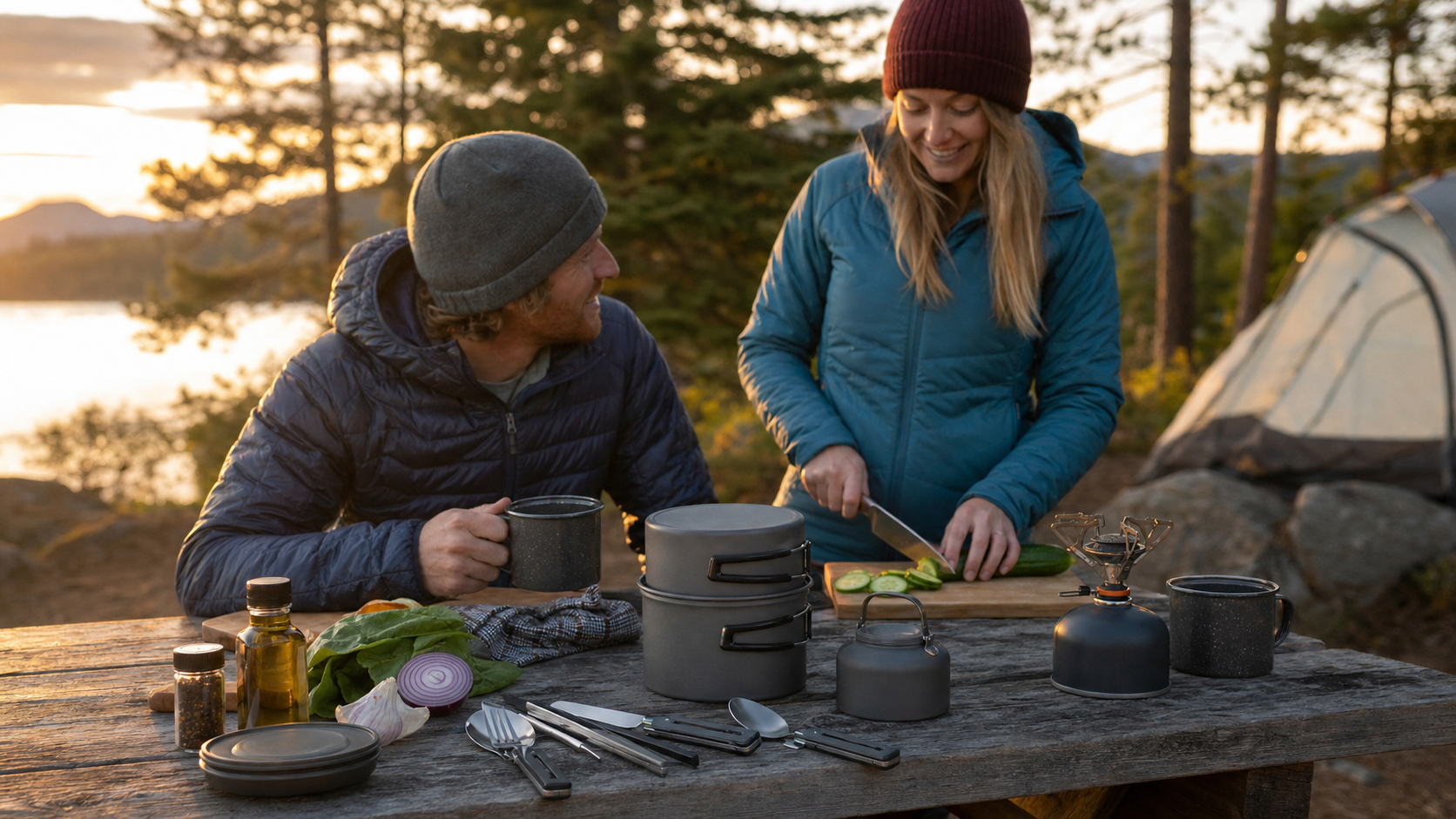
Compact cookware is not only about saving room. It reduces setup friction. When your pot, lid, mug, utensils, and stove all live in one predictable bundle, you spend less time digging through bins and more time getting water hot before the wind picks up. That is why many experienced campers end up using a smaller, tighter cook system even for casual weekend trips.
REI’s camping cookware guide makes the same basic point: nesting sets work because they control both pack volume and kitchen clutter. For a typical weekend, the best compact camping cooking kit is rarely the one with the most pieces. It is the one that gives you enough capacity, one surface for simmering or frying, and enough organization that nothing rattles loose in transit.
If you like a tidy basecamp, pair your cook kit with a stable prep surface. A small kitchen feels much more usable when the stove is not balancing on a cooler lid, which is exactly why a foldable camping table often improves cooking more than buying a larger pot set.
There is also a safety angle. The National Park Service advises campers to decide ahead of time whether they will cook on a stove or over a fire and to use designated cooking areas when required. Their camp cooking guidance is a useful reminder that the “best” kit is the one that fits the rules and conditions of the place you are actually going.
6 Smart Checks Before You Buy
The six checks below are the real structure behind this article’s title. If a kit passes these six tests, it will usually feel better at camp than a cheaper set with more pieces and worse design.
1. Match Capacity to People and Meal Type
Start with how many people are eating and what they are eating. For one person making oatmeal, coffee, ramen, or dehydrated meals, a 750ml to 1-liter pot can be enough. For two adults cooking pasta, rice, soup, or a one-pan dinner, 1.5 to 2 liters is usually the comfort zone. REI notes that pot size should scale with party size, and that simple menus need far less cookware than elaborate campsite meals.
This is where many buyers overspend. They buy a four-piece family cook set for two people who mostly boil water. Extra pots sound useful online, but in practice they eat space, add dishwashing, and rarely leave the tote. If your trip menu is simple, size down first and spend the saved weight on a better stove, a sharper camp knife, or a cleaner lighting setup like a reliable rechargeable headlamp for after-dark cooking.
2. Choose Material for Real Cooking, Not Just Weight
Material changes how the kit feels every single meal. Hard-anodized aluminum is the most versatile option for many campers because it heats fairly evenly, stays relatively light, and tolerates repeated weekend use well. Titanium is superb for ounce-conscious backpackers, but it creates hot spots faster and is less forgiving when you are cooking real food instead of only boiling water. Stainless steel is durable and easy to scrub, but it is heavier for the amount of capacity you get.
If you are building a true backpacking cooking set, titanium still earns its place for solo trips and fast overnights. But for couples, van-life setups, or beginner campers who actually sauté, simmer, or scramble eggs, aluminum often cooks better with less frustration. REI’s camp kitchen setup advice also leans toward practical, durable tools over gimmicky extras, which is the right mindset here.
| Material | Best For | Strength | Drawback |
|---|---|---|---|
| Hard-anodized aluminum | Most campers, couples, weekend trips | Balanced weight and better heat distribution | Can still scratch if packed carelessly |
| Titanium | Solo backpackers and boil-only cooking | Very light and compact | Hot spots and poorer simmer control |
| Stainless steel | Car camping and rough handling | Durable and easy to scrub clean | Heavier for backpacking |
3. Check the Nesting Layout Before You Trust the Packed Size
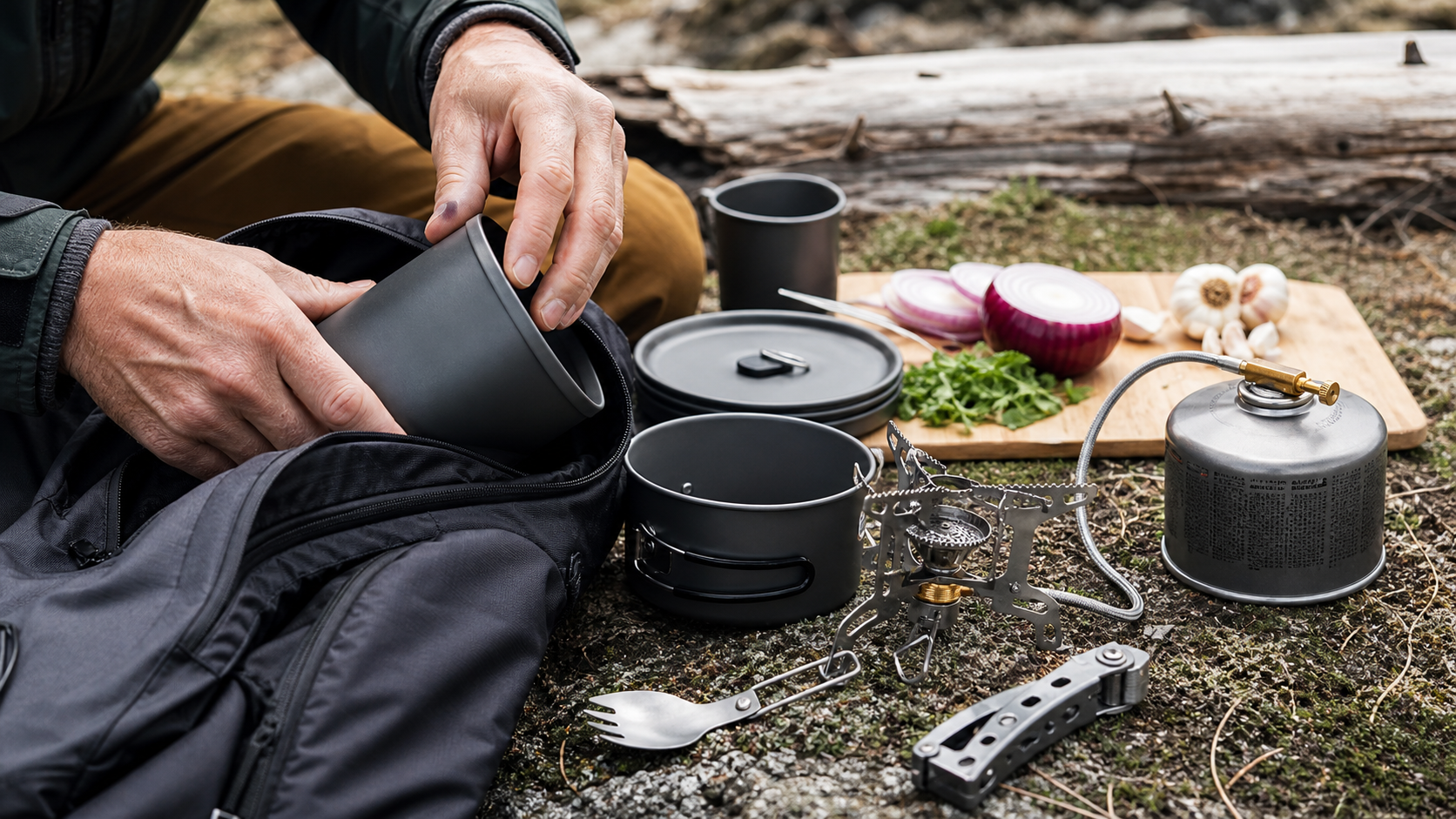
“Compact” on the product page does not always mean compact in your trunk or backpack. Look at how the lid, handles, bowls, and stove actually nest. A good kit leaves room inside the main pot for a small burner, lighter, cleaning cloth, or spice vial. A bad one wastes that space with odd angles or oversized plastic dinnerware you will never use.
This matters even more if your camp kitchen shares room with cold storage. When a portable camping fridge or cooler is already eating cube space in the vehicle, a loose cookware bundle becomes annoying fast. The best compact kits either fit inside one soft case cleanly or compress into a shape that slides beside food bins instead of fighting them.
4. Confirm Stove Compatibility and Pot Stability
Not every pot behaves well on every burner. Narrow pots can feel twitchy on broad stove arms, while wide frypan lids can make top-heavy canister stoves feel unstable on uneven ground. Before you buy, picture the whole system: pot diameter, handle angle, burner head width, windscreen use, and the kind of meals you actually make.
The National Park Service recommends deciding in advance whether your site allows campfires or whether you need a portable stove. That sounds basic, but it affects the entire cookware choice. If you will mostly cook on a small canister stove, you want pots that are easy to center and lids that stay put when the wind nudges them. If you are a frontcountry camper with a two-burner stove, a slightly wider pot or skillet can be worth the extra bulk because it is easier to stir and less likely to scorch food.
5. Plan for Cleanup, Water Access, and Food Safety
A compact camping cooking kit should make cleanup easier, not harder. Smooth interior walls, a lid that doubles as a plate or strainer, and utensils that wipe clean quickly are all worth paying for. The USDA’s food safety advice for hiking and camping is especially helpful here: keep raw foods separate, wash hands before and after handling food, and do not bring perishables unless you can actually keep them cold.
That means the right cook kit is partly a sanitation kit. A small drying cloth, biodegradable soap where allowed, and a dedicated scrub pad matter. So does campsite organization. If you want your wash-up routine to stay clean instead of turning into a gear pile, a portable wash bag is one of the easiest upgrades you can make.
For longer basecamp trips, think beyond dishes. If you are cooking with meat, dairy, or leftovers, your cookware choice should work with your cold-storage plan, your cleanup water supply, and the temperature forecast. Lightweight gear is nice; not dealing with spoiled food is nicer.
6. Skip Filler Pieces and Buy Around Your Real Weak Spot
The biggest buying mistake is assuming a complete set is automatically better value. Many sets pad the piece count with tiny bowls, awkward cups, or utensils that feel flimsy after two weekends. Instead, ask what problem you are actually solving. Do you need faster boiling, better simmer control, easier nesting, or less mess while packing?
If your real pain point is campsite visibility, the better buy may be a rechargeable camping lantern or a string-light setup for soft area light rather than a larger pot set. If your issue is power management for a longer stay, your next useful upgrade might be a solar camping generator that supports the rest of your kitchen system. Let the cook kit stay small and competent.
Best Compact Kit Setups by Camping Style
Affiliate disclosure: If you buy through the Amazon links below, BugfreeCamping may earn a commission at no extra cost to you.
Solo backpacker: Choose a simple pot-first system with one mug or bowl, one long-handled spoon, and enough room inside the pot for your stove and lighter. A search like titanium backpacking pot 750ml is a good starting point if your meals are mostly boil-and-soak.
Two-person weekend car camper: Go with a 1.5 to 2-liter hard-anodized pot, one useful frypan or lid, two mugs, and a compact utensil roll. For this style, a hard anodized camping cookware set usually offers the best balance of cooking performance and pack size.
Van-life or comfort-focused basecamp: Prioritize easy cleanup and sturdier surfaces. A stainless steel camping cook set can make sense when weight matters less than durability and scrubbing ease.
Smart accessory add-ons: A dedicated compact camp kitchen utensil set keeps your spatula, spoon, and knife from floating loose in the gear bin, while a camp pot gripper is still worth carrying if your dream kit uses removable handles.
One practical pattern shows up again and again: backpackers do better with fewer pieces, while car campers do better with slightly larger pieces that are easier to cook in. A compact camping cooking kit should save hassle first and save inches second. If the smaller set forces bad meals, burns food, or makes washing up miserable, it is not really the better choice.
Common Buying Mistakes
Most regrets come from one of four mistakes. First, buyers size the kit for a fantasy trip instead of their usual trip. Second, they overvalue low packed weight and undervalue cookability. Third, they forget that camp kitchens live in wind, cold fingers, and limited cleanup water. Fourth, they ignore wildlife-safe storage and leave smellables or food scraps out around camp.
Leave No Trace’s food storage guidance is worth treating as part of your kitchen plan, not a separate afterthought. Food, trash, and smellables all need secure storage, and in many places that also means thinking about where you cook, where you clean, and what still smells like dinner after you are done. If you are traveling through parks or developed campgrounds, the NPS what-to-bring checklist is another useful reality check for the basic tools people forget.
The easy fix is to build a compact system around one primary meal pattern. If your normal camp dinner is pasta, chili, rice bowls, or soup, buy for that. If your trips are mostly coffee, oatmeal, and freeze-dried meals, buy for that instead. The right kit feels almost boring because it works every time.
FAQ
What size compact camping cooking kit is best for two people?
For most two-person trips, a 1.5 to 2-liter pot plus one practical lid or shallow frypan is the sweet spot. That size handles coffee, oatmeal, pasta, soup, and simple one-pot dinners without feeling oversized.
Is a backpacking cooking set good for car camping too?
Sometimes, but only if your meals stay simple. A lightweight backpacking cooking set is excellent for boiling water and basic meals, but many car campers are happier with slightly larger cookware that simmers better and cleans up faster.
Is titanium or aluminum better for camp cooking?
Titanium is better when you care most about low pack weight. Aluminum is usually better when you care about more even heating, easier real-meal cooking, and lower frustration at camp.
What should fit inside a compact camping cooking kit?
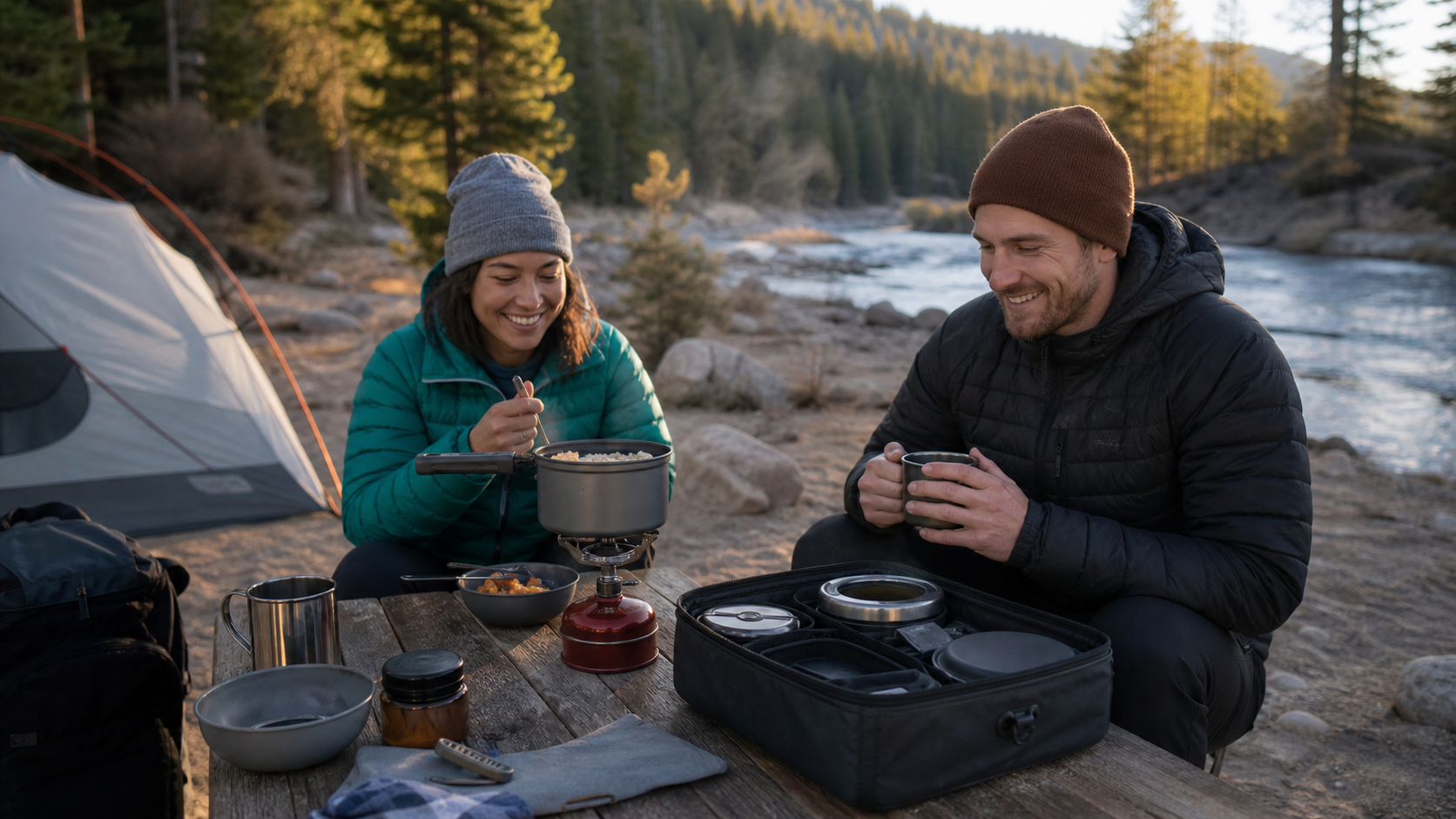
Ideally the packed kit holds the main pot, lid, stove or burner head, lighter, small cloth, and a few utensils without rattling. If the included bowls and cups waste that internal space, the set is probably less compact than it looks.
Sources consulted: REI cookware guide, REI camp kitchen setup, National Park Service cooking in camp, USDA camping food safety, and Leave No Trace food storage 101.