
### Blog Post:
Foldable camping furniture has quickly become essential for today’s campers who want low pack weight, small footprints, and gear that stands up to repeated trips—not just a cheap seat you toss in the trunk. If you care about comfort, durability, and real-world portability, this guide will help you buy with confidence.
Key Takeaways
- Portability matters: Look for a portable camping chair or folding camping table that balances low weight and compact packed size with comfort and reliable load capacity.
- Durability is measurable: Field use reveals failure points—seams, frame fatigue, fabric wear—well before most claims in generic roundups.
- Category growth is real: U.S. foldable camping furniture is growing 10–12% annually, and top products like the Helinox Chair One move 50,000+ units yearly, showing high demand for well-designed, portable gear.
- What Makes Foldable Camping Furniture Worthwhile?
- Step-by-Step: Choosing and Testing for Portability & Durability
- Advanced Analysis & Common Pitfalls
- Conclusion & Top Recommendations
- Frequently Asked Questions
What Makes Foldable Camping Furniture Worthwhile?
Modern foldable camping furniture serves campers across the spectrum—from minimalists hiking miles into the backcountry to families upgrading campfire comfort for the weekend. The critical value isn’t just that it folds. True utility comes from a balance of measurable portability (weight, packed size, how it actually carries) and proven durability (frame and fabric, not just in-store). The U.S. market backs this up: Helinox Chair One weighs 2.5 pounds and supports 320 pounds, selling 50,000+ units a year. The REI Flexlite is around one pound and supports 300 pounds with 30,000+ in annual sales—proving people buy what actually lasts while fitting in a pack or trunk.

Whether you’re hiking, car camping, or outfitting a van, the key is seeing through flashy claims to real weight, packed size, carry ergonomics, and proven durability in field conditions—not just price or popularity. More on that below, along with a look at top-performing models and what to check during your research or at the shop.
Step-by-Step: Choosing and Testing for Portability & Durability
-
Define your use-case (weight and packing need):
- Backpacking or hiking? Choose a portable camping chair under 3 pounds and 15-inch packed length. (Helinox Chair One, REI Flexlite, etc.)
- Car camping or family use? Comfort and durability may trump weight but avoid models over 10 pounds unless you need heavy-duty support.
- Want a folding camping table? Look for an aluminum top, compact camping table design under 3 pounds, and reliable leg locks.
-
Check core portability metrics:
- Weight: Over 8 pounds is tough for backpacking, per verified reviews.
- Packed size: Under 12 x 6 inches easily fits in a pack or small trunk.
- Carry ergonomics: Integrated strap or handle is essential for repeated trips. Lack of these features are top complaints (source: Treeline Review).
-
Inspect durability upfront:
- Feel for sturdy frame joints and reinforced seams.
- Check fabric denier: 600D polyester or ripstop nylon with some water repellency is ideal.
- Review warranty and replacement part policy for the model.
-
Assess the setup mechanism:
- Look for intuitive, few-step assembly—connected (shock-corded) poles or spring-strut designs are fastest and eliminate lost parts.
- Pinch points, loose hinges, or tool-required steps are red flags for usability and breakage.
-
Test the seat height and comfort:
- Does your hip/knee alignment match the seat height? Too low can cause knee pain on longer sits; too high is unstable on uneven ground.
- Sit test: If possible, test with your weight and gently rock to expose frame or seam weaknesses—look for any early sag or shift.
-
Evaluate by real-world field reports:
- Check for repeated pain points: Early failures at 20–30 uses, sagging under rated load, excessive packed size, no carry strap.
- Scan for any load test results, accelerated UV aging info, or fatigue cycle data in reviews.
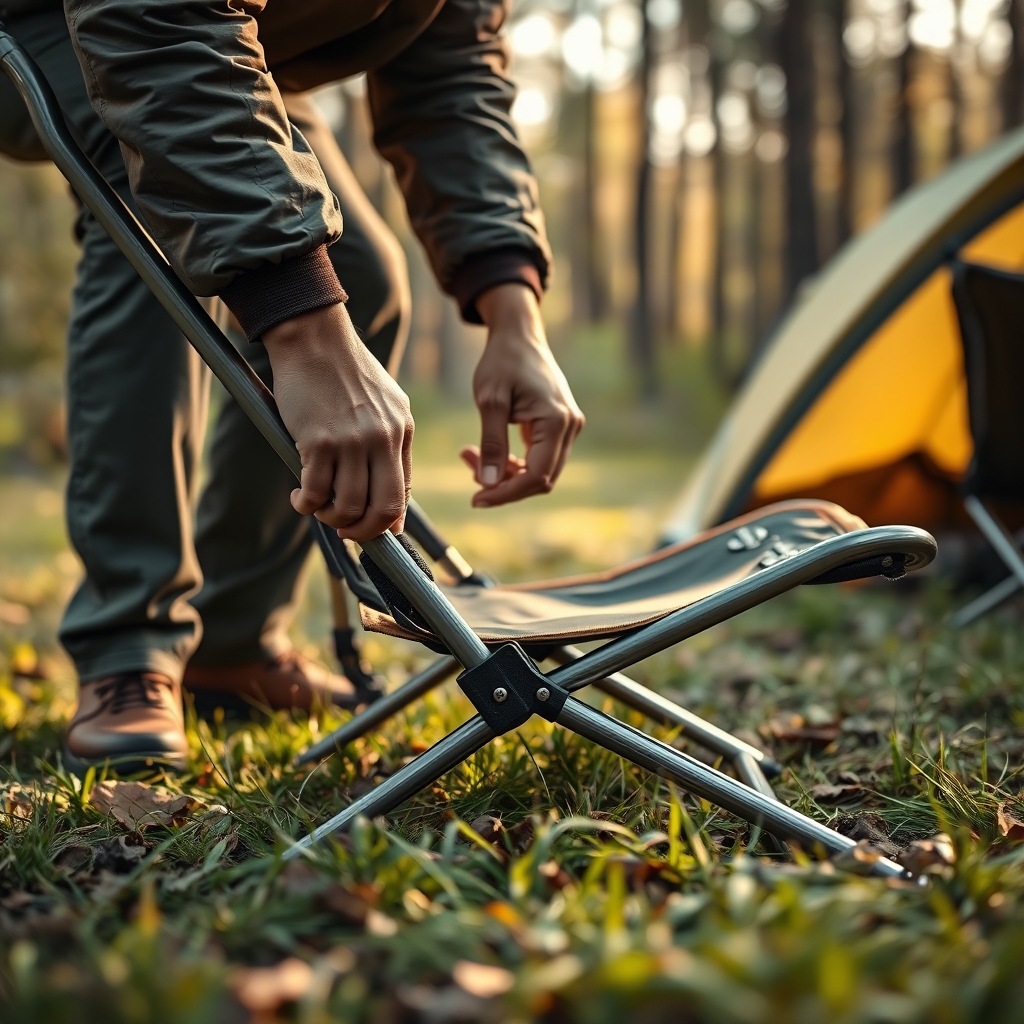
Looking for related setup gear? See our guides to the portable camping shower and ultralight camping chair for even lighter-weight options and storage hacks for minimalist campers.
Advanced Analysis & Common Pitfalls
Despite strong marketing, not all foldable camping furniture lives up to real-world pressure. Here’s where most people run into trouble—and what the data actually shows from long-term use and category reviews.
Common Pitfalls
- Overclaiming weight capacity: Many chairs are rated for 250–300 pounds but sag or fail closer to 200 pounds in real life, especially for models with unreinforced frames or weak seat geometry (Wirecutter review).
- Heaviness in disguise: Classic camp chairs often exceed 8 pounds once you add the carry bag and built-in cup holders, crossing the “pain threshold” for long carries flagged in top verified reviews.
- Frame/fabric fatigue: Most early failures (20–30 uses) are due to cheap rivets, thin pole walls, or 300D polyester versus 600D+ used in higher-end models. Visible wobble, small tears, or loose seat bottom are warning signs.
- Awkward packing and transport: Folded footprints greater than 12 x 6 inches or missing carry straps are among the most cited user complaints.
- Unreliable leg locking (tables): Aluminum slat tops with stable locks outperform MDF or soft plastics for both strength and longevity.
- Non-intuitive mechanisms: Set up that requires tools, manual alignment, or has lots of small moving parts leads to frustration and faster breakage.
Comparison Table: Top Foldable Models
| Product | Weight | Packed Size | Load Capacity | Seat Height | Frame Material | Fabric | Warranty | MSRP ($) | Notes |
|---|---|---|---|---|---|---|---|---|---|
| Helinox Chair One | 2.5 lb | 14 x 4 in | 320 lb | 14 in | Aluminum alloy | 600D polyester, UV resistant | 5 yr | 120 | Ultralight, 50k+ annual sales |
| REI Flexlite | 1 lb | 11 x 4 in | 300 lb | 11 in | Aluminum | Ripstop polyester w/ DWR | 1 yr | 115 | Backpackers, 30k+/yr |
| Kijaro Dual-Lock | 9.5 lb | 45 x 7 in | 300 lb | 20 in | Steel | 600D polyester | Limited | 55 | Car camp, solid seat |
| ALPS King Kong | 13 lb | 41 x 7 in | 800 lb | 19 in | Steel | 600D polyester | Limited | 90 | Heavy-duty, overbuilt |
| Coleman Broadband | 6 lb | 36 x 6 in | 250 lb | 17 in | Steel | Polyester mesh | Limited | 45 | Budget starter |
| Helinox Table One | 2 lb | 16 x 4 in | 300 lb | n/a | Aluminum alloy | Polyester mesh | 5 yr | 130 | Top folding table |
| Big Box Private-Label Table | 1.5 lb | 16 x 2 in | 200 lb | n/a | Aluminum | MDF or aluminum slats | 1 yr | 45 | Lightweight, compact |
Note: Many online guides fail to report key metrics like UV/fatigue cycles, strap wear tests, or ergonomic seat angle. Ask before buying.
For in-depth guides to related gear, see our write-up on ultralight camping gear or check recommendations for a solar generator for camping setup.

Conclusion & Top Recommendations
The best foldable camping furniture prioritizes real-world portability, tested durability, and easy setup—while matching your trip style. Always cross-check manufacturer specs with real user test data, especially for weight, packed dimensions, and capacity.
For lightweight trips, the Helinox Chair One or REI Flexlite are unbeatable. Car campers and family setups will get max comfort per dollar from the Kijaro, ALPS, or Helinox Table One. For the best value, don’t ignore in-store brands if you inspect materials, sizing, and warranty first.
Ready to upgrade your kit? Visit our curated foldable camping furniture section for detailed product picks and links to trusted retailers. No gimmicks, just field-tested upgrades for your next adventure.
Frequently Asked Questions
How do I know if a portable camping chair is really comfortable?
Test the seat height and back angle in person if possible. Ideal comfort comes from at least 11–14 inches in seat height with proper ergonomic angle. Read verified reviews for real-world impressions and try to “sit test” in the store—look out for sagging, awkward angles, or pinch points.
Are higher weight ratings always accurate?
No. Many chairs rated for 250–300 pounds begin to sag around 200–225 pounds in field use. Heavy-duty models like the ALPS King Kong (800 lb) offer wider margins but weigh much more, so always check user feedback and look for independent load test data if available.
Does packed size make a big difference for weekend car camping?
If trunk space is tight or you want to pack multiple items, yes. Folded furniture over 12 x 6 inches can be frustrating to stack and move—this is a top complaint even for “car camping” models. Smaller sizes allow for more gear or backseat space.
How can I extend the life of my folding camping table?
Wipe down surfaces after wet or sandy sessions, check and re-tighten leg locks or screws each trip, and store out of direct sun to prevent UV damage. For tables with fabric tops, spot clean and dry thoroughly before bagging to avoid mold or mildew.
What’s the best way to spot early signs of failure?
Regularly check the frame (for wobble or hairline cracks), seams (for small tears or loose stitching), and fabric for any surface abrasion. Listen for squeaks or grinding in hinges—these are early warnings that stress is causing damage. Doing so early can help you use warranties proactively.
—