
folding solar panel camping works best when you size the panel around your real battery needs, your actual sun exposure, and the gear you want to run after dark.
Key Takeaways
- Most campers get better results from a 100W to 200W folding panel paired with a small power station than from charging phones directly.
- Connector compatibility, kickstand stability, and realistic setup speed matter more than flashy peak-watt claims.
- Shade, heat, and flat panel placement can cut charging performance fast, so campsite positioning matters.
- A good portable solar panel for camping should be easy to carry, simple to angle, and durable enough for repeated setup.
- Buying too much panel without a matching battery, or too much battery without enough panel, is the most common expensive mistake.
Table of Contents
Why This Setup Works at Camp
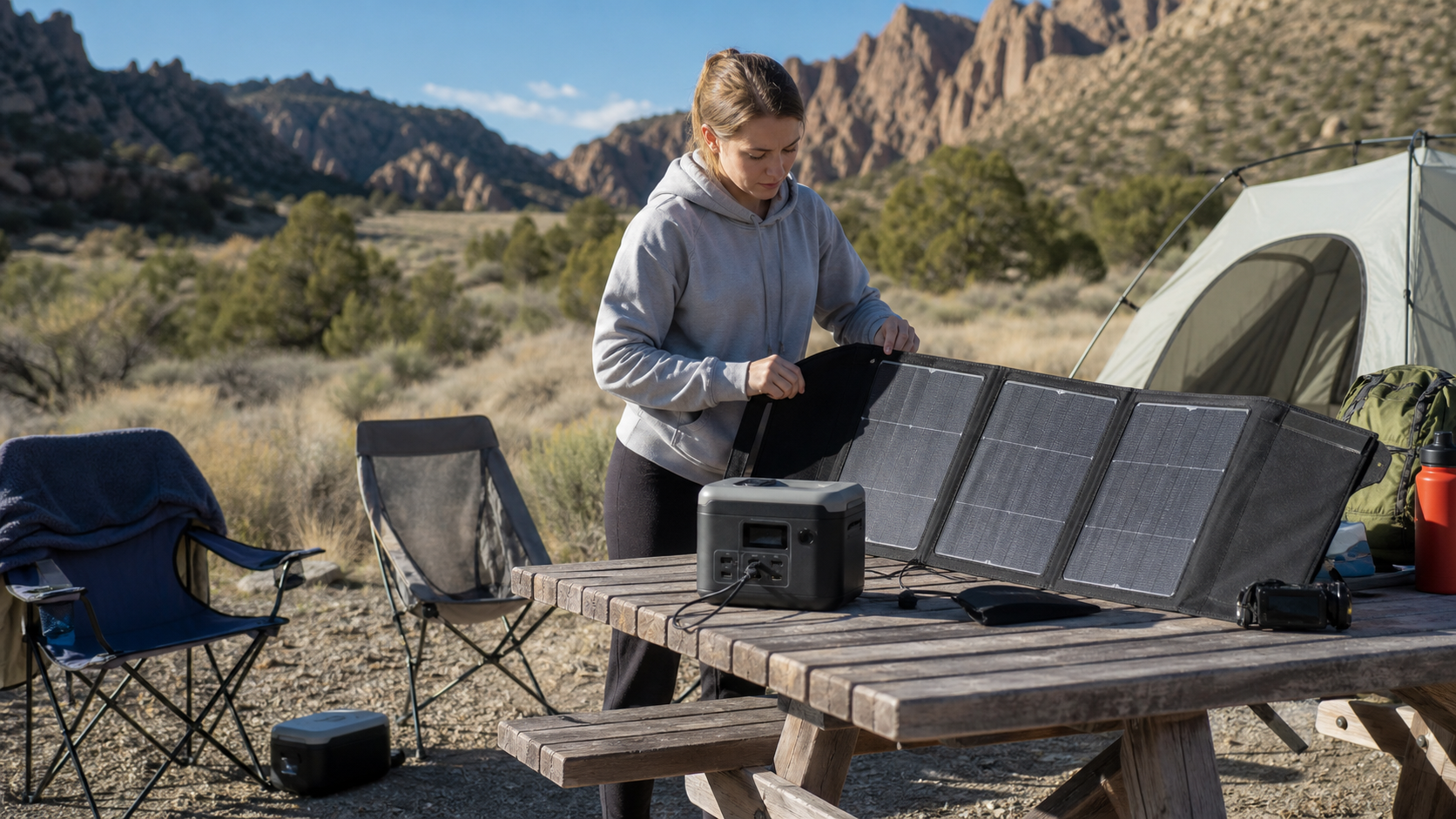
A folding solar panel camping solves a very specific camping problem: you want quiet electricity without hauling a fuel generator, hunting for a hookup, or wasting time with underpowered gadgets. For most car campers, overlanders, and comfort-focused weekend campers, the sweet spot is a panel that can top up a small power station during the day and then run lights, phones, a fan, or a few meal-prep accessories after sunset.
Campers now bring more rechargeable gear than ever, but they still want a simple setup. REI’s guide to solar chargers and portable power makes the same practical point many people learn the hard way: using solar to recharge a battery bank or power station is usually more reliable than trying to run delicate electronics straight from the panel all day.
That is why the best buying question is not “What is the highest wattage I can afford?” It is “What do I actually need to keep charged on a real campsite day?” Once you answer that honestly, the right panel size, battery pairing, and setup style become much easier to choose.
Folding Solar Panel Camping: The 6 Checks That Matter
1. Size the system around watt-hours, not marketing watts
Panel wattage matters, but battery capacity and daily load matter more. A 40W panel might be enough for two phones and a headlamp if the weather stays clear. A 100W panel is more realistic for a small power station that needs to run a lantern, charge phones, and help with a fan. A 200W folding panel starts to make sense if you are powering higher-demand comforts such as a compact fridge or recharging a medium-size battery quickly between stops.
| Trip Style | Typical Daily Needs | Good Panel Range | Best Battery Pairing |
|---|---|---|---|
| Weekend tent camping | Phones, headlamps, lantern, small speaker | 60W to 100W | 250Wh to 500Wh power station |
| Warm-weather comfort camp | Fan, lights, phones, tablets | 100W to 160W | 500Wh to 700Wh power station |
| Basecamp or van stopover | Fridge support, device charging, longer stays | 160W to 220W | 700Wh to 1000Wh battery |
If you already own a battery, build around that first. If you are still deciding, this is where our guide to a solar camping generator helps: the panel and battery should be treated as one system, not two separate impulse buys.
2. Check connector compatibility before you fall for the panel
Many campers focus on watts and ignore plugs. That creates the classic camp purchase mistake: a nice folding solar panel camping that cannot connect cleanly to the battery you already own. Look closely at the panel output, the adapter bundle, the maximum solar input on your battery, and whether the brand expects MC4, XT60, DC7909, USB-C, or a proprietary connector.
This matters because a portable solar panel for camping should save time, not add adapter drama. If you need three third-party adapters and a workaround cable to make it function, the setup is already less practical in the field. A simple match that clips in fast is worth more than a slightly cheaper panel with annoying compatibility gaps.
3. Judge portability by setup speed, not just folded size
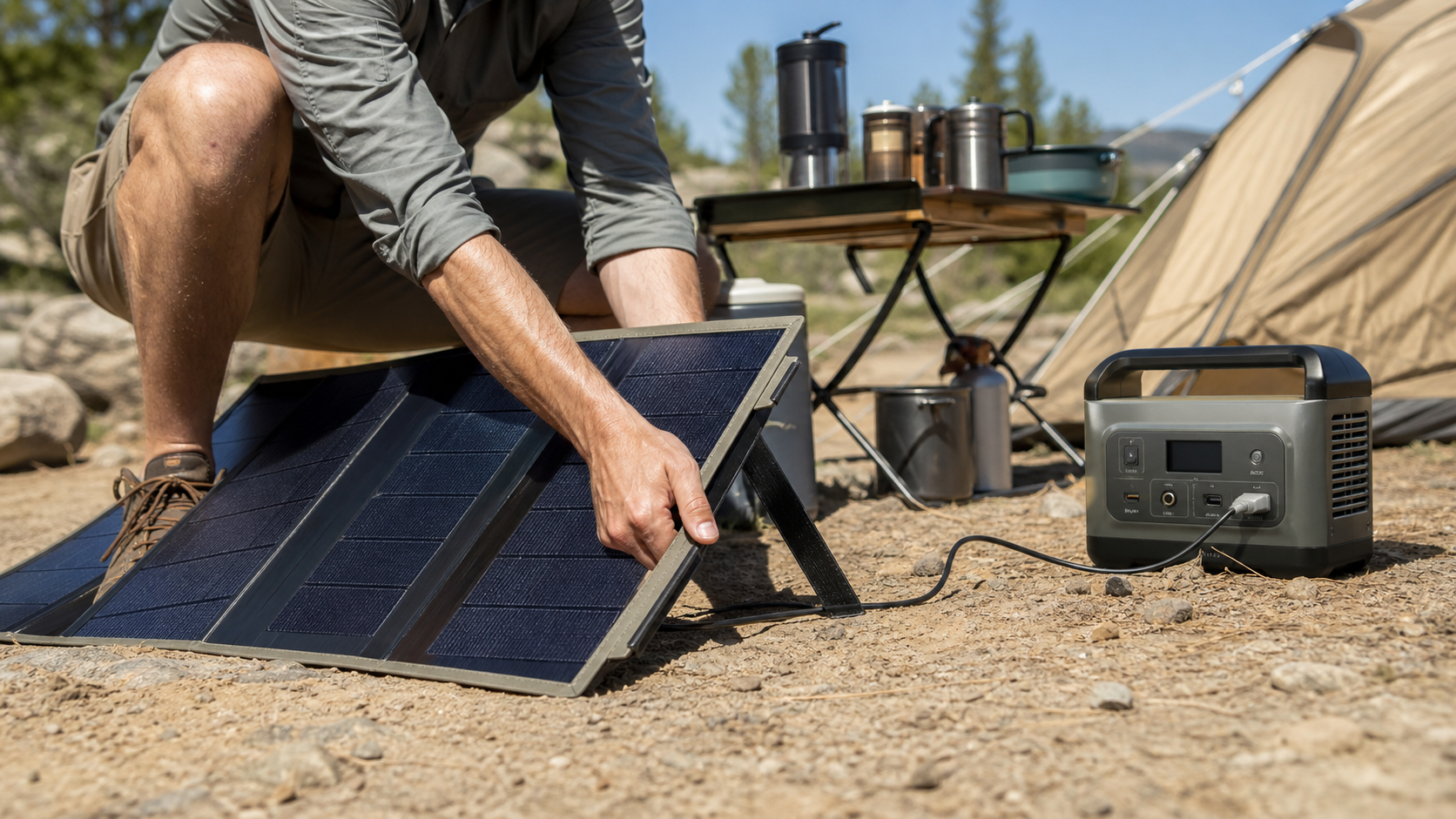
Some panels look compact online and feel awkward in real life. The useful questions are: How fast can you carry it from the vehicle? How stable are the kickstands on uneven ground? Can you move it twice during the day without treating it like a fragile puzzle? Does the case actually protect the corners and fabric hinges?
For camping, genuine portability is about friction. The more annoying the panel is to unfold, angle, clean, or reconnect, the more often it stays packed. Many campers are happier with a slightly smaller folding panel they will actually reposition during the day than with a bulkier one that promises more output but rarely gets used properly. That is also why the packable, stand-equipped design emphasis you see on Goal Zero’s portable solar panels matches what real campers actually need.
4. Read weather and durability claims carefully
A folding panel can live a hard life at camp. It gets set down on dusty picnic tables, propped on damp ground, folded before dew fully dries, and packed beside chairs, cookware, and tote bins. So durability matters in a very unglamorous way. You want reinforced corners, firm stitching or lamination around hinges, stable kickstands, and connectors that do not feel loose after a few trips.
This is also where the spec sheet needs careful reading. “Water-resistant” is not the same as “leave it in a storm.” Some brands, including Jackery and EcoFlow, publish clearer expectations about surface durability, connector care, and splash resistance. That is a good reminder that most folding panels are designed for temporary outdoor exposure, not careless all-weather abuse.
If your camp routine involves beach sand, frequent drizzle, or fast pack-outs, durability should move ahead of raw wattage on your priority list.
5. Plan for real-world charging conditions, not perfect-lab numbers
Real campsites rarely deliver ideal test conditions. Shade from trees, haze, heat, and poor panel angle can all reduce output. The U.S. Department of Energy’s solar basics explain that the amount of solar energy reaching a spot changes with weather, time of day, and orientation, which is exactly why campers should treat peak wattage as a best-case ceiling rather than a normal result.
In practice, this means a foldable solar charger outdoor setup should have a realistic daily plan. Morning coffee? Move the panel into open light. Midday heat? Keep the battery in shade while the panel stays in sun. Afternoon tree shadow crossing the campsite? Shift the panel before output collapses. EcoFlow and other manufacturers also stress correct panel angle and unobstructed exposure because even partial shade can make a visible difference.
The safest buying assumption is that you will not hit advertised output for most of the day. Buy enough capacity to still feel comfortable when conditions are merely decent, not perfect.
6. Build a simple system that matches camp life
The best camp solar setups are boring in the best way. One panel. One battery. One cable path you trust. A clear place to stage the battery out of direct heat. A simple habit of checking charging before you leave for a hike or paddle. That is the kind of camp solar panel setup that feels easy on trip two, not just exciting on day one.
For many campers, this means using the panel to recharge a battery during the day, then using that stored power after dark for comfort items that actually improve the trip. Our coverage of a rechargeable camping lantern, a 30W portable charger, and a portable wireless charger fits naturally into this approach.
Common Buying Mistakes
Most regrets in this category come from mismatch, not from panels being “bad.” These are the mistakes that show up over and over:
- Buying a large panel for a tiny battery that fills quickly and wastes the rest of the sunny window.
- Buying a large battery with too little panel, then wondering why it never fully recovers between days.
- Trying to charge phones directly from the panel all afternoon instead of charging a stable battery first.
- Ignoring cable and connector compatibility until the first trip.
- Expecting rooftop-RV performance from a lightweight folding unit that gets moved around camp.
- Leaving the panel flat on a table all day and assuming the output drop is “just normal.”
- Packing the panel wet or dusty, which slowly shortens hinge and fabric life.
The realistic downside of this gear is that it still requires attention. A folding solar panel is not a magic set-it-and-forget-it appliance, and it works best when you actively place it well.
Best Setups by Trip Style
If you are weekend tent camping, keep it simple: a 100W panel and a 300Wh to 500Wh battery are usually enough for lights, phones, and a little extra comfort. If your warm-weather setup includes a small fan at night, lean toward a stronger 100W to 160W panel and a battery that can recover during daylight hours.
If you travel with a compact cooler, power-hungry lighting, or multiple people’s devices, step up the system together rather than oversized on one side only. That is especially true for campers who also rely on a portable camping fridge or want longer, warmer evening light with battery-powered camping string lights.
Affiliate disclosure: If you buy through the Amazon links below, BugfreeCamping may earn a commission at no extra cost to you.
- Shop 100W folding solar panel options on Amazon
- Shop 200W portable solar panel options on Amazon
- Shop MC4 to XT60 solar adapters on Amazon
- Shop 500Wh portable power stations on Amazon
- Shop portable solar panel stands on Amazon
Maintenance and Safety
Keep the battery itself out of direct heat whenever possible, even while the panel stays in sun. Brush dust and pollen off the panel face before folding it. Dry the exterior before packing. Avoid pinching cables into tailgates, tent zippers, or table edges. If a connector gets sandy, clean it before forcing the fit.
Also think about campsite safety and etiquette. Do not stretch cables where people walk at night. Do not leave an expensive panel in a high-traffic campground unattended all day. And if wind picks up, reposition or stow the panel before a hinge, kickstand, or corner gets damaged. Those simple habits matter more than most spec-sheet upgrades.
Helpful Gear Pairings
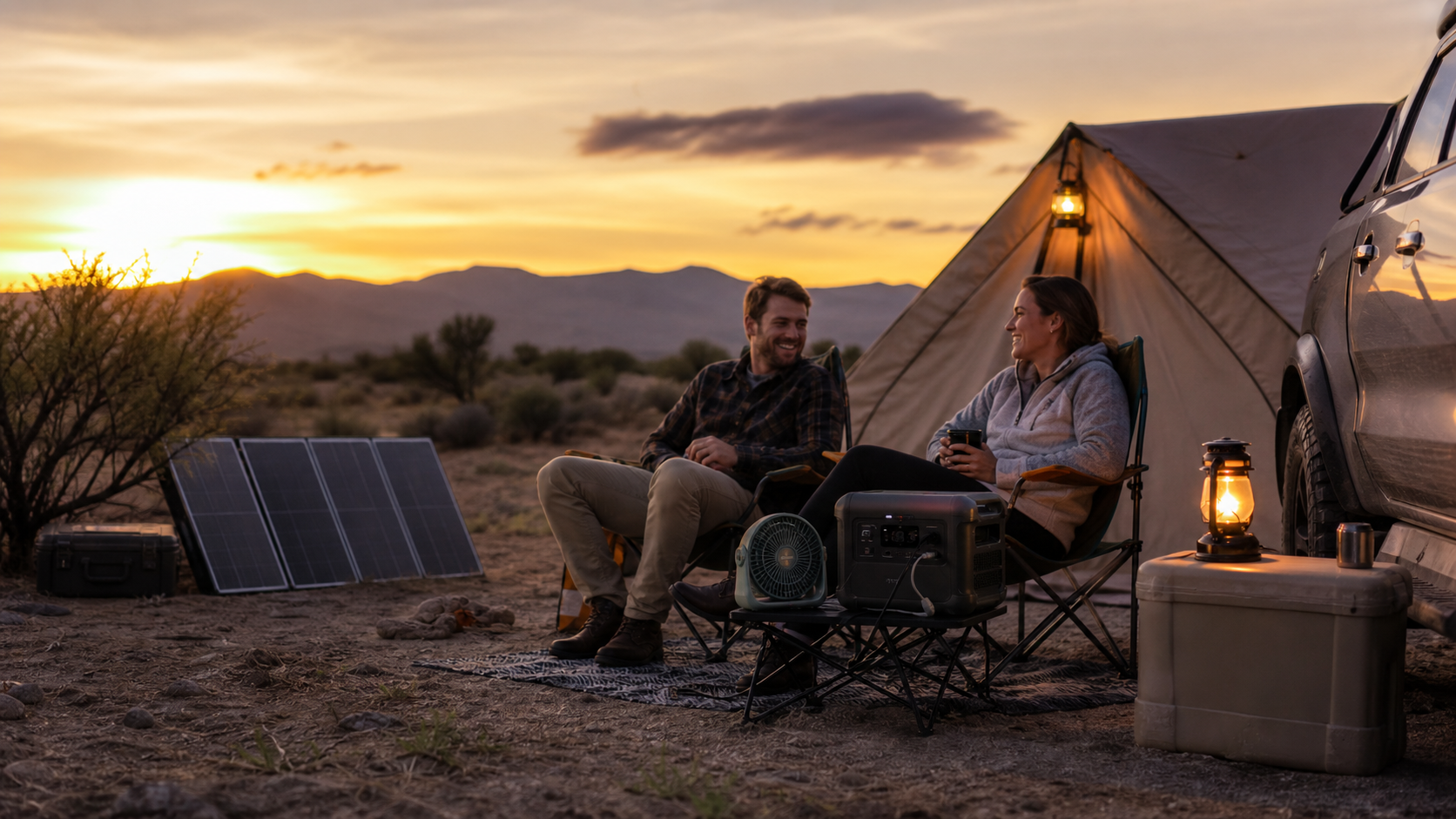
A good solar setup works better when the rest of your powered camp kit stays efficient. For late-night visibility, pair it with a rechargeable headlamp instead of disposable-battery lights. For kitchen and table use, a rechargeable lantern or efficient string lights stretch stored power further than bright flood-style lights.
FAQ
What size folding panel is best for most campers?
For many weekend campers, 100W is the practical starting point because it balances portability, setup speed, and enough output to recharge a small battery during a decent sunny day.
Is a portable solar panel for camping better than a solar generator by itself?
They solve different parts of the problem. The panel makes electricity during daylight, while the battery stores it for when you actually need it. Most campers want both pieces working together.
Can I leave a folding solar panel outside all day at camp?
Usually yes in normal use, but you should still watch for wind, rain, theft risk, and overheating of any connected battery. Panels handle temporary exposure better than careless neglect.
Do folding panels work in partial shade?
They still work, but output can fall sharply. Even light tree cover can turn a fast midday charge into a slow trickle, which is why campsite placement matters so much.
What is the biggest buying mistake with camp solar?
The biggest mistake is mismatch: too little panel for the battery and devices you want to support, or too much battery and not enough daytime charging to refill it.
Sources
- REI: How to Choose Solar Chargers and Portable Power
- U.S. Department of Energy: Solar Radiation Basics
- Goal Zero: Portable Solar Panels
- Jackery: Solar Panels
- EcoFlow: 220W Bifacial Portable Solar Panel
Bottom Line
Folding solar panel camping is worth it when the gear stays practical. Buy a panel that matches your battery, your campsite routine, and the loads you actually care about. Prioritize compatibility, setup speed, stable kickstands, and realistic sun conditions over flashy peak-output promises. Do that, and you end up with quiet, repeatable off-grid power that genuinely improves camp comfort instead of becoming one more gadget you regret packing.