
portable hand washing station camping setups solve one of the easiest-to-overlook campsite problems: keeping hands clean enough for food prep, snack breaks, and post-bathroom cleanup without wasting half your water supply.
A good station does more than drip water from a jug. It puts soap, rinse water, towels, and gray-water capture in one predictable place so campers actually use it. That matters more than many people think. The CDC’s guidance on preventing norovirus outdoors is blunt about the basics: soap-and-water handwashing matters, and hand sanitizer alone is not a full substitute when stomach bugs are in play.
This guide focuses on the six checks that make a portable hand washing station camping worth packing for family camping, car camping, overlanding, and comfort-first weekends. It also covers the practical tradeoffs campers run into after the first trip: unstable stands, too-small basins, wasted water, awkward towel storage, and gray-water cleanup that turns a smart idea into one more chore.
Key Takeaways
- The best station keeps water, soap, towels, and gray-water capture together instead of spread across the table.
- Spigot height and basin size matter more in daily use than fancy accessories.
- Handwashing at camp works best when the station sits beside your cook zone, not across camp.
- Gray-water rules vary by campground, so a good setup should be easy to carry, empty, and reset cleanly.
- Most campers do not need a bulky freestanding sink; a stable jug-and-basin system is often the smarter buy.
Table of Contents
Why Portable Hand Washing Station Camping Matters
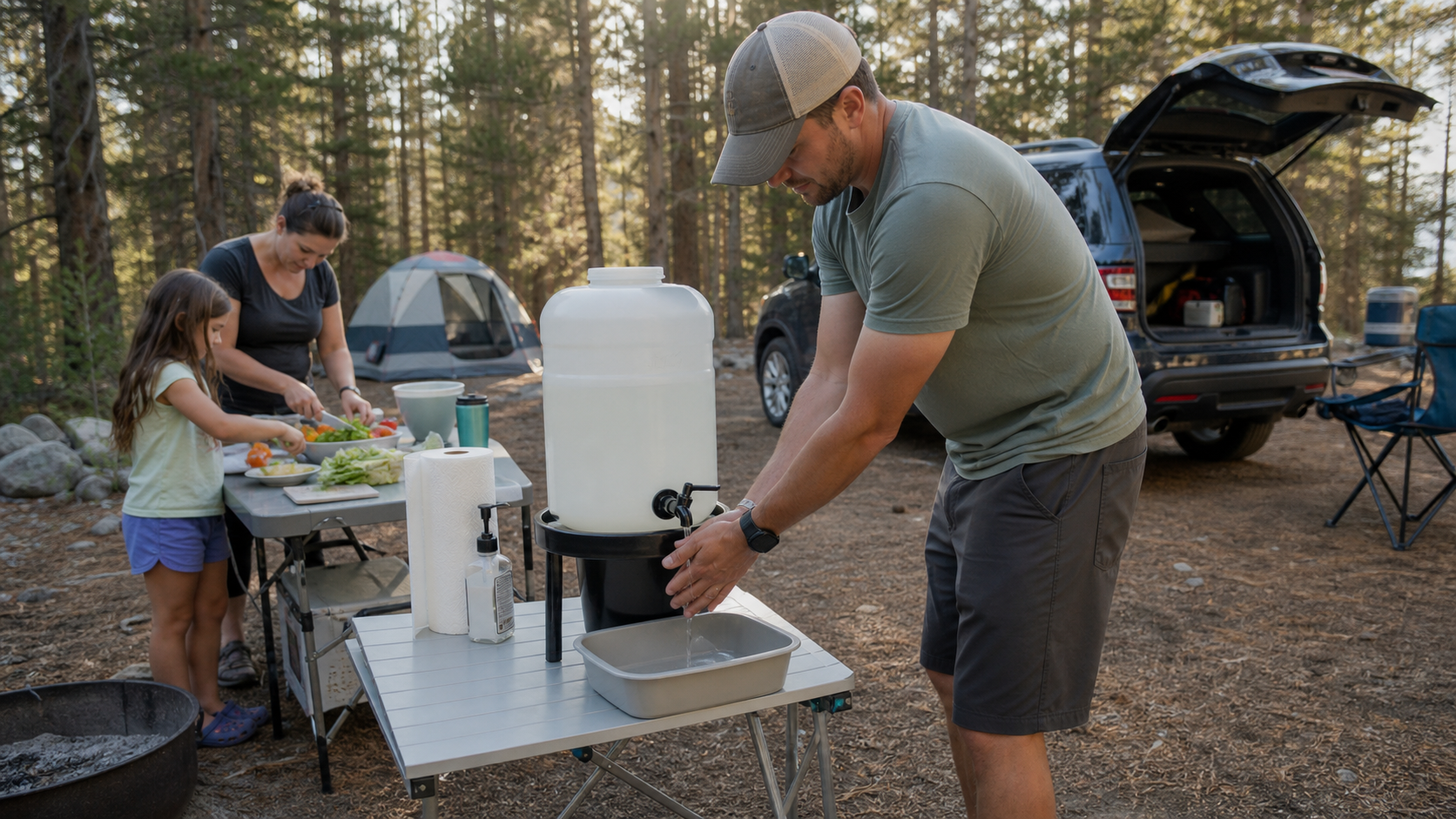
At home, handwashing happens without planning. At camp, it competes with coolers, folding chairs, half-packed bins, and the temptation to rinse quickly from a bottle. That usually works until someone starts handling sandwich fixings, raw meat, sticky marshmallow hands, sunscreen, bug spray, or a toddler who just came back from the restroom. Once camp gets busy, the easiest system wins. If a real wash station is visible and ready, people use it.
That matters for more than comfort. USDA Food Safety and Inspection Service advice on food safety while hiking, camping, and boating emphasizes clean hands, clean surfaces, and temperature awareness before the meal ever reaches the stove. In practical campsite terms, the handwashing station is part of the kitchen, not a nice extra sitting off to the side.
A good portable hand washing station camping also improves the rhythm of camp. Kids can wash up before snacks without crowding the cooler. Adults can clean hands after firewood, fish cleaning, or restroom trips without dipping into the cooking water jug. And if your whole kitchen already depends on predictable zones, the logic matches the way a camp kitchen organizer keeps spatulas, soap, towels, and trash bags from getting lost in one messy tote.
6 Essential Checks Before You Buy or Build
The title number reflects the real structure of this article. These six checks are the core decisions that separate a portable hand washing station camping keep using from one that gets abandoned after the first meal.
1. Put the Water Source at a Comfortable Height
The most common mistake is placing the jug too low. If campers have to crouch, balance, or hold one hand awkwardly under a weak stream, they stop washing well. The better setup places the spigot high enough to get both hands under it comfortably while still leaving room for a basin below. That can be a purpose-built stand, a stable side table, or a bin turned into a platform, as long as it does not wobble when the jug gets lighter.
This is one reason a good foldable camping table can be more useful than a random picnic-bench corner. The table gives you control over height, keeps the soap upright, and lets the basin sit directly below the spigot instead of half hanging off an edge.
| Setup Style | Best For | Main Strength | Watch For |
|---|---|---|---|
| Jug on a camp table | Weekend car camping, simple family sites | Fast, affordable, easy to adapt with gear you already own | Can waste prep space if the table is too small |
| Freestanding wash station | Longer stays, organized basecamp kitchens | Better height, cleaner layout, easier family use | Bulkier cargo footprint and more setup pieces |
| Foot-pump sink | Comfort-focused car camping, glamping, event camps | Hands-free water flow and familiar sink feel | Heavier, pricier, and often overkill for short trips |
2. Size the Basin for Real Handwashing, Not Drips
The catch basin needs to be big enough for real use, especially if you camp with kids. Tiny trays overflow quickly, splash onto the table, and make the station feel sloppy by day two. A deeper basin gives people time to rinse properly and makes the setup more forgiving when someone leaves the spigot running for an extra second.
Water supply matters too. If you are relying on one small jug for cooking, coffee, and handwashing, you will either ration too hard or run dry too early. That is why many campers get better results by separating the hygiene jug from the main kitchen supply and pairing the station with a dedicated collapsible water container camping setup for refill flexibility.
3. Keep Soap, Towels, and Trash Within One Step
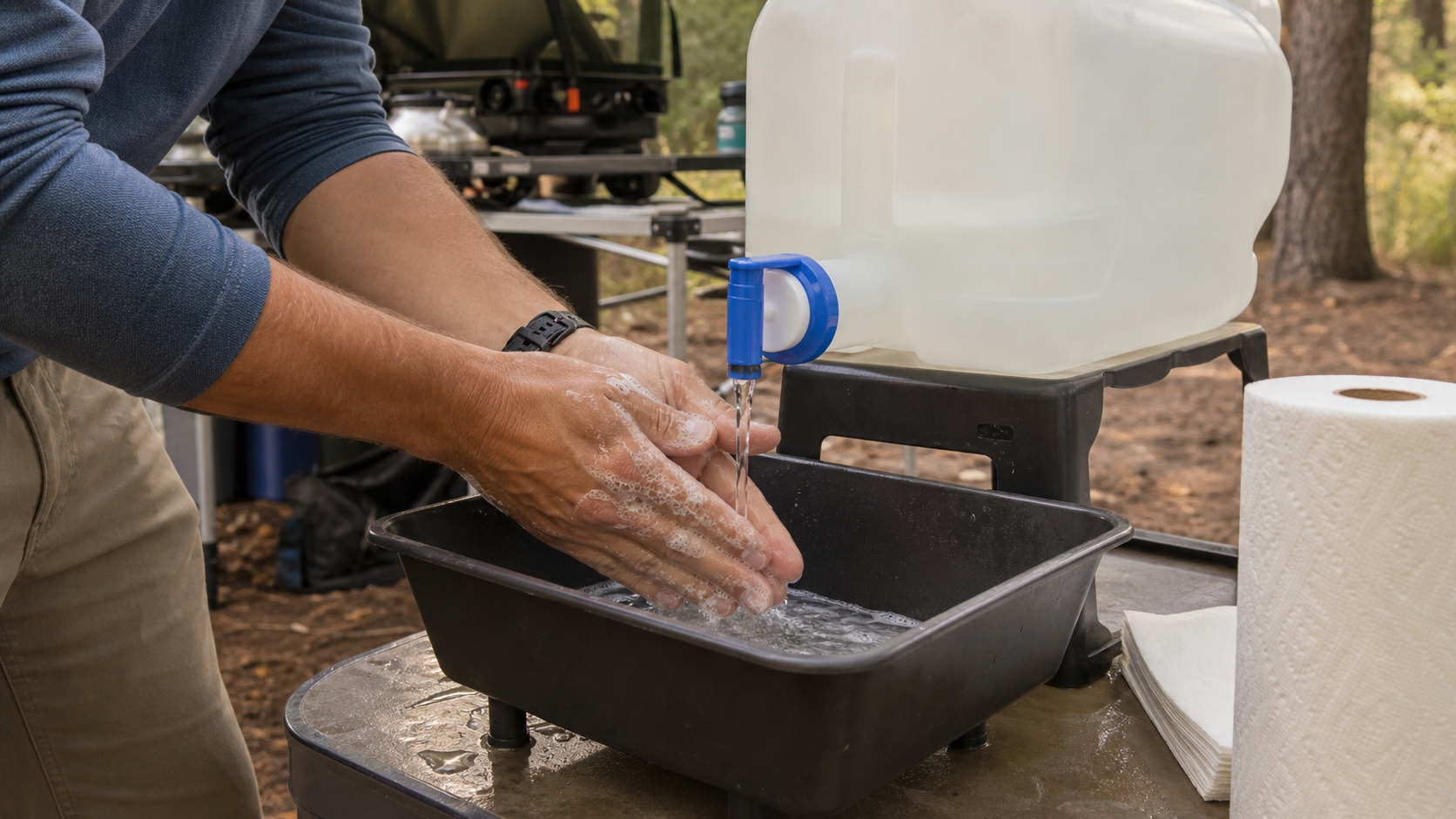
A station only works when everything needed is there. If soap lives in the toiletry tote, paper towels are blowing away on the picnic table, and the trash bag is clipped to a tree ten feet away, people skip steps. The best stations keep soap, towels, and a small trash drop point together so the wash-rinse-dry flow takes seconds.
That is also where hygiene overlaps with the rest of camp organization. A portable wash bag is useful for storing backup soap, toothbrushes, wipes, and kid cleanup items, but daily-use soap should stay at the station. The goal is not carrying gear back and forth. The goal is making the right behavior the easy behavior.
4. Plan for Gray Water Before You Turn the Spigot On
Gray-water handling is where a smart-looking station can become a campsite headache. In backcountry-style practice, Leave No Trace notes in The Skinny on Soap that even biodegradable soap should not go directly into lakes or streams, and that soap use still carries impact. In developed campgrounds, rules can be even stricter. Capitol Reef National Park, for example, requires dishwashing and bathing water to be collected and taken to designated gray-water sinks rather than dumped casually on the ground.
That means your station should be easy to empty cleanly. A removable tub, bucket, or basin beats a cute integrated tray that sloshes everywhere on the walk to disposal. If you camp at mixed public and private campgrounds, get in the habit of checking site-specific gray-water rules before the trip. The best station is not just easy to use; it is easy to dispose of responsibly.
5. Place the Station Beside the Cook Zone, Not Across Camp
Location matters more than features. If the station sits right beside the cook table, campers naturally use it before touching utensils, coolers, and shared snacks. If it sits on the far side of camp, it becomes something people promise to use and then bypass when burgers are already on the griddle.
This is especially important on busy meal-oriented trips. If you already run a coffee setup, stove area, and prep zone, keep the handwash station inside that same work triangle. It pairs naturally with a portable camping shower for larger hygiene routines, but the handwashing station itself should stay where food and shared touchpoints happen most.
REI’s camp kitchen checklist is helpful here because it treats wash items as part of the kitchen workflow rather than afterthoughts. That same kitchen-first mindset makes the station far more useful in real camp life.
6. Buy for Fast Reset, Easy Cleaning, and Off-Season Use
The right station should reset in under a minute after breakfast. If it takes too many clips, collapses awkwardly, or traps dirty water in hard-to-clean corners, it will start feeling like a burden. Smooth-sided jugs, wipe-clean stands, and simple basins are usually better than overdesigned systems with too many creases and accessories.
The best buys also work beyond camping. A stable handwashing station can be useful for beach days, tailgates, hunting camps, kids’ outdoor parties, muddy trailhead cleanup, and power-outage situations at home. That broader usefulness is often a better reason to spend more than chasing a luxury camp sink with features you will barely use.
Best Portable Hand Washing Station camping Setups by Trip Style
Affiliate disclosure: If you buy through the Amazon links below, BugfreeCamping may earn a commission at no extra cost to you.
Simple weekend car camping: Search Amazon for a portable hand washing station camping setup if you want an all-in-one solution with a stand and basin.
DIY family basecamp: A 5 gallon water container with spigot for camping often gives better capacity and simpler refills than tiny integrated sinks.
Compact cleanup zone: Add a collapsible camp sink when you need a basin that stores flatter between trips.
Low-mess gray-water handling: A collapsible camping bucket is useful for carrying or staging used water when your campground requires proper disposal at a sink or dump point.
Better soap-and-dry flow: A camp soap dispenser and paper towel holder setup can make a basic jug station much easier to use consistently.
For many campers, the smartest setup is still simple: one stable jug, one real basin, one soap bottle, one towel point, and one clear plan for gray water. Spend your effort on placement and workflow before adding gadgets. If your camp kitchen already has a modular cooking system, the same thinking from a compact camping cooking kit applies here too: fewer pieces can work better when each one earns its space.
Common Mistakes That Make a Good Station Annoying
The biggest mistake is underestimating how much the station will be used. A tiny jug may feel fine on paper, but it empties quickly when multiple people wash before every meal. The second mistake is making the station too clever. Pump-style units and collapsible frames can be great, but only if they are stable, easy to clean, and worth the cargo space.
Another common miss is treating handwashing like a bathroom-only task. In reality, the most valuable washes at camp often happen before cooking, after touching raw food packaging, after handling trash, and after kids have been picking up sticks, rocks, and marshmallow skewers all afternoon. CDC guidance on personal hygiene when water is limited is a useful reminder that temporary handwashing systems should still make soap, rinse water, and drying practical.
The last major problem is ignoring site rules and environmental impact. Some campers assume biodegradable soap means they can dump rinse water anywhere. That is not consistently true, and many established campgrounds prohibit that approach. A cleaner campsite is only a win if the cleanup routine is also responsible.
FAQ
How much water does a portable hand washing station camping need for a weekend trip?
For a small family, a dedicated 3- to 5-gallon hygiene jug is usually a comfortable starting point for a weekend, especially if cooking water is stored separately. Heavy handwashing habits, hot weather, and kids can push you toward the higher end fast.
Is hand sanitizer enough if I do not want to carry a wash station?
No. Hand sanitizer is useful, but soap and water are still the better choice for dirty hands and important meal-prep moments. The CDC specifically notes that sanitizer alone does not work well enough against norovirus to replace proper handwashing.
What is the best place to put a handwashing station at camp?
Right beside the cook and snack area is usually best. The closer the station is to the table, cooler, and stove, the more consistently everyone will use it before touching shared food and gear.
Do I need a freestanding sink or is a jug-and-basin setup enough?
For most campers, a stable jug-and-basin setup is enough and often easier to pack. Freestanding sinks make more sense for longer stays, organized family basecamps, or comfort-focused setups where height and hands-free flow matter more.
What should I do with gray water from handwashing?
Follow campground or land-management rules first. In many developed campgrounds, gray water needs to go into a designated sink or disposal point. In more primitive settings, use minimal soap and follow current Leave No Trace guidance for disposal away from water and camp.
Final Take
A portable hand washing station camping setup is worth it when it makes clean hands easier than dirty shortcuts. For most campers, that means a stable water jug, a basin big enough for actual rinsing, one-step access to soap and towels, and a gray-water plan that fits the campground rules. If you get those basics right, the station quietly improves every meal, every snack break, and every messy kid cleanup without adding much bulk to the trip.