
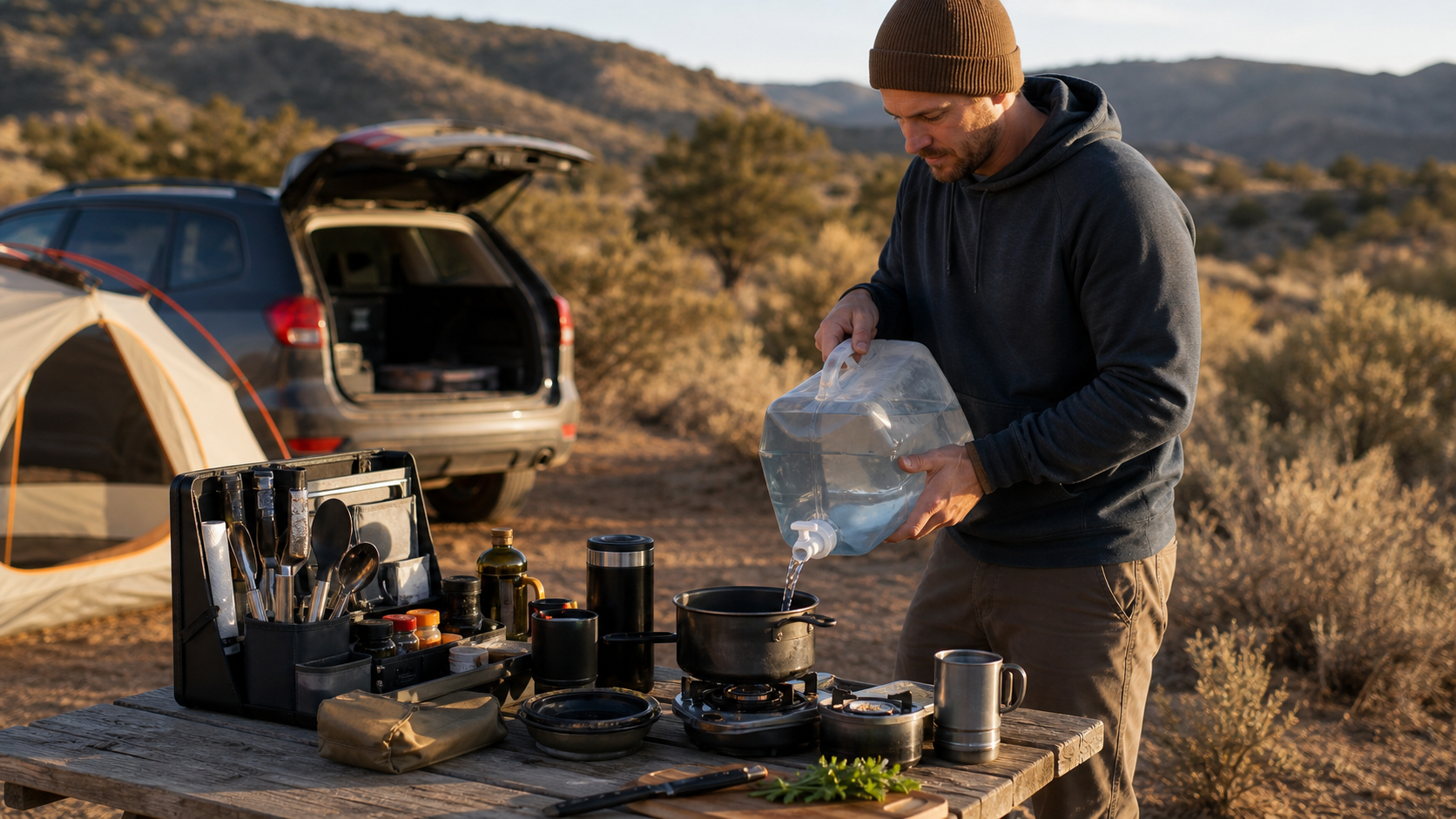
Collapsible water container camping setups solve a real problem: you need enough water for cooking, washing, and drinking at camp, but rigid jugs waste valuable cargo space on the drive in and on the drive home. The right soft-sided container can make a dry campsite feel more organized and easier to manage, but the wrong one can leak, pour badly, taste like plastic, or become annoying to clean after a single weekend.
Key Takeaways
- Capacity matters, but full-weight handling matters more once the container is loaded.
- A good spigot and a stable shape make camp use far easier than a bag that only stores water.
- Wide openings help with filling and cleaning, but clean handling still matters for drinking water.
- Collapsible water containers camping save space best at dry camps, basecamps, and overnights with limited vehicle room.
- The best models balance packability, durability, easy drying, and realistic campsite pouring control.
Table of Contents
The 6 Collapsible Water Container Camping Checks That Matter
The strongest buying angle here is simple: pick a container that works both when it is packed away and when it is full. A lot of soft water carriers look great when empty and frustrating when you actually need to pour, hang, refill, clean, or dry them. These six checks separate practical campsite tools from cheap emergency-bag plastic.
1. Choose capacity by real use, not maximum volume
More liters are not always better. A full 5-gallon container weighs a little over 40 pounds, which is enough to turn a flexible jug into an awkward dead weight if the handle or body shape is poor. For most weekend car campers, 8 to 12 liters is often easier to carry, refill, and store than one giant container. For families or dry camps, two medium containers usually work better than one huge bag because you can dedicate one to drinking and one to dish or hand-washing water.
This matters even more if your kitchen lives on one crowded table. A container that is too tall or too floppy steals prep room from your camp kitchen organizer and stove. If you already use a dedicated foldable camping table, you have more freedom to go larger without creating clutter.
2. Prioritize pouring control, not just storage
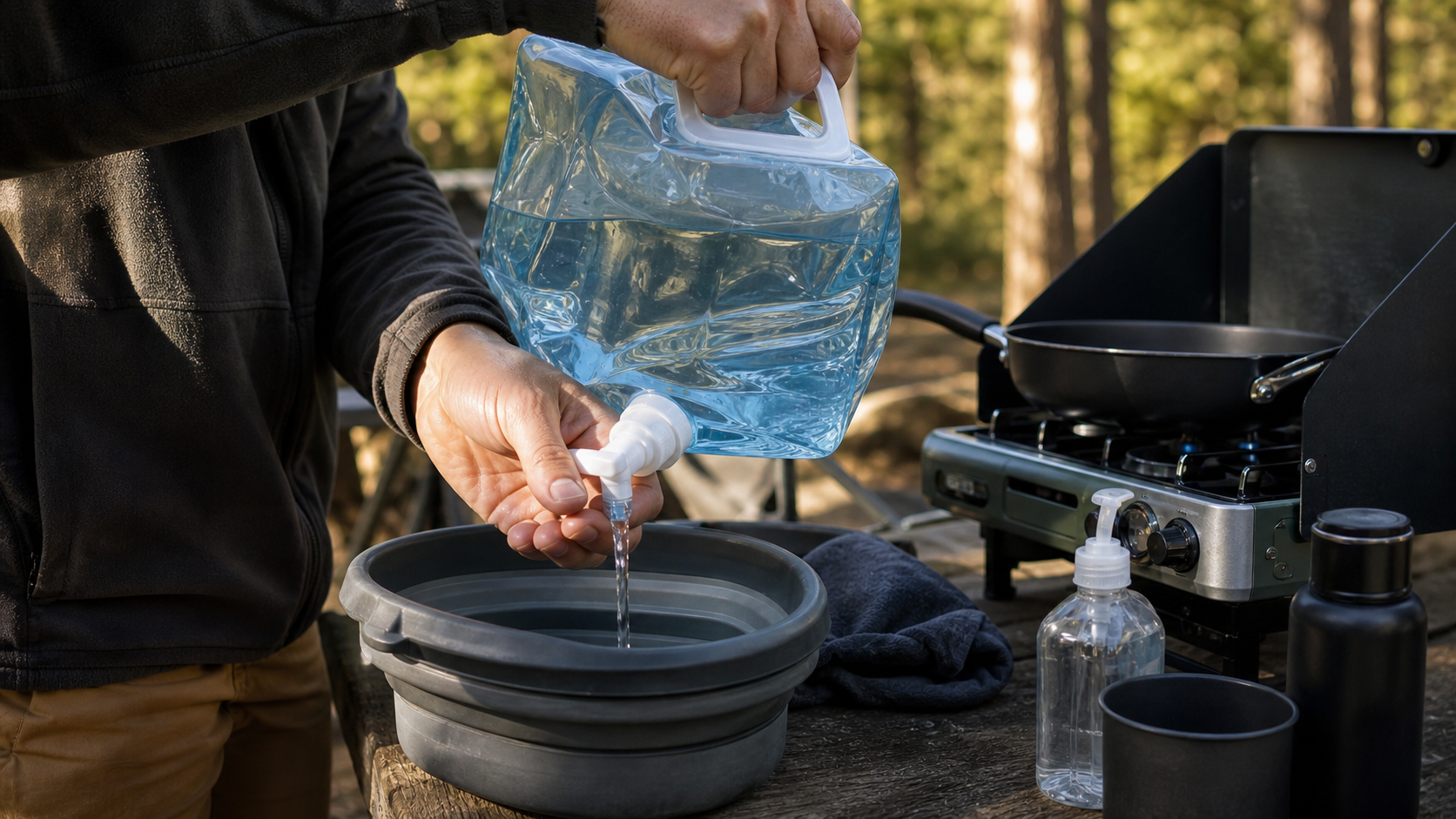
The difference between a good campsite water container and a mediocre one usually shows up at the spigot. Some soft containers store water well but become sloppy when you try to fill a bottle, wash hands, or top off a pot without soaking the table. Look for a controlled spigot or cap system, a handle you can grip one-handed, and enough structure that the container does not collapse into itself the moment the volume drops.
Sea to Summit’s Watercell X is a good example of the features worth watching: a wide mouth for filling and drying, flow control for dispensing, welded attachment points, and a shape that stays more usable under load than an unstructured bargain bag. Those details matter much more in camp than a flashy liter number on a product card.
3. Check material, seams, and drying behavior
Soft containers win on packability, but they demand better material choices than rigid jugs. The useful keywords are food-grade lining, reinforced handles, and welded seams rather than stitched construction. Sea to Summit’s product specs also highlight BPA- and PVC-free materials, which is worth paying attention to when the container will sit in a warm vehicle or campsite for hours.
The less obvious issue is drying. A container with a narrow body and awkward opening can stay damp and stale long after the trip ends. That is where wide-mouth designs help. The CDC’s guidance on safe water storage focuses on keeping containers clean and protected from contamination, and that principle matters at camp too. If the inside is hard to rinse and dry fully, it is easier for tastes, odors, or grime to build up between trips.
4. Match the container to your campsite workflow
The best water container is the one that fits how you actually use camp water. If your trips are mostly roadside campgrounds with potable water nearby, smaller collapsible carriers are ideal for short hauls from the spigot to camp and for reducing empty-bulk on the way home. If you cook more involved meals, a shaped container with a low spigot makes dishwashing and pot refills easier than lifting a heavy jug.
That is also why soft carriers pair naturally with a lightweight kitchen system. If your cooking setup is already compact, such as a compact camping cooking kit, a collapsible water container camping helps the whole station stay modular. If you care more about hygiene and cleanup, it can sit beside a portable camping shower or wash station without wasting space when empty.
5. Keep drinking-water safety separate from utility-water convenience
This is the check most shoppers skip. A collapsible water container camping can be perfect for washing, cooking, and carrying camp water without being the right vessel for untreated backcountry water or long-term storage. CDC guidance on water treatment while hiking, camping, and traveling is clear: if you are unsure whether a water source is safe, boiling is the best option, and the next-best option is to filter and then disinfect.
That means a soft container is not a magic safety upgrade by itself. If you are filling from a questionable source, the treatment method matters more than the container shape. At established camps, the bigger risk is contamination after filling. Use clean hands, keep the cap and spigot clean, and avoid dipping dirty mugs or utensils near the opening. For mixed-use camps, I like one container reserved for drinking water and another for utility tasks like dishwashing or rinsing muddy gear.
6. Make sure it solves a space problem a rigid jug cannot
The last check is honest self-audit. If you have plenty of cargo room and always camp near a faucet, a rigid jug may still be simpler. But for small SUVs, dry camps, beach trips, and basecamps where space gets tight fast, soft-sided storage wins because it shrinks when empty and packs around other gear on the drive in. The Bureau of Land Management’s general camping guidance is a useful reminder that self-sufficiency is part of many public-land camping setups, especially where amenities are limited.
That cargo efficiency matters beyond the kitchen too. When your vehicle is already carrying a cooler, bedding, a portable camping fridge, or extra organization gear, collapsing empty water storage down flat is a real advantage, not a gimmick.
Collapsible vs. Rigid Water Jugs
Rigid jugs still have real strengths. They stand up more easily, feel less floppy when full, and often pour more predictably. But they also consume the same space when empty as when full. Collapsible water containers camping are better when vehicle space is the limiting factor, when you need backup water capacity only part of the time, or when you want separate containers for drinking and utility water without dedicating half the cargo area to plastic cubes.
| Feature | Collapsible Container | Rigid Jug |
|---|---|---|
| Empty storage | Excellent for tight vehicles and return trips | Always bulky |
| Stability when full | Varies a lot by design and internal baffling | Usually stronger and easier to set down |
| Pouring and spigot control | Great on better models, frustrating on cheap ones | More consistent |
| Cleaning and drying | Can be harder if opening is small | Usually easier |
| Best use case | Dry camps, modular camp kitchens, space-limited vehicles | Basecamps with room to spare, simpler short-haul storage |
For many campers, the best move is not choosing only one style. It is using a rigid jug at home or for transport-heavy trips and a collapsible water container camping when you want flexible storage around a compact campsite. If you also pack a separate hygiene kit or portable wash bag, the modular approach usually feels cleaner and easier to manage.
Affiliate disclosure: If you buy through the product search links below, we may earn a commission at no extra cost to you.
- Collapsible water container camping options on Amazon
- Foldable water jug camping options on Amazon
- Camp water container with spigot options on Amazon
- BPA-free collapsible water jug options on Amazon
- Camp water storage container options on Amazon
Common Buying Mistakes
The first mistake is buying on volume alone. Campers see 15 or 20 liters and think bigger is safer, then discover the container becomes unwieldy when full or impossible to pour cleanly. The second mistake is ignoring fill and drying access. A water bag that is hard to clean is a water bag you eventually stop trusting.
The third mistake is using one container for every purpose. Drinking water, handwashing water, and dishwater do not need to share the same container. The fourth is assuming “food safe†means “ready for any source.†It only describes the container material. It does not mean untreated stream, lake, or faucet water is automatically safe. The National Park Service’s camp cooking guidance also reinforces the importance of handwashing and proper cleanup, which is much easier when the water setup is deliberate instead of improvised.
Last, avoid weak handles and bargain spigots. A flexible container that leaks only when lifted is especially annoying because it often fails once everything around it is already packed into camp. If you mostly camp in dry or self-sufficient setups, that is the wrong place to save a few dollars.
FAQ
What size collapsible water container is best for camping?
For many weekend campers, 8 to 12 liters is the easiest range to carry and use. Larger sizes can work well for families or dry camps, but they become much heavier and harder to pour once full.
Are collapsible water containers safe for drinking water?
They can be, if they use food-safe materials and you keep them clean. The container itself does not make questionable water safe, so untreated water still needs proper treatment before you drink it.
Is a spigot worth it on a collapsible camp water container?
Yes, especially for camp kitchens, handwashing, and bottle refills. A good spigot improves control and keeps you from lifting and tilting a heavy flexible container every time you need a little water.
When is a rigid jug better than a collapsible one?
A rigid jug is often better when you have plenty of vehicle room, want maximum stability on the table, or need a container that is especially easy to clean and dry between trips.
Final Take
A good collapsible water container camping should do more than fold flat. It should make camp life easier when full, not just easier to pack when empty. If you focus on the six checks above, you will end up with a container that fits your vehicle better, pours more cleanly, dries more thoroughly, and supports a more useful campsite water routine overall. For most campers, that is the whole point: less wasted space, fewer awkward water runs, and a cleaner kitchen setup once you arrive.