
magnetic tent light options can make a tent, hatchback camp kitchen, or picnic table far easier to use after dark, but the wrong one is either too harsh, too dim, or dead before bedtime.
The best models are not just bright. They mount securely, spread light where you actually need it, dim low enough for shared campsites, and stay simple to recharge and pack. That matters more than a flashy lumen claim, especially in small tents and busy campgrounds.
Key Takeaways
- Choose a magnetic tent light with a true low mode first, not just a big max-lumen number.
- Magnet strength, clip shape, and diffuser quality matter more at camp than peak brightness.
- Warm or red modes are far better for late-night tent use and campground courtesy.
- Rechargeable lights are convenient only when runtime on low and medium is realistic.
- Magnetic lights work best on vehicles, steel tables, and camp boxes, not every tent pole.
Table of Contents
Why Campers Are Switching to Magnetic Tent Lights
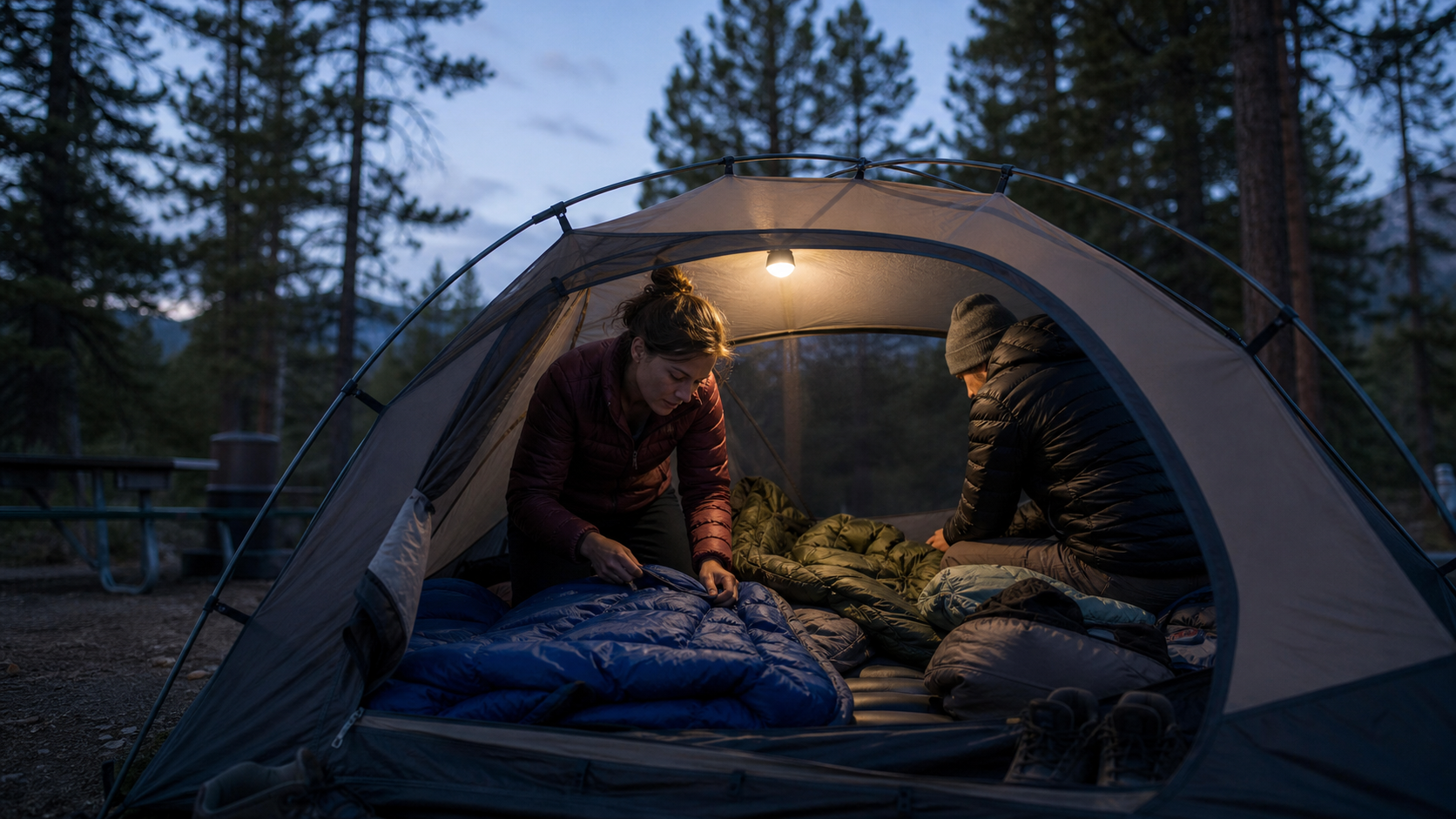
A good clip on tent light solves a basic camping problem: most campers do not need floodlight-level brightness inside a tent. They need controllable light that stays off the floor, keeps both hands free, and moves quickly from tent ceiling to hatchback door to camp table.
That is where magnetic lights beat many mini lanterns. They stick to steel table legs, tailgates, stove boxes, cooler carts, or cot frames without a cord, and the best ones still include a clip or hook for tents with aluminum or fiberglass poles.
Practical use matters more than marketing language. REI’s lantern guidance focuses on brightness, runtime, and beam usefulness, while the National Park Service reminds campers to keep night lighting to a minimum. See the NPS guidance on camp etiquette and the REI overview on choosing a camp lantern.
If you already carry a bigger area light, pair this guide with our articles on a rechargeable camping lantern, headlamp rechargeable options, and camping string lights battery setups for more layered campsite lighting.
6 Smart Checks Before You Buy a Magnetic Tent Light
These six checks separate a useful magnetic tent light from a gadget that lives in your gear bin after one trip.
1. Start With Low-Mode Usability, Not Max Lumens
Most campers do not need a tent light blasting 500 lumens into a nylon wall three feet from their face. They need a low setting for reading, changing clothes, or stepping outside without waking everyone up. A medium setting matters for cooking or card games. High mode is mostly for short setup bursts.
The sweet spot is a light with a truly usable low mode. Lights with only high and strobe modes are usually annoying in real camp use.
2. Check the Magnet and the Backup Mounting Method
Many tent poles are aluminum or fiberglass, so the magnet alone is rarely enough. The best designs add a clip, loop, carabiner, hinged hook, or flat base.
Magnetic mounting is excellent on SUVs, truck beds, camp kitchen boxes, steel lantern poles, and some folding furniture. It is far less useful in small backpacking tents unless the light also clips to webbing or hangs from a gear loft. Zion National Park specifically notes that lanterns and string lights should not be hung from trees or park structures, which is another reason to favor self-contained mounting options.
3. Prioritize Diffused Light Over a Harsh Spotlight
A frosted diffuser or broad side panel makes a magnetic tent light much more livable. Spot beams are fine for finding a zipper pull or bear box latch, but inside a tent they create glare and sharp shadows. A diffused lens spreads softer light across sleeping pads and camp bins.
Warm white is usually more comfortable at camp than icy blue-white LEDs. If the light has a red mode, that is a real advantage for late-night use. The National Park Service explains that dim red light helps preserve night vision better than bright white light. Their article on red flashlights and night vision is worth a quick read if you camp in very dark places.
4. Read Runtime Claims With Healthy Skepticism
Runtime claims can look impressive until you notice they refer to the lowest mode, not the setting you will actually use for dinner, cleanup, or a rainy evening under the vestibule. Check whether the brand lists runtime by mode. If it only gives one vague number, assume the usable runtime on medium is shorter than you want.
Rechargeable lights are convenient for car camping and van setups, but they need a charging plan. Our guides on a portable wireless charger and 30W portable charger can help if your kit is already running heavy on USB gear.
5. Make Sure It Can Handle Moisture, Dust, and Rough Packing
Tent lights live a rough life. They bounce around in bins, get dropped in dirt, and run during damp shoulder-season trips. You do not need a dive light, but you do want basic weather resistance, protected charging ports, and a body that will not crack next to cook gear.
If you camp in rain-prone regions or leave lights clipped under an awning, sealed buttons and covered USB-C ports are worth paying for. The FAA’s current lithium battery guidance also notes that power banks and spare lithium batteries should be protected from damage and short-circuiting during travel. That same habit helps in camp bins and vehicle drawers. The FAA summary on lithium batteries and power banks is a good reminder.
6. Buy for the Job: Tent Reading, Camp Cooking, or Vehicle Use
A compact light for reading in a two-person tent is not automatically the best light for a truck hatch meal prep station. Match the light to the job. Smaller puck-style lights are great for interior tent use. Bar-shaped or side-emitter lights are often better for cooking and gear sorting.
Be honest about bugs too. Bright white light attracts attention and can make warm evenings less comfortable. If insects are a recurring headache where you camp, pair restrained task lighting with dedicated solutions like our guides to a bug repellent camping device or a rechargeable bug zapper lantern.
| Camping Use | Best Light Style | What Matters Most | Common Buying Mistake |
|---|---|---|---|
| Tent reading and bedtime | Small diffused puck or clip light | Low mode, warm light, red mode | Buying the brightest light available |
| Vestibule or camp kitchen prep | Magnetic bar light or swiveling task light | Medium runtime, wider beam, stable mount | Ignoring shadowing and glare on food prep surfaces |
| SUV hatch or van setup | Magnetic rechargeable utility light | Strong magnet, USB-C charging, durability | Assuming any magnet is strong enough on a sloped panel |
| Backpacking backup light | Tiny clip light or micro lantern | Weight, packability, simple controls | Carrying a heavy rechargeable light instead of a headlamp |
If you want to shop the category quickly, start with these broad searches and compare shape, diffuser, charging port design, and mounting options before you buy:
Affiliate disclosure: If you buy through one of the Amazon links below, Bug Free Camping may earn a small commission at no extra cost to you.
- Shop magnetic tent light options on Amazon
- Compare clip on tent light designs
- Browse rechargeable camp lantern alternatives
- See red light headlamp options for late-night use
- Find compact power banks for rechargeable camp lights
Best Places to Mount One at Camp
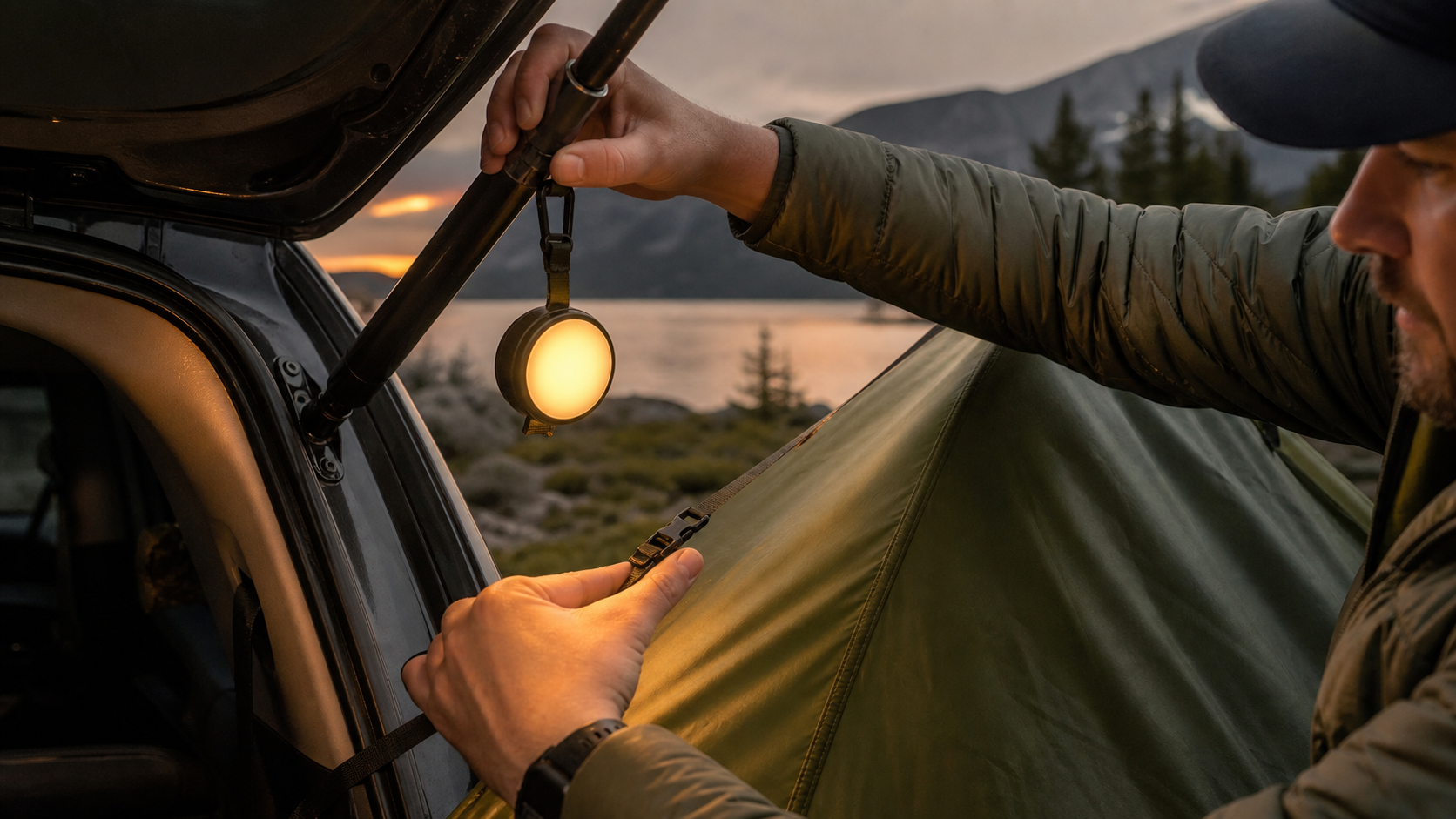
The most useful spot is usually not the center of the tent ceiling. For reading, mount the light slightly behind shoulder level so it washes the roof and reflects softer light downward. For gear sorting, angle it across the floor instead of straight down.
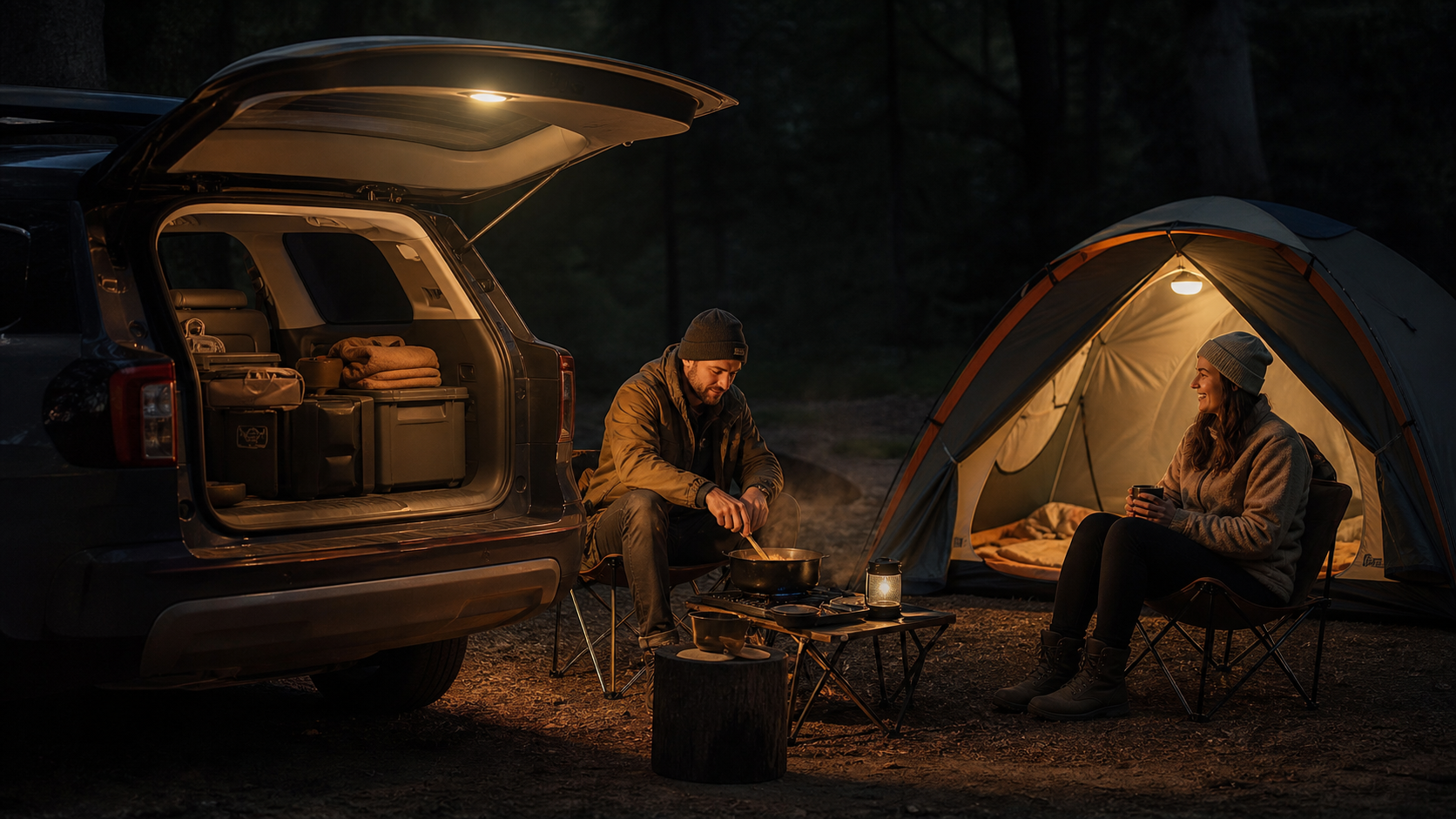
Vehicle campers get the biggest benefit. A magnetic tent light is excellent under a lifted tailgate, on a steel bumper step, or inside a truck bed while organizing bins. It also works well on a folding table frame, cot leg, or camp kitchen panel if the magnet is strong.
Just stay campsite-aware. Capitol Reef’s campground regulations tell visitors to keep night lighting to a minimum and note that artificial light should be limited to personal route-finding or minimum-impact camping. In other words, aim the light where work is happening, not into neighboring tents or up into the trees. See the NPS notes on campground lighting and dark-sky courtesy.
Common Mistakes and Realistic Drawbacks
The biggest mistake is assuming one magnetic light can replace every other camp light you own. It usually cannot. A magnetic tent light is best as a close-range task light, not your trail light or best whole-campsite lantern.
The second mistake is overlooking campsite materials. If your tent poles are aluminum and your camp furniture is fabric and plastic, the magnetic part is less useful than the listing suggests. That does not mean the light is bad. It means the clip, hook, or stand becomes the deciding feature.
Another common mistake is charging carelessly. The U.S. Fire Administration recommends paying attention to battery condition, using devices according to instructions, and stopping use if batteries overheat or show damage. That matters for small USB camp lights that get tossed into hot vehicles or charged from sketchy cables all season long. Their battery fire safety page is a good refresher on safer charging and storage habits.
Real drawbacks are worth naming too:
- Magnets add convenience, but also weight compared with the lightest micro lanterns.
- Very compact bodies can have tiny buttons that are frustrating with cold fingers.
- Cheap diffusers often create glare, especially inside light-colored tents.
- Many small rechargeable lights have sealed batteries, so long-term service life is limited.
- Some magnets are strong enough for flat steel, but slide on angled or dusty surfaces.
If your goal is mostly ambient comfort rather than task lighting, a lantern or string light setup may simply feel better. If your goal is hands-free walking or late-night bathroom trips, a headlamp is still the better primary tool.
Helpful Add-Ons and Smart Alternatives
For many campers, the smartest setup is layered rather than all-in-one. Use a magnetic tent light for inside-the-tent tasks, a rechargeable lantern for meals and cleanup, and a headlamp for walking.
A few practical pairings work especially well:
- A small red-mode headlamp for moving around camp without blasting white light.
- A larger diffused lantern for group meals or family tents.
- A compact power bank if you camp multiple nights away from hookups.
- A gear organizer or side table so the light is solving a real workflow problem, not just adding gadget clutter.
That is why related gear matters. If your sleep setup still feels messy after dark, a better lighting plan works well with organized camp furniture and nighttime storage, not instead of them.
FAQ
Is a magnetic tent light bright enough to replace a lantern?
Usually no. A magnetic tent light is best for close task lighting inside a tent, under a hatch, or at a camp table. A lantern is still better for lighting a wider shared area.
Do magnetic tent lights work on all tent poles?
No. Many tent poles are aluminum or fiberglass, so the magnet may not grab at all. A clip, hanging loop, or hook is just as important as the magnet itself.
Is red mode actually useful for camping?
Yes. A dim red mode is helpful for preserving night vision, moving around camp politely, and avoiding the harsh glare of white light inside a tent at bedtime.
What is the biggest buying mistake with a clip on tent light?
The biggest mistake is chasing max brightness instead of low-mode comfort, runtime, and mount flexibility. In a tent, too much light is often worse than too little.
Are rechargeable magnetic tent lights reliable for weekend trips?
Yes, if they have realistic runtime on medium and low settings and you start the trip fully charged. For multi-night trips, a small backup power bank is a smart safety net.
Conclusion
A magnetic tent light is worth carrying when it solves a specific campsite job better than a lantern or headlamp. Focus on six things: usable low mode, backup mounting, a soft diffuser, honest runtime, weather resistance, and a shape that matches how you camp. Get those right and the light becomes one of those small comfort upgrades you use on every trip.
If you camp from a vehicle, cook after dark, or want a cleaner tent setup, this is a category worth buying carefully instead of cheaply. The right light adds comfort without adding glare, clutter, or one more dead gadget by Saturday night.