
portable camping coffee maker choices get a lot easier when you focus on brew quality, packability, cleanup, and how your coffee routine actually works at a real campsite.
Key Takeaways
- A simple brewer you will actually use every morning is usually better than a clever gadget with too many parts.
- Cleanup speed matters more than people expect, especially when water is limited and you still have breakfast dishes to handle.
- Single-cup brewers are great for solo campers, but couples and group sites often need a faster batch solution.
- Wind, stove stability, and hot-water control affect camp coffee quality almost as much as the brewer itself.
- The best camp coffee maker is the one that tastes good, packs small, survives repeated trips, and does not turn mornings into a chore.
Table of Contents
Why Campers Upgrade Their Coffee Setup
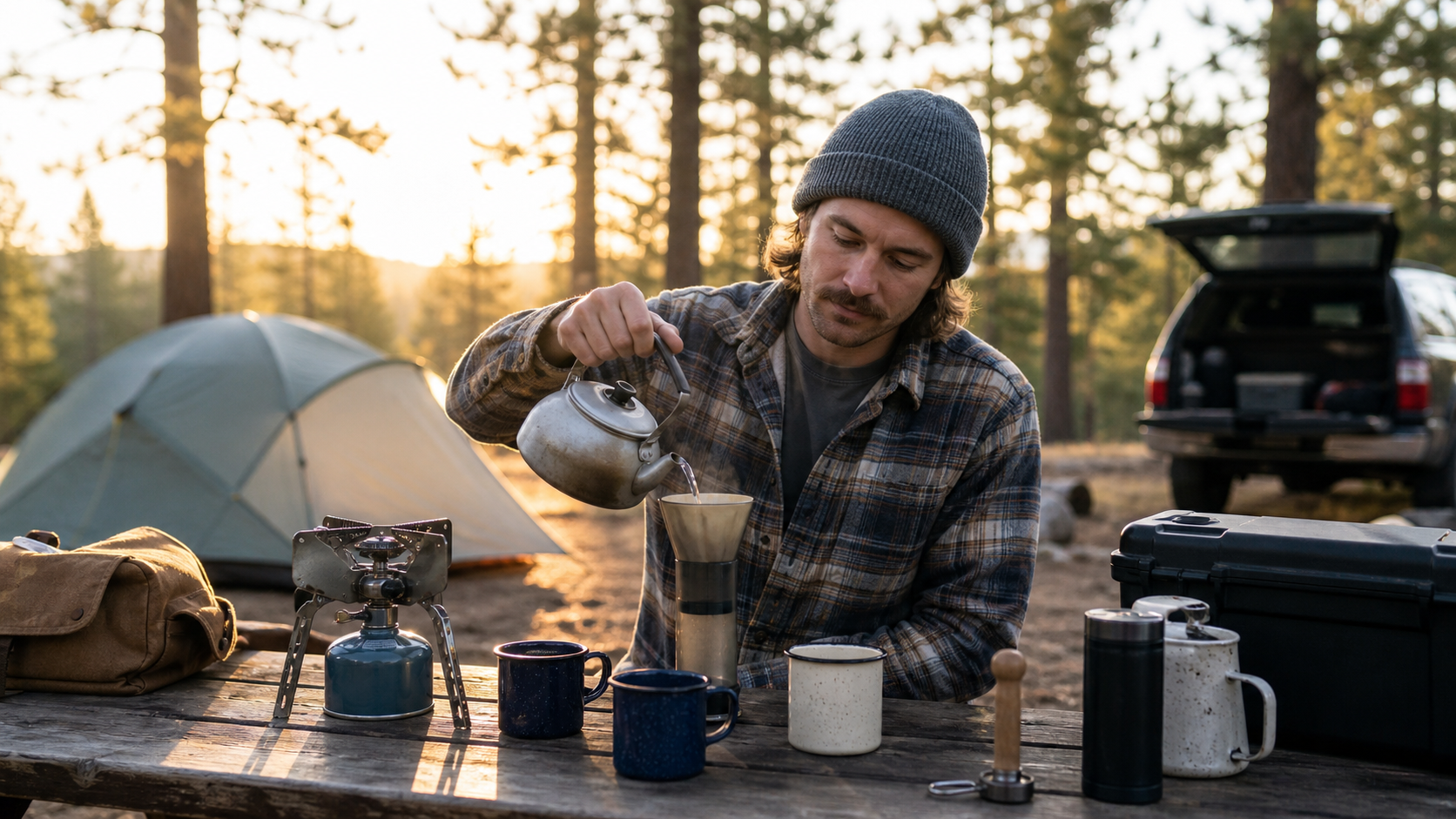
Campers still use instant packets and old percolators, but more of them now want a cup that tastes better without carrying a bulky kitchen bin. That is why compact drippers, travel presses, and low-mess brewers keep gaining traction.
REI’s guide to the best camp coffee makers and OutdoorGearLab’s 2025 roundup both point to the same practical lesson: the best brewers are not just tasty, they are portable, easy to clean, and simple to use before you are fully awake.
A great camp coffee setup should fit your stove, water situation, group size, and available packing space, not just your coffee preferences at home.
Portable Camping Coffee Maker: The 6 Checks That Matter
1. Match the brew style to the trip, not your kitchen habits
The first question is not brand. It is method. A solo tent camper making one mug before sunrise needs something different from a family at a state-park site trying to pour three hot cups while breakfast is already moving.
| Brew Style | Best For | Packed Bulk | Cleanup | Main Downside |
|---|---|---|---|---|
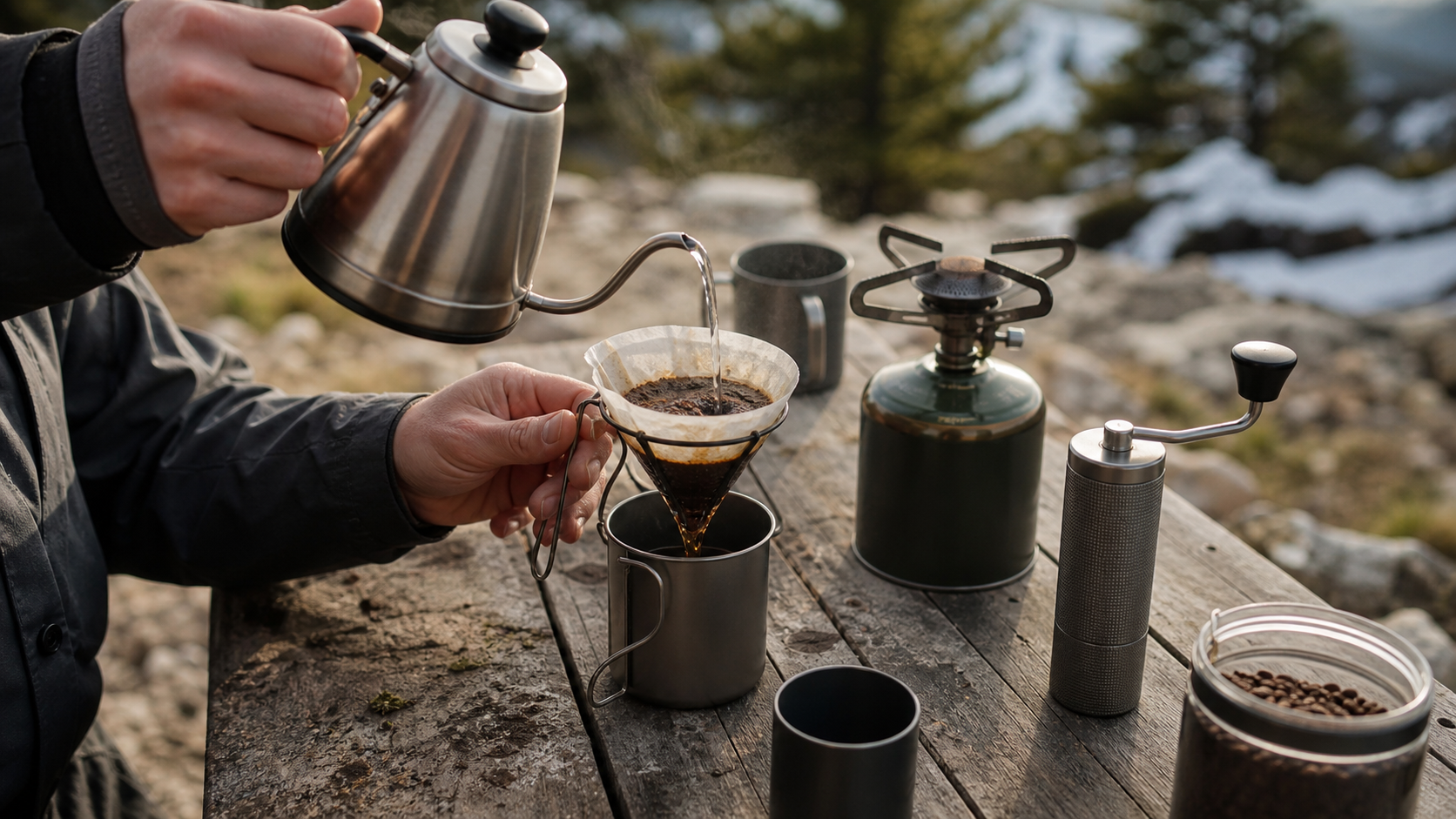
| Pour-over dripper | Campers who want light weight and clean flavor | Low | Easy if you pack filters well | Needs a steady pour and decent kettle control |
| AeroPress-style brewer | Solo or duo campers who care most about taste | Medium | Fast and low-water | Usually one serving at a time |
| French press | Car camps and slower breakfasts | Medium to high | Messier grounds cleanup | Bulkier and harder to clean well |
| Moka pot or camp espresso maker | Campers who want strong coffee on a stove | Medium | Moderate | More heat-sensitive and less forgiving |
If you want a forgiving, compact option, a press brewer often makes sense. The AeroPress Go travel coffee maker is a good example of why: compact packing, fast cleanup, and reliable single-cup brewing.
2. Count the full kit, not just the brewer weight
Product listings love to advertise a light brewer while ignoring the rest of the setup. A compact device still becomes annoying if it needs a separate kettle, filters, grinder, storage pouch, and two extra cups just to make one decent mug.
Lay out the full kit before you buy: brewer, mug, filter, coffee storage, hot-water tool, and cleanup items. If those pieces do not nest well, the setup will feel bigger than the spec sheet suggests. The same logic shows up in our compact camping cooking kit guide: fewer loose parts means faster mornings.
3. Favor fast cleanup and easy grounds disposal
Cleanup is where a lot of coffee gear stops feeling charming. Wet grounds stick to filters, presses trap sludge, and a windy campsite can turn a tidy dump-out into a muddy mess. If water is limited, cleanup matters almost as much as taste.
The National Park Service’s Cooking in Camp guidance is a good reminder that cooking and cleanup should stay efficient and controlled. That is why many campers end up happier with brewers that eject a compact puck, use a paper filter, or rinse clean in seconds.
4. Match batch size to your actual campsite routine
Single-cup systems are excellent when you are alone or the only coffee drinker. They are less fun when two people want full mugs immediately or a group is waiting on one tiny brewer.
Think through your real pattern: one fast cup at dawn, two mugs with breakfast, or several servings during a slow car-camping morning. If your setup already spreads across a wider kitchen footprint, a foldable camping table helps keep hot water, mugs, and grounds from competing with everything else.
5. Think through heat source, wind, and water control
Camp coffee quality depends on hot water more than most campers realize. REI’s camp brewing guide explains that recipe, grind size, and water control all matter if you want a consistently better cup. At camp, those basics get harder because stoves run differently and wind can make a controlled pour feel clumsy.
The U.S. Forest Service also stresses portable-stove safety in its fire guidance. For coffee, the practical takeaway is simple: if your stove is tippy, your table wobbles, or your burner struggles in crosswind, a delicate brew setup becomes much less enjoyable.
A good camp coffee maker should still work when the morning is cold, your hands are stiff, and the breeze is moving across the picnic table.
6. Buy for durability and low-fuss use, not novelty
Camping coffee gear gets banged around beside stoves, utensils, storage bins, and wet dish gear. Plastic can be light and tough, stainless can handle abuse but adds weight, and glass usually makes less sense unless you camp gently.
The smartest buy is usually the brewer that survives repeated use without becoming precious. Look for replaceable parts, durable seals, and shapes that fit into the rest of your kit. Our portable camping fridge guide makes the same point from another angle: camp comfort gear has to earn its space through dependable reuse.
Common Buying Mistakes
Most regrets in this category are not about bad coffee. They are about mismatch. These mistakes show up over and over:
- Choosing a brewer that makes beautiful coffee at home but feels fiddly when the campsite is cold or windy.
- Buying a glass or bulky press for a trip style that is already tight on storage space.
- Ignoring cleanup until the first morning when water is limited and the grounds are everywhere.
- Picking a one-cup system for two heavy coffee drinkers who both want coffee fast.
- Forgetting that filters, grinders, kettles, and mugs are part of the real kit size.
- Using a delicate brew method on an unstable stove or cramped picnic-table corner.
The honest downside is that even good brewers become dead weight if they do not match your trip rhythm. For camp use, convenience is often what makes good coffee repeatable.
Best Setups by Camping Style
For solo weekend tent campers, a lightweight dripper or compact press is usually the sweet spot. It keeps the kit small, cleanup manageable, and brew quality far ahead of instant coffee.
For car campers and van campers, slightly larger gear can be worth it if it improves consistency. A sturdier kettle, a better mug, or a calmer early-morning setup with battery-powered camping string lights may be worth the space when you are not carrying everything on your back.
If you camp with kids or a larger group, think beyond the brewer. A tidy kitchen station and a simple portable wash bag for soap, cloths, and drying pieces can keep the coffee corner from blending into the rest of the dish mess.
Affiliate disclosure: If you buy through the Amazon links below, BugfreeCamping may earn a commission at no extra cost to you.
- Shop portable camping coffee maker options on Amazon
- Shop AeroPress Go travel coffee makers on Amazon
- Shop camp pour-over drippers on Amazon
- Shop camping French press coffee makers on Amazon
- Shop stainless camp kettles on Amazon
Practical Add-Ons That Actually Help
The best coffee upgrades are usually boring: a pouch that keeps filters dry, a kettle that pours predictably, and a mug that is pleasant to hold in cold weather. Those details improve the experience more than a novelty brewer with too many clips and hinges.
If you already use powered camp comforts, a simple coffee station can fit neatly into a broader morning setup that includes lighting, refrigeration, and charging. That overlaps naturally with our solar camping generator coverage: good camp systems feel calm because the pieces work together.
FAQ
What is the best portable camping coffee maker for most campers?
For most campers, the best choice is a compact single-cup brewer that balances taste, quick cleanup, and low packed bulk. A simple pour-over or AeroPress-style setup covers that sweet spot well.
Is a camp coffee maker better than instant coffee?
If you care about taste, yes. A good brewer gives you fresher flavor and more control, but instant coffee still wins on sheer simplicity for ultralight or very rushed trips.
Are French presses good for camping?
They can be, especially for car camping and slower mornings, but they are bulkier and usually messier to clean than simpler single-cup brewers.
How do I keep camp coffee cleanup easy?
Use a brewer with simple grounds disposal, keep a small trash bag or grounds container nearby, and avoid systems that need lots of rinsing when water is limited.
What is the biggest mistake when buying a portable camping coffee maker?
The biggest mistake is buying for novelty instead of routine. If the brewer does not match your trip style, group size, and cleanup tolerance, it will stay packed.
Sources
- REI: Best Camp Coffee Makers
- REI: How to Make Great Coffee at Camp
- OutdoorGearLab: Best Camping Coffee Maker
- National Park Service: Cooking in Camp
- U.S. Forest Service: Fire Safety and Portable Stove Use
- AeroPress: AeroPress Go Travel Coffee Press
Bottom Line
Portable camping coffee maker shopping goes better when you stop chasing gimmicks and start building around real camp mornings. Pick a brew method that suits your trip style, count the full kit, prioritize easy cleanup, and be honest about how many people need coffee and how fast. Do that, and you end up with a setup that delivers better coffee without becoming one more campsite hassle.