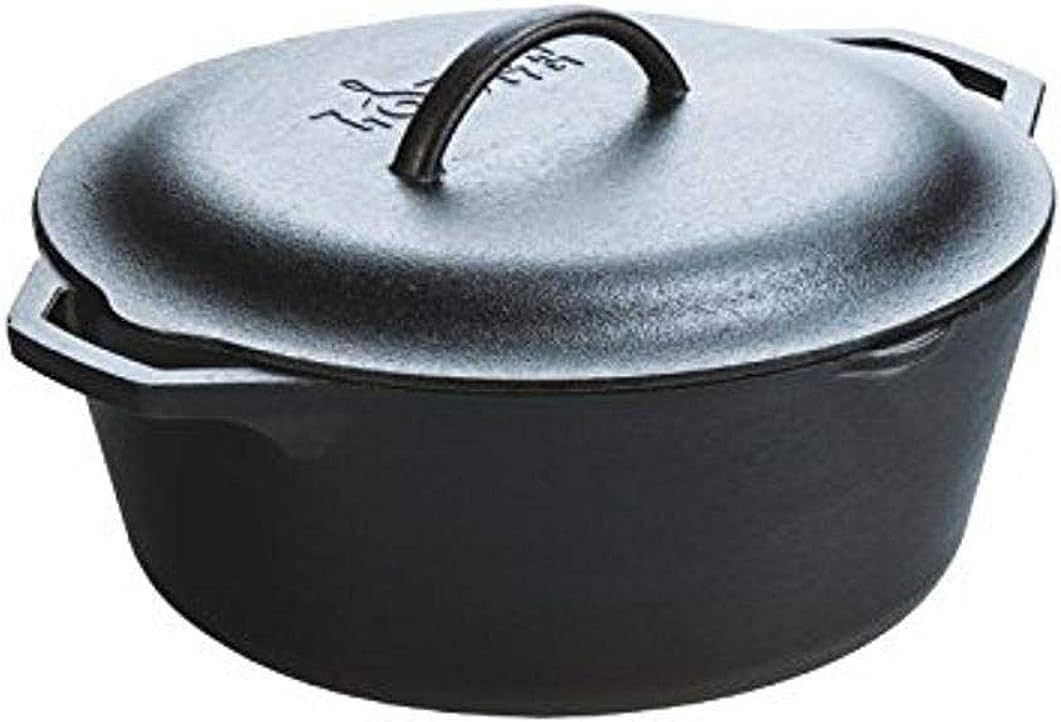
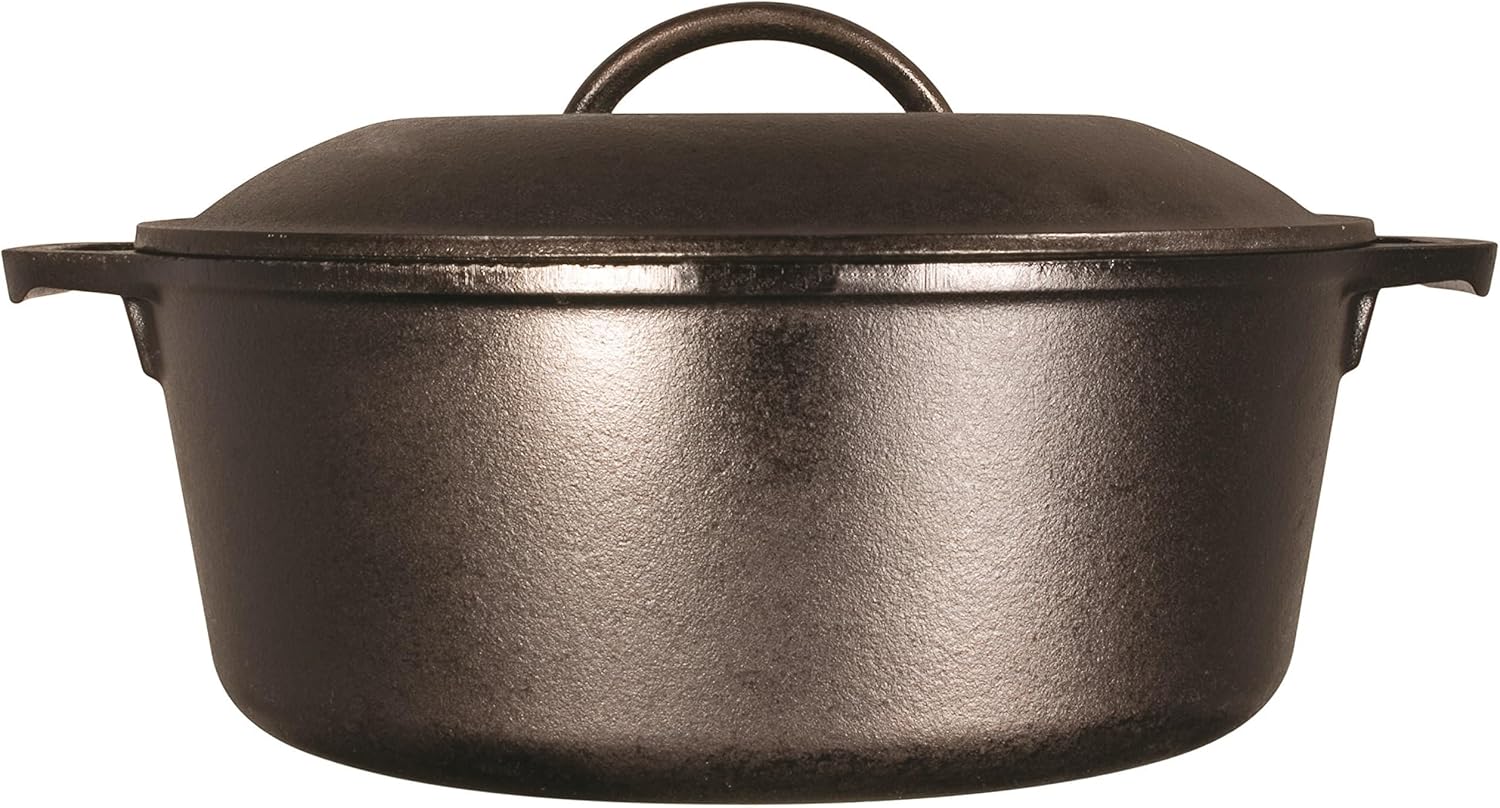
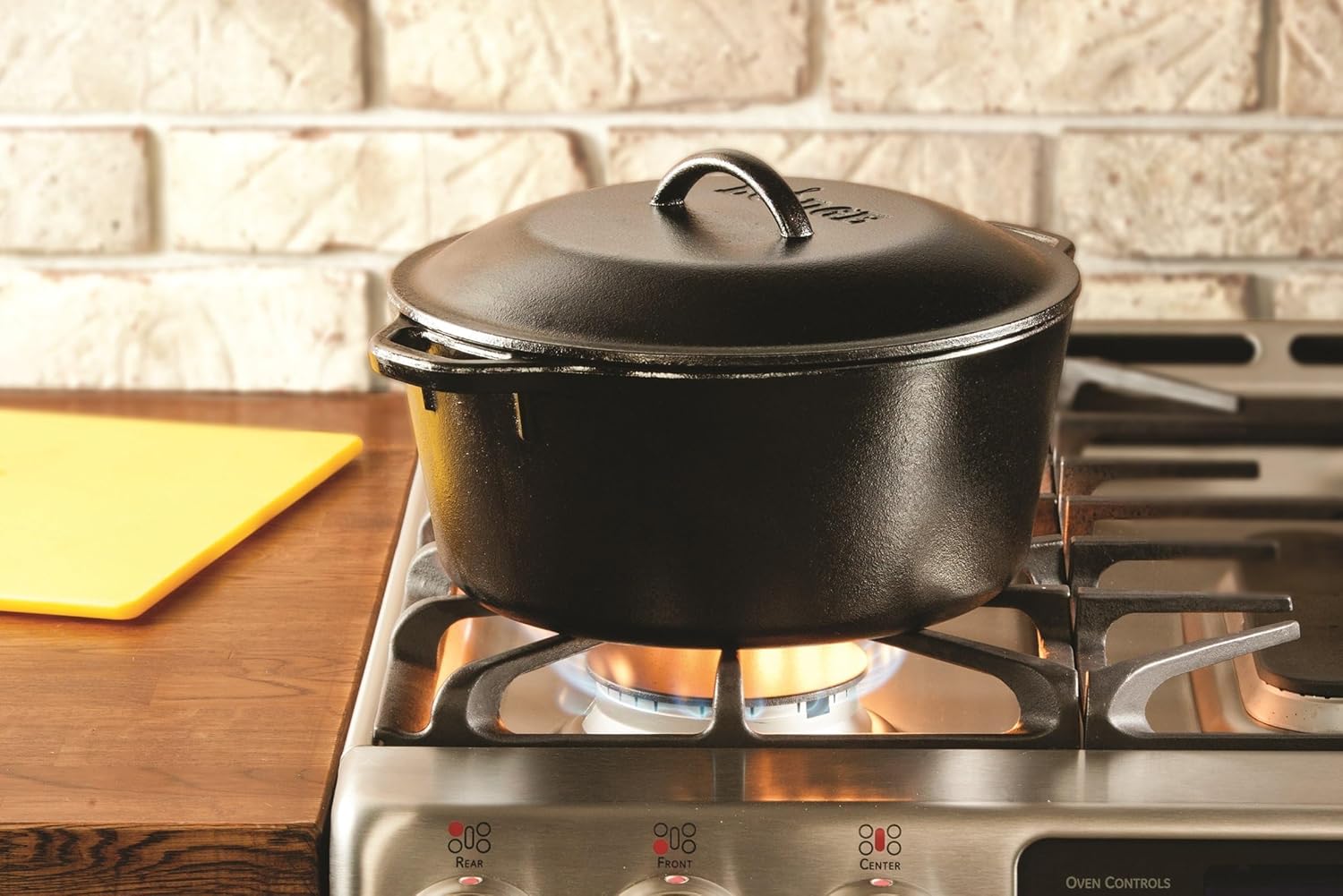
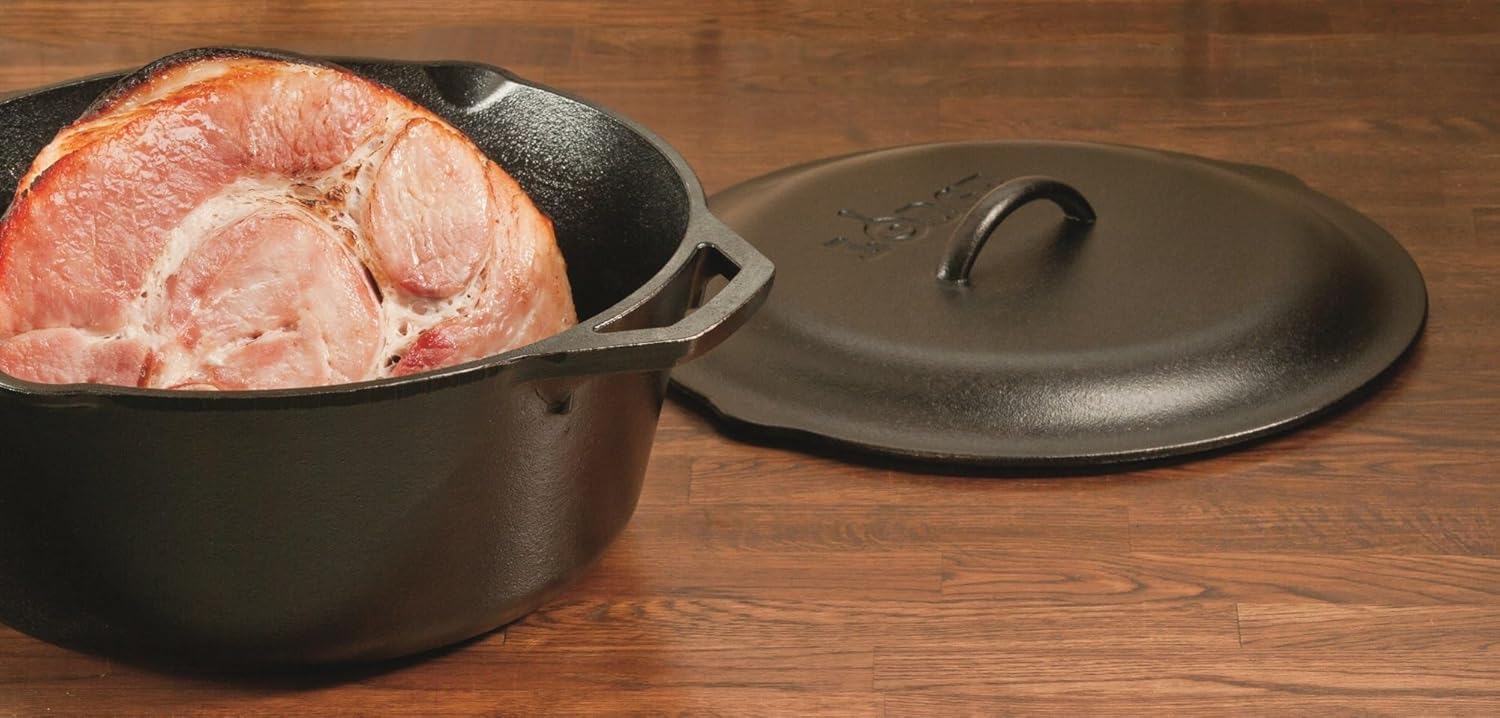
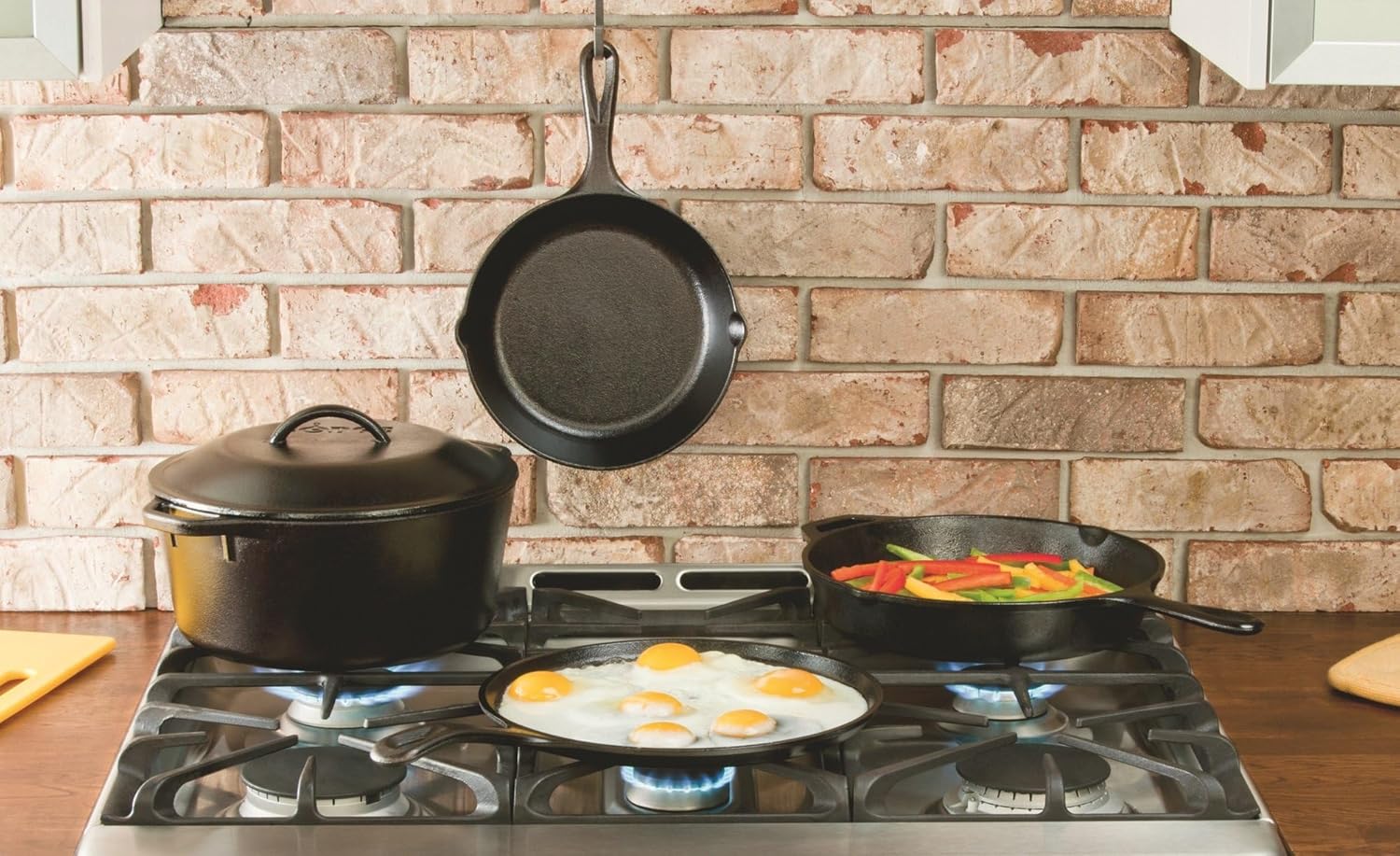
Lodge Cast Iron Dutch Oven is a durable 7-quart camp-cooking workhorse that handles braises, stews, baking, and fire-side meals with excellent heat retention. Its weight makes it best for car camping, cabins, and backyard cooking rather than ounce-counting trips. If you want one pot that can move from oven to stove to grill to campfire, it still delivers strong long-term value.
Disclosure: Bug Free Camping may earn a commission if you buy through links on this page, at no extra cost to you.
Table of Contents
- Quick verdict
- Lodge Cast Iron Dutch Oven: 6 buying checks that matter
- 1. Capacity and meal size
- 2. Heat retention and cooking control
- 3. Campfire and kitchen versatility
- 4. Weight, handling, and transport
- 5. Cleaning, seasoning, and long-term care
- 6. Price and long-term value
- Who should buy it
- Final verdict
- Sources
Lodge Cast Iron Dutch Oven is one of the easiest ways to cook real campsite meals without juggling fragile cookware or worrying about whether your pot can handle open heat. This 7-quart model is built for stews, chili, braises, bread, cobblers, and one-pot dinners that need steady heat more than ultralight portability. For campers who travel by car, cook for a group, or want one dependable pot that can go from home oven to propane stove to campfire grate, it still makes a very practical case in 2026.
Quick verdict
Lodge Cast Iron Dutch Oven is a strong buy for campers who value durability, heat retention, and cooking flexibility more than low weight. It is heavy, slow to cool, and not something you will carry far from the trailhead, but it rewards that tradeoff with even cooking, serious toughness, and years of repeat use. If your trips revolve around basecamp meals instead of freeze-dried pouches, this is the kind of cookware that earns its space.
Lodge Cast Iron Dutch Oven: 6 buying checks that matter
1. Lodge Cast Iron Dutch Oven capacity and meal size
The first buying check is simple: does the pot size match the way you actually camp? The Lodge Cast Iron Dutch Oven reviewed here is listed at 7 quarts, which puts it in the sweet spot for family chili, stew for several adults, pot roast, beans, or batch cooking at a basecamp. That makes it far more useful for car campers than the tiny dutch ovens that work for one or two portions but run out of room fast once you add broth, vegetables, or bread dough.
For campers who cook once and serve several people, that larger capacity matters more than most product pages admit. A roomy dutch oven gives you headspace for stirring, safer simmering, and fewer boil-overs when the fire spikes. It also pairs well with a broader camp-kitchen setup. If you are building that setup from scratch, our guide to a compact camping cooking kit can help you avoid redundant pots and pans.
2. Heat retention and cooking control
This is where cast iron still separates itself from cheaper thin-wall camp cookware. The Lodge Cast Iron Dutch Oven stores heat extremely well, which helps with browning meat, holding a simmer, and keeping temperature swings under control when campfire heat is uneven. That same mass also means you need a little patience: it takes longer to heat up than aluminum, and once it is hot, it does not respond instantly when you move it away from the flame.
For real camp cooking, that tradeoff is usually worth it. Stable heat is exactly what you want for braises, beans, sauces, baked pasta, and crusty bread. It also helps when you are trying to finish food safely at camp. The USDA’s safe minimum temperature chart and food thermometer guidance are useful references if your dutch oven meals include poultry, ground meat, or leftovers that need precise finishing temperatures.
3. Campfire and kitchen versatility
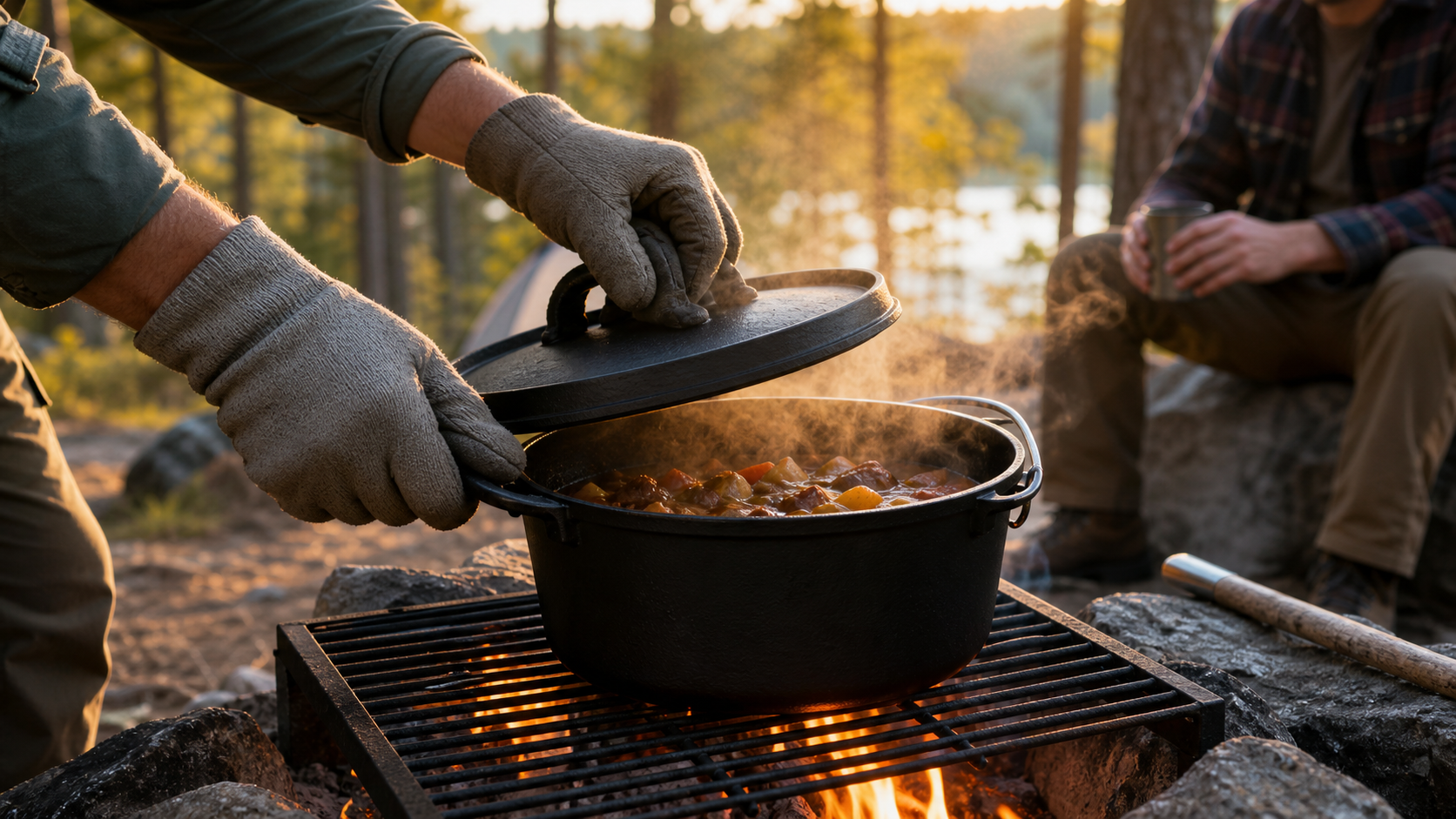
The third check is versatility. The Lodge Cast Iron Dutch Oven is not just for campfires. It makes sense if you want one piece of cookware that can braise in a home oven, simmer on a stovetop, sit on a grill, or work over a controlled campfire. That matters because the best camping gear is the gear you use often enough to understand before a trip. A heavy cast-iron pot becomes much more valuable when it also earns regular use at home.
This kind of versatility is also why dutch ovens work well in organized camp kitchens. If your campsite prep area is cramped or unstable, the pot’s weight can feel awkward, so a solid work surface helps. Our foldable camping table guide and foldable camping furniture guide are relevant if you are trying to build a safer cooking station around heavier cookware.

4. Weight, handling, and transport
This is the biggest reason not to buy it. The Lodge Cast Iron Dutch Oven weighs about 17.6 pounds before food, which immediately rules it out for backpacking and makes it a poor fit for anyone who wants a light, grab-and-go stove kit. It is best treated as car-camping cookware, cabin cookware, RV cookware, or backyard gear that occasionally goes to camp.
That does not make the weight a flaw for every buyer. In fact, the same mass that makes it annoying to carry is what helps it cook so well. The question is whether your trip style supports that tradeoff. If you usually park close to camp, cook at picnic tables, and bring full-size kitchen tools, the heft is manageable. If you haul gear long distances or cook on tiny backpacking burners, the Lodge Cast Iron Dutch Oven will feel like overkill.
5. Cleaning, seasoning, and long-term care
Cast iron is not hard to maintain, but it does require consistency. Lodge’s own cleaning guidance says to wash with warm, soapy water, dry completely, and apply a thin layer of oil. Lodge also explains that all of its cast iron comes seasoned and ready to use, and that occasional reseasoning in the oven restores the surface when needed.
In practice, this means the Lodge Cast Iron Dutch Oven is a better fit for campers who do not mind a little post-meal cleanup ritual. Letting it sit wet is how you invite rust. Using it regularly, drying it thoroughly, and keeping a thin oil coat on the surface is how you get the natural easy-release finish people like about seasoned cast iron. If the cookware being made without PFAS matters in your buying decision, the EPA’s PFAS overview is a useful baseline for understanding why many shoppers now pay closer attention to those claims.
Campfire use also comes with obvious safety responsibilities. The National Park Service’s campfire safety guidance is worth following whenever you cook over live flame: keep fires small, clear the area, keep water nearby, and never leave the fire unattended.
6. Price and long-term value
At roughly $79.90 from the current Amazon listing, the Lodge Cast Iron Dutch Oven is not the cheapest pot you can bring camping, but it is a strong value if you will actually use it for years. You are paying for durability, broad heat compatibility, and cooking performance, not for minimum packed weight. In that sense, it is closer to a buy-once piece of camp cookware than a trendy accessory.
The value case gets stronger if you cook at home between trips. If this pot only comes out twice a year, the weight and maintenance can feel like work. If it becomes your regular chili, bread, soup, roast, and fire-side pot, the economics improve fast. That is why the Lodge Cast Iron Dutch Oven makes the most sense for campers who want fewer, harder-working pieces rather than a giant collection of single-purpose gear.
Who should buy it
Buy the Lodge Cast Iron Dutch Oven if you mostly car camp, cook for two or more people, enjoy one-pot meals, and want cookware that transitions easily between camp and home. It is especially practical for campers who make stews, braises, beans, breads, cobblers, or slow-simmered breakfasts.
Skip it if you backpack, count every ounce, dislike hand-wash maintenance, or usually cook only quick solo meals on a tiny stove. In those cases, lighter anodized aluminum or titanium cookware will be easier to live with.
Final verdict
Lodge Cast Iron Dutch Oven remains an easy recommendation for serious camp cooks because it solves the right problems: it holds heat well, handles multiple cooking environments, serves real meal sizes, and lasts long enough to justify the upkeep. The weight is the price you pay for that stability. For basecamp cooking in 2026, that is still a fair trade.