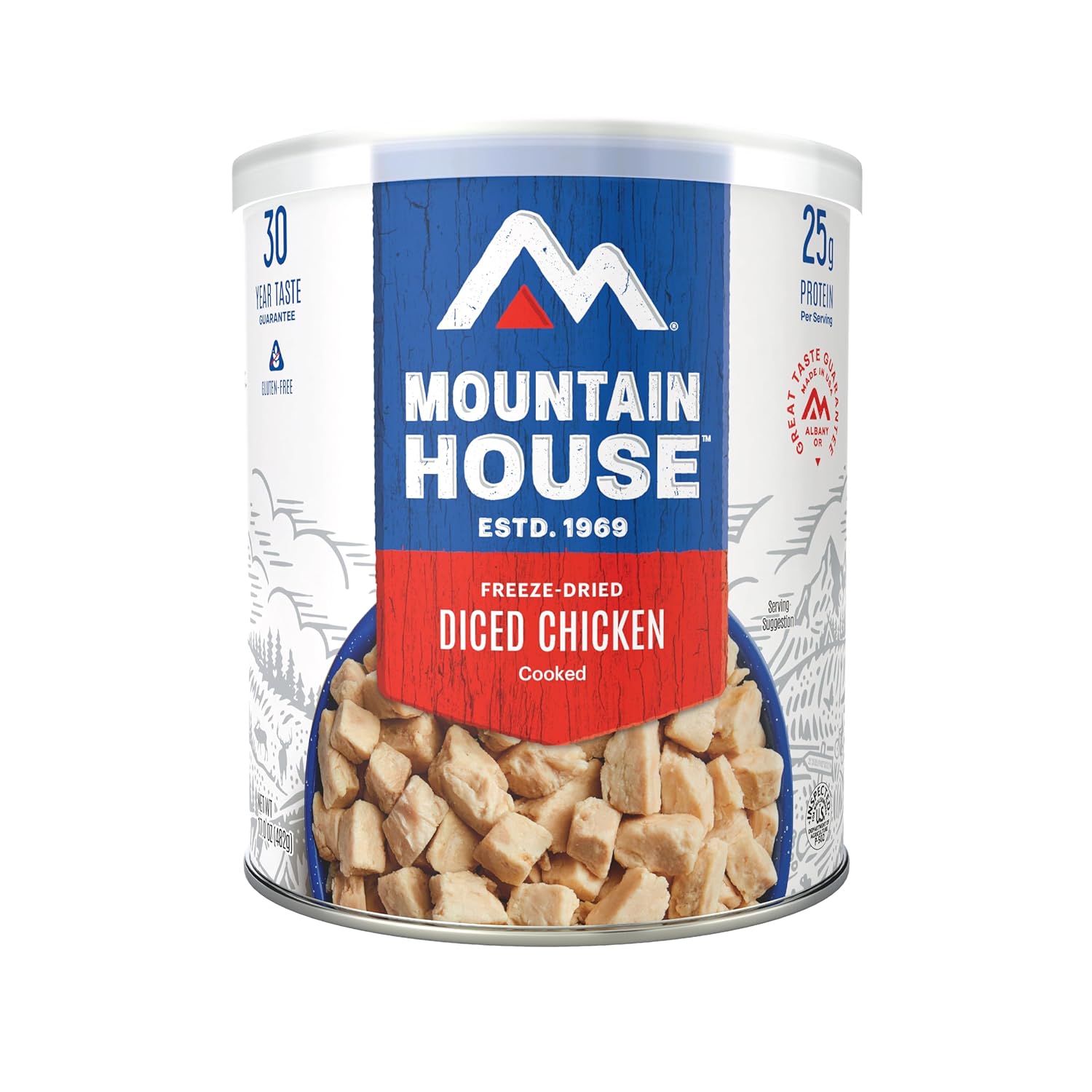
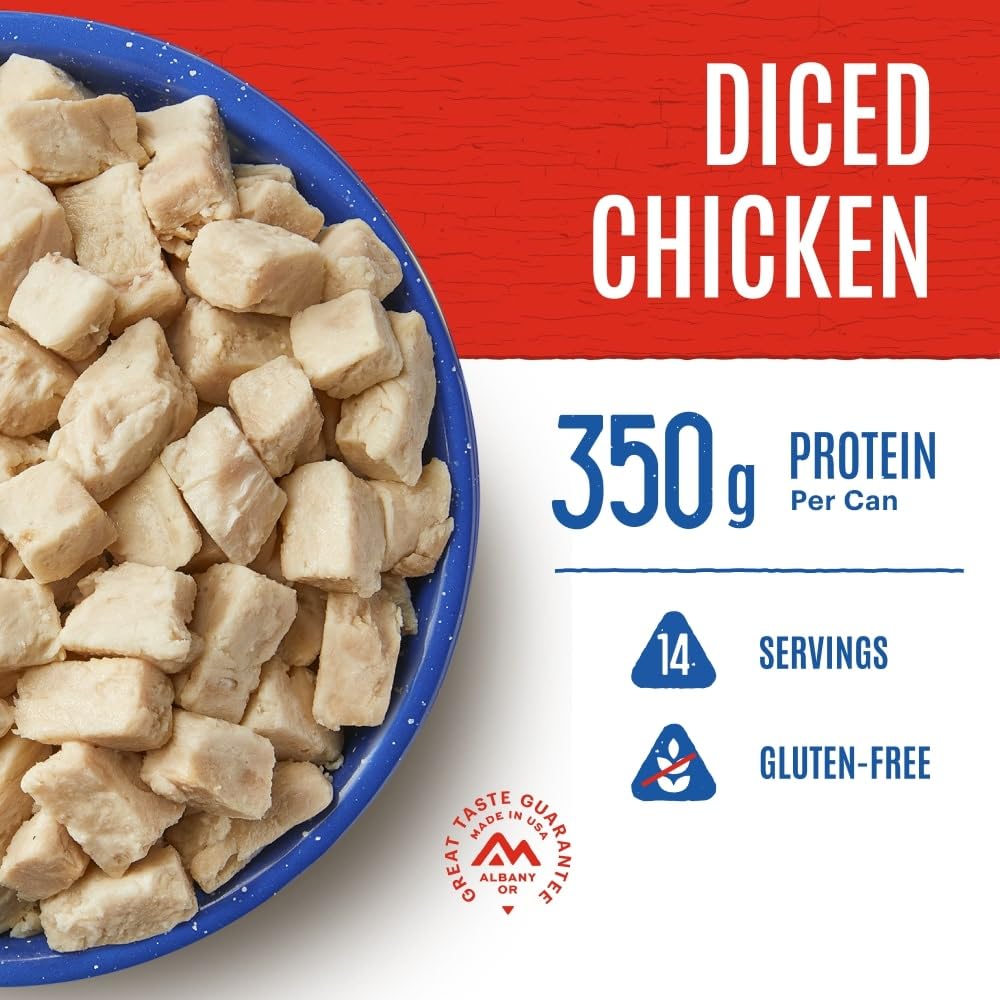

Mountain House Diced Chicken is a shelf-stable #10 can protein option that gives campers and emergency planners 14 servings, 25 grams of protein per serving, and quick rehydration without raw-meat cleanup.
Bug Free Camping may earn a commission if you buy through links on this page, at no extra cost to you.
Table of Contents
Mountain House Diced Chicken is one of the more practical shelf-stable protein options for campers who want real meat without carrying raw poultry, a heavy cooler, or extra cleanup gear. In 2026, it stands out because the #10 can format gives you 14 servings, 25 grams of protein per serving, and fast rehydration for rice bowls, soups, wraps, tacos,and quick campsite dinners.
The bigger question is whether this can actually makes sense for camping instead of just emergency storage. After reviewing Mountain House product details, current FDA gluten-free guidance, USDA outdoor food-safety advice, CDC backcountry water recommendations, and food-preservation context from the University of Minnesota Extension, the answer is yes, but only if you buy it for the right use case. It is strong for car camping, cabin kits, family camp boxes, and backup pantry planning. It is weaker for ultralight solo trips where a large can is less convenient than a single pouch.
Mountain House Diced Chicken: Complete Review
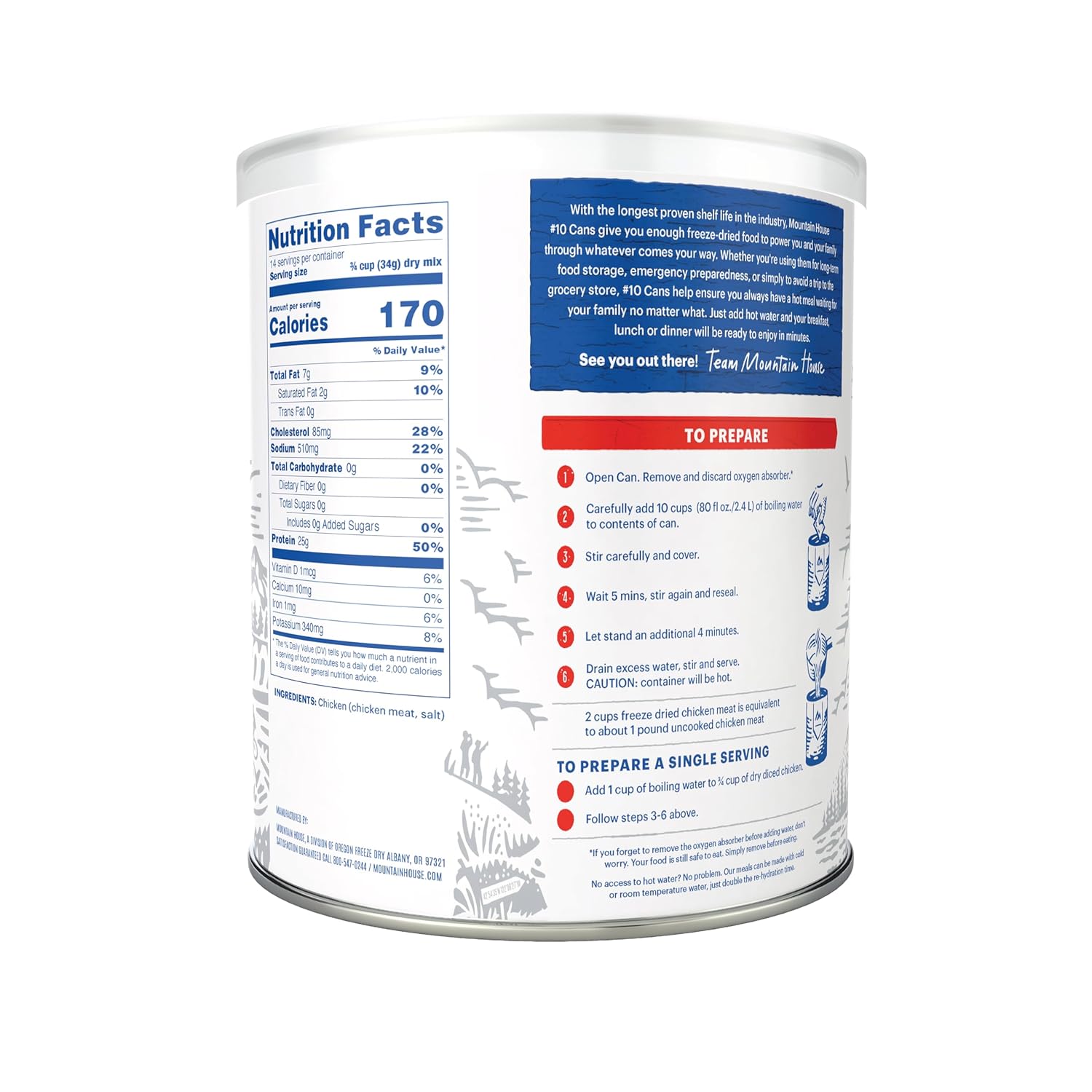
Mountain House Diced Chicken is sold as a freeze-dried #10 can of fully cooked chicken cubes that you rehydrate with water before adding to meals. On the official Mountain House product page, the brand highlights 14 servings per can, 170 calories and 25 grams of protein per serving, and a preparation time of less than 10 minutes. Those numbers matter because protein is often the hardest part of camp meals to keep simple, safe, and lightweight at the same time.
What makes this product useful is not culinary excitement. It is operational simplicity. Instead of packing raw chicken that needs refrigeration and careful handling, you get a dry can that stores easily, opens when needed, and drops into meals with much less risk and mess. That is a meaningful advantage when you are building a compact camping cooking kit or keeping an emergency meal reserve at home.
Mountain House Diced Chicken: 6 Proven Buying Checks
1. Protein Per Serving Is Actually Useful
Each serving delivers 25 grams of protein, which is enough to turn noodles, rice, soup, or tortillas into a more complete meal instead of a carb-heavy side dish. For campers who want flexible protein instead of a fully prebuilt entree, that is a real strength.
2. Shelf Life Is a Core Selling Point
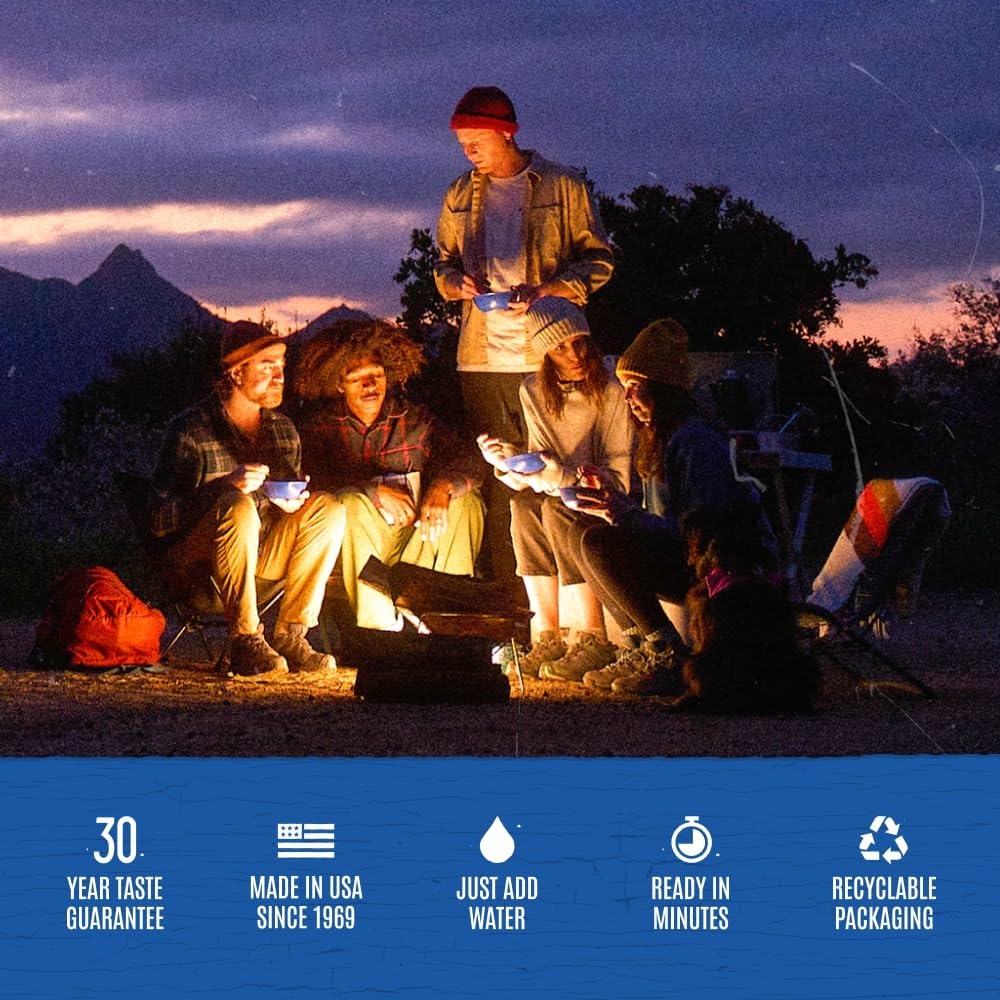
Mountain House backs the can with its 30-Year Taste Guarantee. That makes this a better fit for long-term pantry planning, storm prep, and camp-box storage than fresh chicken or short-life refrigerated meal components.
3. Prep Is Easy, But Water Still Matters
Mountain House says the chicken is ready in less than 10 minutes with hot water, and that cold or room-temperature water also works if you allow more time. At camp, that means you need a reliable boil-and-rehydrate setup and safe water handling. The CDC guidance on hiking and camping water treatment is relevant here because uncertain backcountry water should be treated before you use it for rehydration.
4. Ingredient Simplicity Helps
The official ingredient list is short: chicken and salt. The product page also flags the can as gluten-free, dairy-free, preservative-free, and free of artificial flavors and colors. For gluten-sensitive shoppers, that claim has more value because the FDA gluten-free labeling rule requires foods carrying that claim to stay below the federal threshold of 20 parts per million of gluten.
5. Portion Format Is Better for Groups Than Solo Hikers
The #10 can is efficient for families, cabins, and repeated weekend use, but it is not the neatest format for a one-night solo trip. Once opened, Mountain House says to reseal the can and use the contents within one week. That is manageable for home backup storage or multi-person camp cooking, but less efficient if you only need one small serving.
6. Versatility Is Where It Earns Its Price
This is not just emergency food. It can drop into burritos, rice bowls, pasta, soups, tacos, wraps, and skillet meals. That flexibility makes it more useful than niche freeze-dried products that lock you into one flavor profile. It also pairs naturally with broader planning around food storage for longer trips and weight-conscious packing decisions from our ultralight camping gear guide.
Taken together, those six checks explain the product clearly: Mountain House Diced Chicken is strongest when you want shelf-stable meat that can adapt to many meals, not when you want the cheapest possible camp calories or the lightest one-night food pack.
Real-World Camp Use
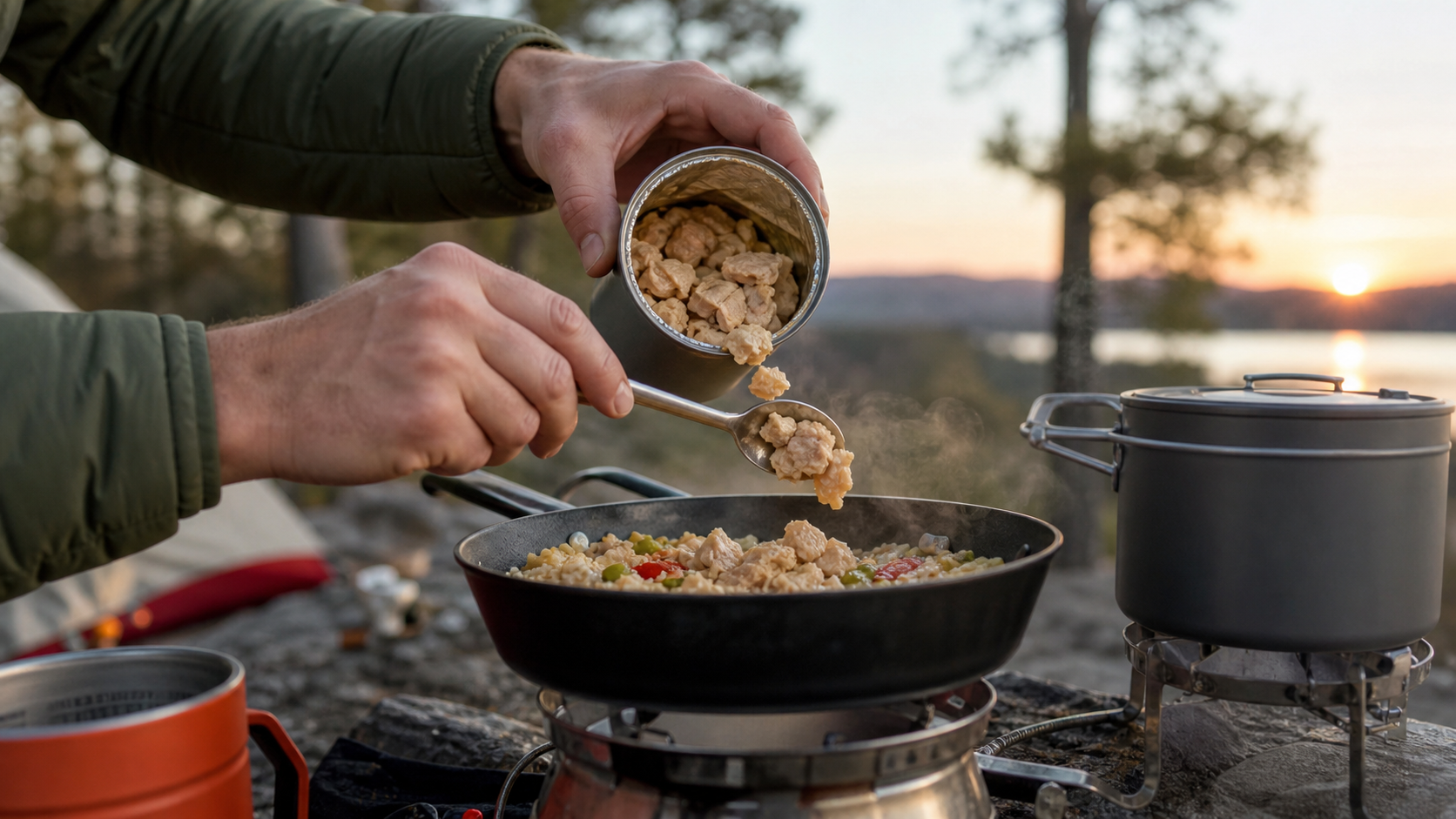
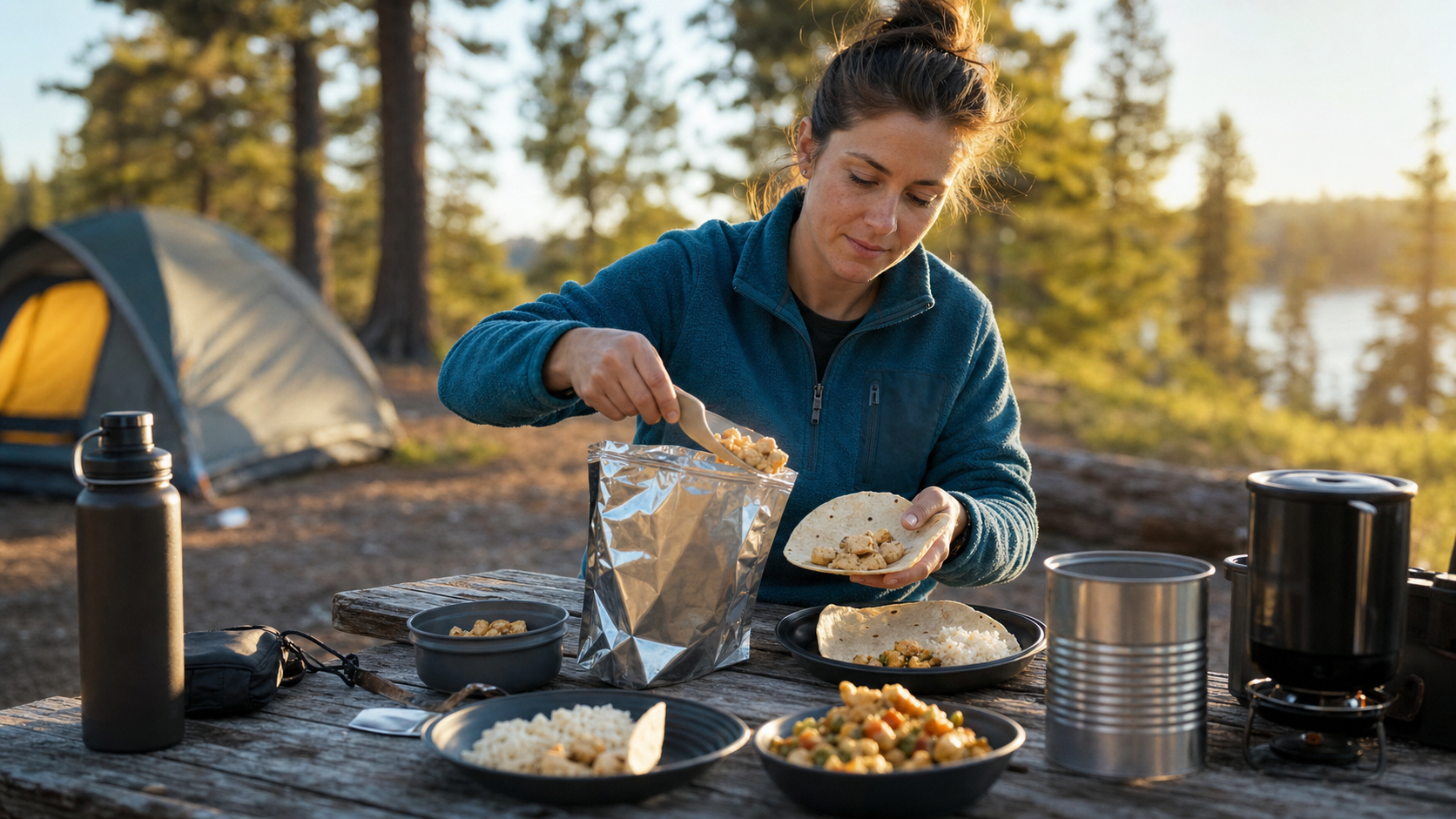
In real camp use, Mountain House Diced Chicken fits best into low-fuss dinners and backup meal planning. It solves a specific campsite problem: fresh meat creates refrigeration pressure, contamination risk, and messy cleanup. The USDA guidance for hiking and camping food safety repeatedly emphasizes safe temperature control, clean hands, and protection against cross-contamination. Freeze-dried chicken reduces several of those pain points because it stores dry and only needs safe rehydration and clean utensils.
That does not mean it replaces all fresh-cooked camp food. Texture will still be more functional than luxurious, and the salt level is noticeable if you are sensitive to sodium-heavy packaged foods. But for quick burrito fillings, ramen upgrades, camp fried rice, or protein boosts in soups, the convenience-to-effort ratio is very good.
There is also a preparedness angle. The University of Minnesota Extension notes in its freeze-drying guidance that freeze-dried foods are shelf-stable and retain much of their taste and nutritional profile when packaged and stored properly, while still needing careful storage to avoid moisture problems. That makes commercial freeze-dried meat especially appealing for households that want a more practical protein option than generic emergency carbs.
How It Compares to Alternatives
Mountain House Diced Chicken compares best against three alternatives: fresh chicken, flavored freeze-dried entrees, and lower-cost canned chicken. Against fresh chicken, it wins on storage, transport, and cleanup. Against prebuilt freeze-dried meals, it wins on meal flexibility because you decide how to season and combine it. Against ordinary canned chicken from a grocery shelf, it wins on long-term storage and lower carried water weight, but canned chicken often wins on immediate affordability.
That tradeoff matters. You are paying for portability, storage life, and convenience, not bargain protein. If you camp frequently and like building meals from simple staples, the flexibility can justify the cost. If you mainly want a cheap ready-to-eat pantry protein, grocery-store canned chicken may still be the more economical buy.
Who Should Buy This Product?
Buy it if you want shelf-stable meat for car camping, emergency storage, cabin kits, or simple family camp meals. It also makes sense if you already keep rice, pasta, tortillas, or dehydrated soup bases on hand and want a fast protein add-in that does not demand cooler space.
Skip it if you only need food for occasional solo overnights, if you are very price-sensitive, or if you prefer complete ready-made entrees instead of ingredient-style meal building. In those cases, smaller pouches or cheaper canned proteins can be easier to justify.
Frequently Asked Questions
Is Mountain House Diced Chicken gluten-free?
Yes, Mountain House labels it gluten-free. FDA guidance explains that foods using that claim must meet a defined federal standard.
How many servings are in Mountain House Diced Chicken?
The official product page lists 14 servings per can.
How much protein is in Mountain House Diced Chicken?
Each serving provides 25 grams of protein.
How do you prepare Mountain House Diced Chicken?
Add hot water and wait a few minutes for rehydration. Mountain House says cold or room-temperature water also works, but it takes longer.
Is Mountain House Diced Chicken good for emergency food storage?
Yes. The long shelf-life positioning and dry storage format make it a strong fit for emergency kits and backup pantry planning.
Pros and Cons
Pros
- 25 grams of protein per serving is genuinely useful for camp meals
- 14-serving can works well for families, cabins, and backup storage
- Only two ingredients keeps the product simple
- Less food-safety hassle than packing raw chicken
- Flexible enough for soups, bowls, wraps, tacos, and pasta
Cons
- Upfront price is high compared with canned or fresh chicken
- Needs water and rehydration time before use
- #10 can format is not ideal for minimal one-person trips
- 510 milligrams of sodium per serving may be high for some buyers
- Opened can should be used within about one week
Final Verdict
Mountain House Diced Chicken is a smart 2026 buy for campers and preparedness-minded households that want real protein without raw-meat logistics. It is not the cheapest protein on the shelf, but it is one of the more flexible and practical freeze-dried options for camp cooking, pantry backup, and fast meal building.