
rechargeable camping fan shopping gets easier when you focus on the six checks that actually matter at camp: airflow, overnight runtime, charging flexibility, mounting, durability, and safe hot-weather use.
Key Takeaways
- Choose airflow based on where you camp, not just the highest marketing claim.
- For warm nights, real low-speed runtime matters more than maximum battery size alone.
- USB-C charging, pass-through power, and power-bank compatibility make multi-night trips much easier.
- Clip points, hanging hooks, and stable bases matter as much as fan speed inside a tent.
- A fan improves comfort, but shade, hydration, and heat awareness still do the real safety work.
Table of Contents
- How to choose a rechargeable camping fan
- 1. Match airflow to your campsite
- 2. Check real overnight runtime
- 3. Pick easier charging options
- 4. Choose mounting and packability
- 5. Check noise and durability
- 6. Use it inside a heat-safety plan
- Rechargeable camping fan comparison table
- Common mistakes buyers make
- Helpful Amazon search picks
- FAQ
- Final verdict
How To Choose A Rechargeable Camping Fan
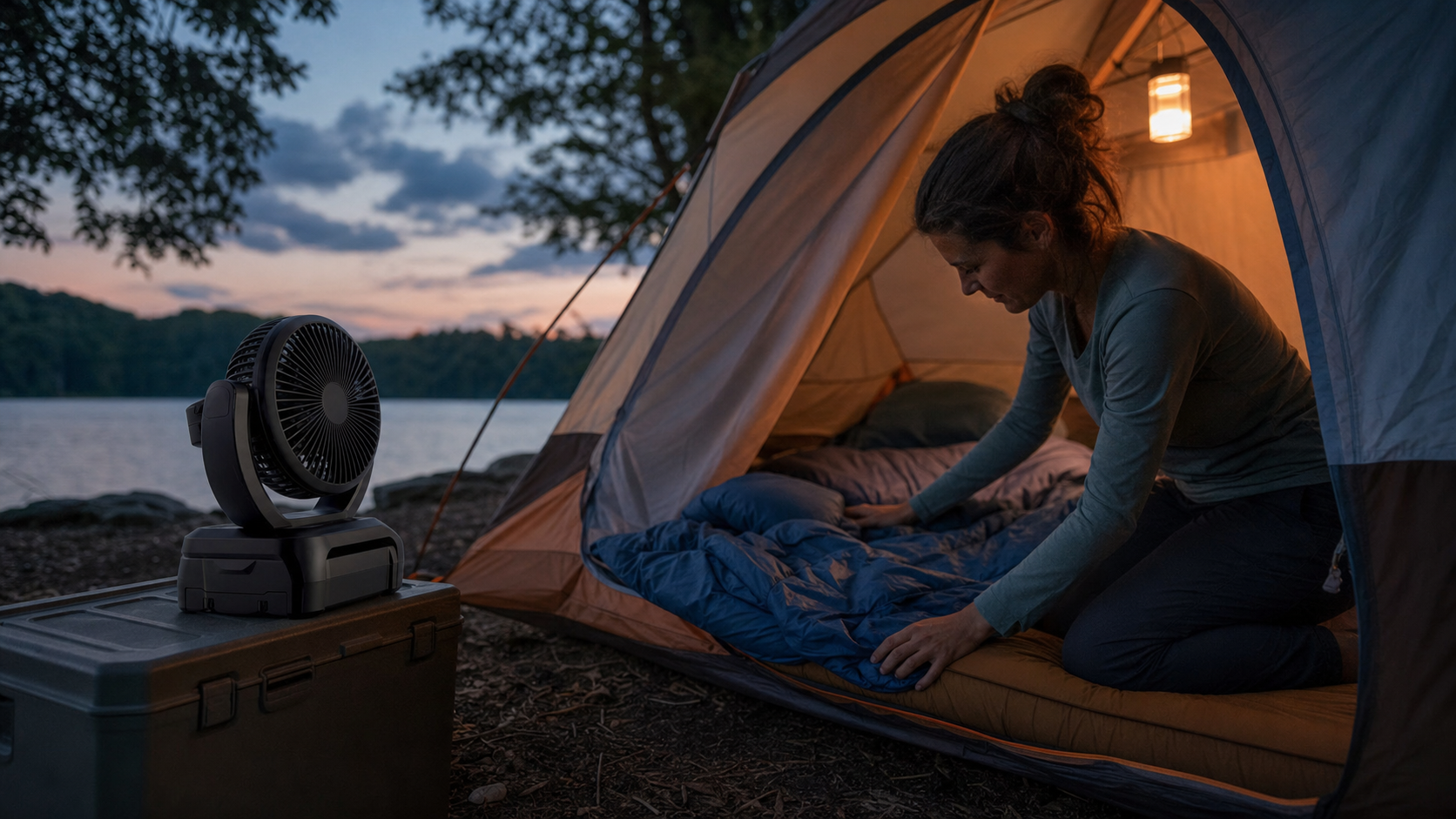
The best camping fan is not always the strongest one. Car campers can use a bigger tabletop or pedestal-style unit, while tent campers usually get better results from a lighter clip-on or hanging design that pushes air across sleeping pads instead of into the empty roof space. That sounds obvious, but it is where most bad purchases start.
Current heat guidance from the CDC and the National Weather Service is a useful reminder here: a fan helps comfort, but it is not a substitute for shade, hydration, and smarter timing when temperatures stay high. For campers, the practical goal is simpler. You want enough airflow to make the tent feel less stagnant, help sweat evaporate, and make it easier to fall asleep without carrying a bulky power setup you will regret packing.
The six checks below are the ones worth caring about before you buy.
1. Match Airflow To Your Campsite
Think first about distance. A two-person tent, rooftop tent, van bunk, and screened dining shelter all ask for different airflow patterns. A compact hanging fan is great when the blades sit within a few feet of your face. It is far less useful when you expect it to cool three sleepers, a dog, and a muggy tent wall at the same time.
If you mostly tent camp in hot weather, airflow placement beats raw size. REI’s tent setup guidance recommends orienting a tent door toward the wind for cooling, and the Weather Service suggests doing the same to take advantage of any available breeze. A fan works best when it supports that natural airflow instead of fighting it. In real use, that means aiming a clip-on fan low across your torso or placing a tabletop fan so it pulls cooler evening air through the door mesh.
For family car camping, look for oscillation only if the fan still feels stable on a picnic table or cot organizer. For solo campers, fixed-direction airflow is often better because it wastes less battery.
2. Check Real Overnight Runtime
This is the biggest buying filter. Ignore giant battery claims unless the brand also gives runtime by speed setting. Official product pages show how much that range can vary. Shark says its FlexBreeze can last up to 24 hours on low but about 6 hours around an average setting, while OPOLAR lists roughly 5 to 20 hours depending on speed. That spread is normal, not suspicious. It is what happens when airflow gets stronger.
For campers, the useful benchmark is one full night plus a little margin. If you sleep eight hours and usually need medium airflow after a sticky evening, shop for a fan that can honestly deliver nine to ten hours at the setting you will really use. If the brand only advertises maximum runtime on low, assume the overnight result will be much shorter once the air gets heavy.
Also check whether lights, misting features, oscillation, or power-bank output drain the same battery. Combination units are handy, but every extra feature competes with airflow.
3. Pick Easier Charging Options
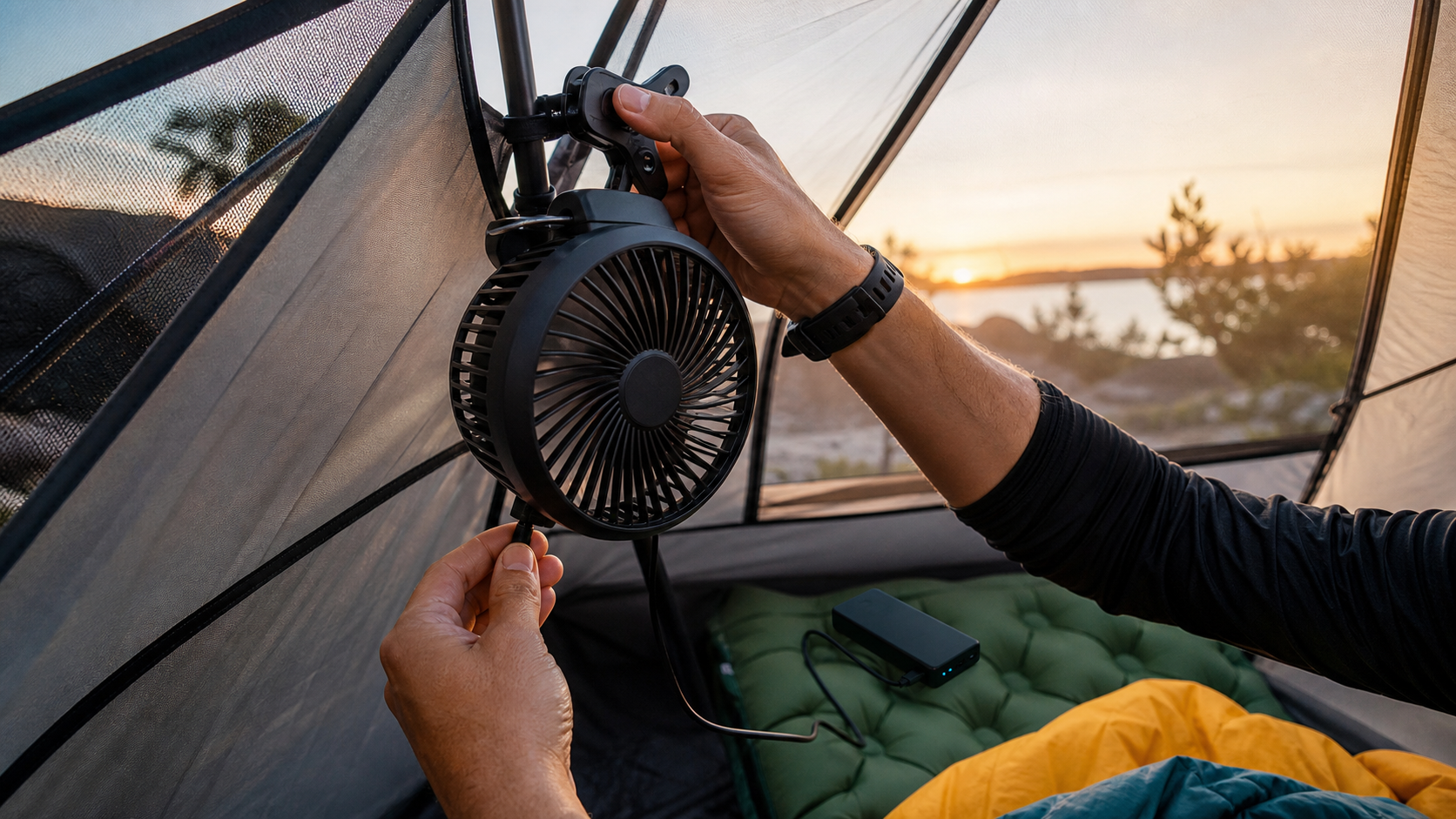
USB-C is the easiest answer for modern camp kits because it lets one cable handle your fan, headlamp, phone, and many lanterns. That matters more than people think. A fan that needs its own odd barrel charger is easy to leave at home by mistake.
Look for one of three practical charging setups:
Power-bank friendly: best for tent and festival camping where you already carry a battery pack.
12V or vehicle-friendly: useful for SUV camping and longer road trips.
Pass-through operation: ideal when the fan can run while plugged into a power station at camp.
This is where related gear matters. A modest fan pairs well with a small charging setup rather than a huge power station. If you are still dialing in the rest of your camp power system, these guides on portable wireless chargers, 30W portable chargers, and a solar camping generator can help you size the whole setup without overspending.
4. Choose Mounting And Packability
A rechargeable camping fan only feels worth bringing when it fits your actual campsite routine. Inside a tent, the most useful designs usually do one of three things well: clip to a pole, hang from a loop, or sit securely on a flat surface without tipping over every time someone rolls over at 2 a.m.
Clip-on models are excellent in compact tents because they keep airflow off the floor and free up storage space. Hanging models work well in center-loop family tents but can be underwhelming if the fan sits too high above sleepers. Fold-flat tabletop fans are the easiest to pack for car camping, especially when they also work in the vehicle during setup or on morning coffee duty.
If your camp style leans more toward comfort than minimalism, pair the fan with lighter camp-lighting gear so you do not overpack bulky electronics. Existing guides on rechargeable camping lanterns, rechargeable headlamps, and battery-powered camping string lights are useful if you are trying to build a lighter overnight kit instead of carrying duplicates.
5. Check Noise And Durability
Some fans move plenty of air but still feel miserable to sleep beside. A harsh motor tone or rattling clip can ruin the whole point. For sleeping comfort, the ideal fan creates a steady, low mechanical hum rather than a high-pitched buzz that keeps changing as the battery drains.
Durability matters too. Camp gear gets dusty, bounced around, and occasionally damp. Outdoor-rated models earn their keep here. Bigger cordless fans like the Shark FlexBreeze lean into rain-resistant outdoor use, while smaller fans often rely more on careful storage than official water-resistance claims. If the brand does not mention splash resistance, treat it like sheltered gear.
Battery safety is part of durability. The CPSC battery guidance notes that incidents have happened during use, storage, and charging, so avoid bargain fans with vague charging specs or swollen battery housings. Charge the fan on a stable surface, keep ports clean, and do not leave a damaged lithium unit baking on a dashboard all day.
6. Use It Inside A Heat-Safety Plan
This is the most important reality check: a fan can make camping more comfortable, but it cannot rescue a bad hot-weather plan. The CDC says fans help only below certain temperature conditions, and the NPS reminds campers to stay aware of heat, hydration, and equipment function throughout the trip. In practice, that means you should treat a fan as one piece of your warm-weather system, not the whole system.
The smartest setup usually includes shade during the afternoon, a tent pitched for airflow, plenty of water, lighter meals, and the discipline to slow down during peak heat. REI’s condensation advice is useful here too. Better ventilation reduces that sticky, damp feeling that makes warm nights seem even hotter. The National Park Service camp safety guidance is another good reminder that weather awareness, hydration, and gear checks all work together. If you are camping where evening lows stay high, your fan helps most by moving air across skin and reducing the stale feeling inside the tent, not by actually lowering ambient air temperature.
If a forecast looks extreme, change the plan instead of trying to gadget your way through it. A rechargeable fan is for comfort and airflow. It is not heat-proofing.
Rechargeable Camping Fan Comparison Table
| Fan Style | Best For | Main Advantage | Main Tradeoff |
|---|---|---|---|
| Clip-on tent fan | Solo or couple tent camping | Direct airflow where you sleep | Usually smaller battery and airflow range |
| Hanging lantern-fan combo | Minimalist summer camp kits | Two functions in one packed item | Light use can shorten fan runtime |
| Fold-flat tabletop fan | Car camping and picnic-table use | Better stability and stronger breeze | Takes more room in the bin |
| Large cordless pedestal fan | Basecamp, vans, screened shelters | Wider coverage and better daytime use | Heavier, pricier, and overkill for backpack-style packing |
Common Mistakes Buyers Make
The most common mistake is buying for max airflow when you really need overnight efficiency. The second is assuming every rechargeable fan works well in a tent. Some are better on a patio than in a cramped shelter. The third is ignoring how the rest of your camp kit charges. If your fan, lantern, phone, and headlamp all need different cords, camp setup gets annoying fast.
Another mistake is placing the fan too high. Air circulating across the tent ceiling does very little for sleep comfort. Aim the breeze where people are actually lying down.
Helpful Amazon Search Picks
Affiliate disclosure: As an Amazon Associate, BugfreeCamping may earn from qualifying purchases. That does not change the price you pay.
- Rechargeable camping fan for general tent and car-camping use
- Clip-on rechargeable camping fan for tent poles and cots
- Camping fan with light for one-item summer shelter setups
- Oscillating portable camping fan for wider family-tent airflow
- Portable misting fan for camping for vehicle-based camps in very dry heat
FAQ
How many hours should a rechargeable camping fan run?
For summer camping, look for at least eight hours at the speed you will really use. Nine or ten hours is safer if you dislike waking up hot at dawn.
Is a rechargeable camping fan better than a battery-only fan?
Usually yes for car camping, van trips, and family sites because USB-C recharging is cheaper and easier to manage than constantly buying disposable batteries.
Can you use a rechargeable camping fan in a tent all night?
Yes, as long as the fan is stable, the battery housing is in good condition, and you are using it as directed. Keep charging cables tidy and do not run a damaged battery pack in a hot enclosed space.
Final Verdict
If you mostly camp in warm weather, a rechargeable camping fan is worth buying when it can truly cover one night of real use, charge easily from the gear you already own, and mount where the airflow actually reaches sleepers. Skip oversized claims and focus on practical runtime, tent-friendly placement, and quiet operation. Those are the features that make a hot campsite feel manageable instead of miserable.