
Cold weather camping sleeping pad choices matter as much as your sleeping bag when the ground turns cold: a plush pad that leaks heat can make a well-rated bag feel strangely inadequate. The practical answer is to choose insulation first, then decide how much bulk, weight, and cushion you can comfortably carry.
- Pad R-value—not thickness alone—controls how much ground chill reaches you.
- For cold nights, prioritize a tested R-value of 4 or higher; snow and cold sleepers often need more.
- Stacking a foam pad under an insulated inflatable pad adds warmth, puncture protection, and a usable backup.
- Set up on cleared ground, carry a repair kit, and test the entire sleep system before a cold trip.
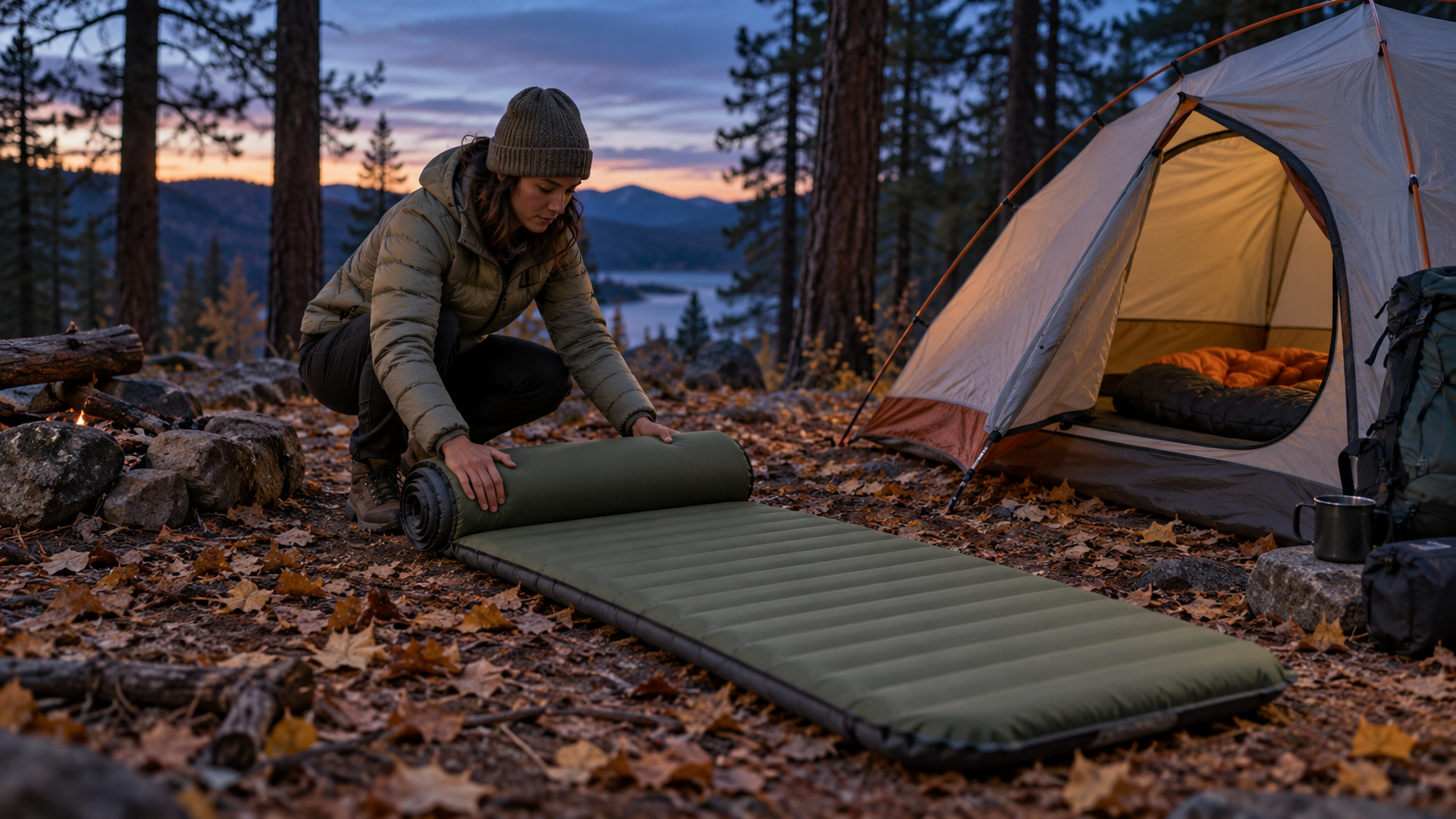
Why a Cold Weather Camping Sleeping Pad Does the Quiet Work
Cold travels in more than one direction. A sleeping bag lofts around your body and slows heat loss to the air, but your body compresses the insulation underneath you. That leaves the pad to resist the steady pull of cold ground. It is why a thick-looking summer air mattress can feel cold even when it seems comfortable.
R-value is the comparable number to watch. It describes a pad’s resistance to heat flow, so a higher number means greater insulation. REI’s current guidance places pads under R 2 in warm-weather territory, R 2–3.9 for cool weather, R 4–5.4 for cold weather, and R 5.5-plus for very cold conditions. Read the manufacturer spec, not just terms like “insulated” or “four-season.”
Your personal margin matters. A cold sleeper, a tired hiker with low calorie intake, a windy exposed site, and ground that has held snow can all make a moderate pad feel underpowered. The National Park Service also reminds winter travelers that wet clothing and wind aggravate hypothermia; a warm pad is one useful layer in a broader plan, not a magic shield.
6 Smart Checks Before Buying a Cold Weather Camping Sleeping Pad
1. Start with the lowest nighttime temperature, not the afternoon forecast
Use the forecast low for the campsite elevation, then add a personal margin. For car campers heading into repeated nights around freezing, an R 4-plus pad is a sensible starting point. For snow camping or people who reliably sleep cold, look toward R 5.5-plus or a layered system. Check the forecast again on departure day; valleys and clear nights can run colder than a nearby town.
2. Favor a tested R-value over a vague warmth claim
Modern pads are often tested to the ASTM F3340 standard, making the R-values useful across brands. That does not turn an R-value into an exact temperature guarantee—it cannot account for your bag, metabolism, food, or weather—but it makes shopping far less guessy. For a deeper explanation of the test and ranges, see REI’s sleeping pad buying guide.
3. Decide whether your trip needs air, foam, or both
Insulated air pads pack tiny and deliver impressive warmth per ounce, which makes them the default for backpacking. Their drawback is puncture risk and a little more setup. Self-inflating pads are heavier but exceptionally pleasant for drive-in camps, especially for side sleepers. Closed-cell foam is bulky on a pack but nearly indestructible, instantly deployable, and useful during breaks.
A plain foam pad is also a smart insurance policy under an inflatable. It protects the more delicate pad from thorns and adds insulation because pad R-values stack. That combination is especially appealing on a multi-night shoulder-season trip where a failed valve would otherwise end the comfort plan.
4. Check dimensions where your body actually needs them
Warmth does not help if your hip rolls off the pad onto cold ground at 3 a.m. Side sleepers should compare width at the shoulders, baffle shape, and real thickness when loaded. Taller campers should consider whether their feet stay on the pad. A regular-width pad can be a good backpacking compromise, but a wider rectangular shape is often worth it for a base-camp trip.
5. Budget for field reliability
Affiliate disclosure: We may earn a commission from qualifying purchases through links below, at no additional cost to you.
Bring the repair kit before there is a leak: adhesive patches, the maker’s recommended repair material, and a small square of clean tape for a temporary dirt barrier. At home, inflate the pad overnight and listen around the valve. At camp, clear sharp twigs, frozen stems, and abrasive gravel before pitching the tent. A closed-cell foam sleeping pad can protect an inflatable underneath while also serving as a sit pad.
6. Treat noise and inflation as comfort specs
Crinkly reflective insulation can be noticeable in a quiet tent. If you share a tent, read reviews for noise and bring the pump sack that came with the pad; it keeps moisture from your breath out of the insulation and makes setup quicker with cold hands. A compact sleeping-pad repair kit is a better purchase than hoping a roll of tape solves every leak.
Compare Cold-Weather Pad Types Before You Pack
| Pad type | Best use | Real strength | Real drawback |
|---|---|---|---|
| Insulated air pad | Backpacking and bikepacking | High warmth-to-weight ratio; small packed size | Can puncture; needs inflation and careful site prep |
| Self-inflating pad | Car camping, van-life, base camps | Stable, quiet, cushioned feel | Bulkier and heavier to transport |
| Closed-cell foam | Minimalists, breaks, backup insulation | Cheap, durable, instant setup | Bulky; less forgiving for side sleepers |
| Layered foam + insulated air | Cold ground, snow, cautious winter trips | Additive insulation and redundant sleep surface | More bulk and a few extra minutes of setup |
Do not confuse a cot with ground insulation. A cot can improve pressure relief and ventilation, but it may create another path for cold air beneath you. If you use one in cold conditions, pair it with an adequately insulated pad. For a comfortable drive-in system, compare a self-inflating camping sleeping pad with your vehicle’s available cargo space before ordering.
Build a Warmer, Less Fussy Sleep System
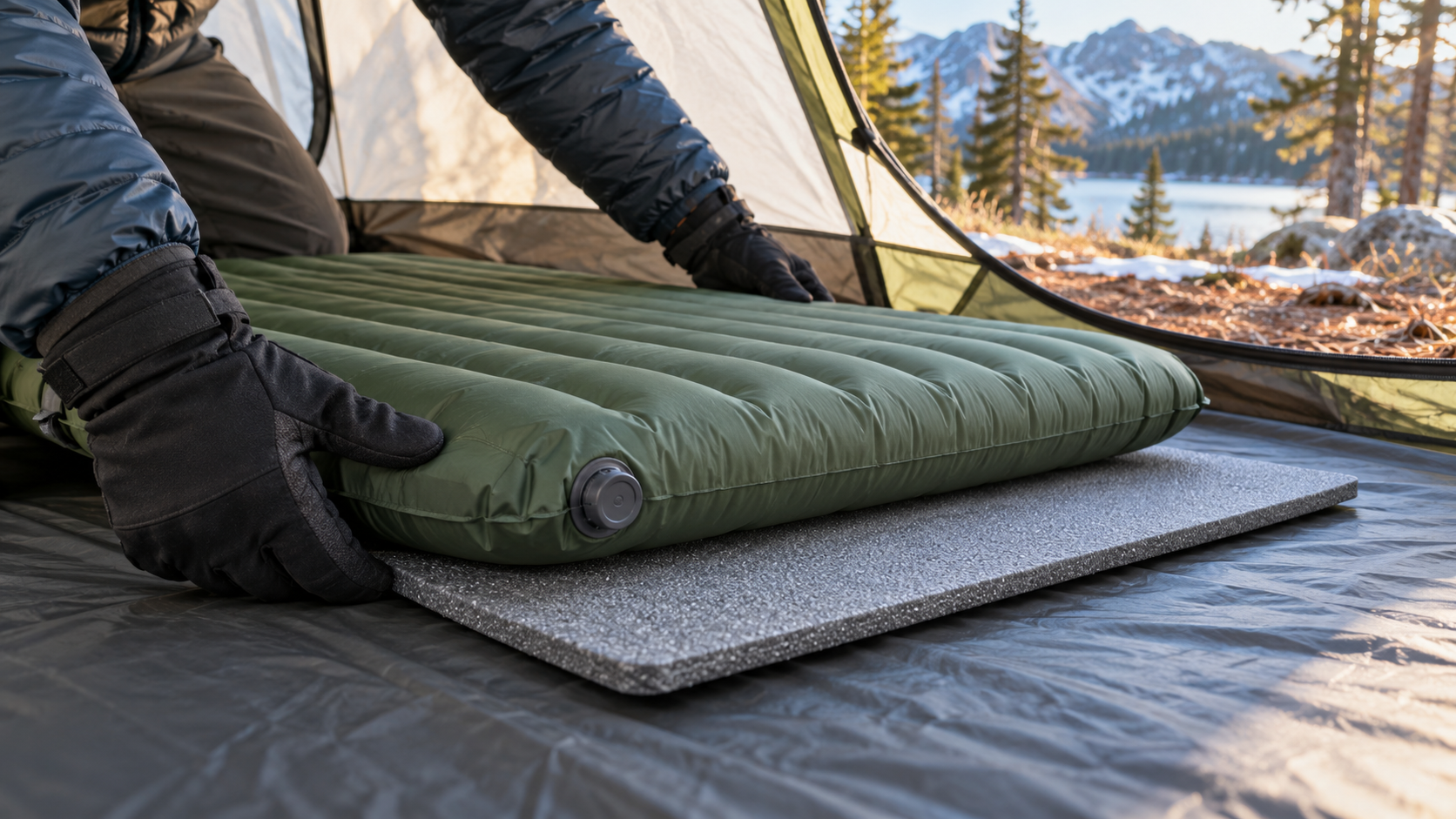
Start from the ground up: clear the tent footprint, lay down foam if you are using it, inflate the insulated pad, then match the bag or quilt to the conditions. Give an air pad a little less than maximum pressure before lying down; you can fine-tune it after your body weight is on it. Overinflation often feels firm at bedtime and creates sore hips before morning.
Wear a dry base layer and warm socks reserved for sleeping. Eat and drink before bed, but avoid the false confidence of a hot water bottle without a secure lid. Keep tomorrow’s clothes inside the bag only if they are dry; damp layers steal warmth. A high-R-value insulated sleeping pad is the right upgrade when the system still feels cold from below—not another blanket piled on top.
Keep your tent ventilated within its design. Condensation wets gear and amplifies the misery of a cold night. Store spare socks and electronics in a dry bag; our guide to a waterproof dry bag backpack can help keep small essentials protected. For fast, low-effort inflation at a vehicle campsite, a rechargeable camping air pump can be useful, but carry the manual backup supplied with the pad. A reliable magnetic tent light also makes a late setup and a middle-of-the-night valve check much less frustrating.
Mistakes That Create Cold Nights
Buying thickness instead of insulation. Loft can feel luxurious, but it does not reveal a pad’s thermal performance. Find the actual R-value before comparing height.
Running a propane heater while sleeping. Never do this in a tent, camper, or vehicle. The U.S. Consumer Product Safety Commission warns that fuel-burning camping equipment can produce deadly carbon monoxide in enclosed spaces. Learn the symptoms and follow the agency’s portable-heater camping guidance instead of improvising warmth.
Skipping a shakedown night. Inflate the pad, use the exact bag or quilt, and spend a backyard or nearby-campground night at a similar temperature. This reveals noisy fabrics, a slow leak, and an unrealistic bag rating while a warm car is close.
Ignoring the campsite surface. A sheltered spot out of runoff and away from cold-air drains is a better start than any gadget. Avoid compressing your pad over sharp debris. Use a durable sleeping-pad pump sack rather than blowing moist breath into an insulated pad night after night.
Letting cold feet become a pad problem. If your torso is warm but feet are cold, lengthen the insulating surface with a foam sit pad or spare clothing under your calves before buying an entirely new system. If your whole back feels chilled, raise the system R-value.
Care, Storage, and the Morning Routine
Open the valve after breakfast so trapped moisture can vent while you pack other gear. At home, dry the pad fully, brush off grit, and store it loosely inflated or uncompressed if the manufacturer recommends it. Avoid leaving an inflated pad in a hot closed vehicle; heat can increase pressure and stress seams.
For a slow leak, inflate the pad and work methodically: valve first, then seams, then the sleeping surface. Soapy water can reveal bubbles at home. Mark the spot, dry it completely, and use the maker-approved patch. On a trip, switch to the foam backup and repair when you can work on a clean, dry surface. Small prevention items—a groundsheet, foam layer, and repair kit—are much lighter than a miserable night. Keep the small repair items inside a waterproof camping storage box, and round out the cold-night kit with dependable rechargeable headlamp habits.
Cold Weather Camping Sleeping Pad FAQ
What R-value should a cold weather camping sleeping pad have?
For most cold-weather camping, start at R 4 or higher. For snow, very cold temperatures, or cold sleepers, an R-value of 5.5 or more—or two pads whose R-values add together—offers a better margin.
Can I put a foam pad under an inflatable sleeping pad?
Yes. Put the foam pad beneath the inflatable. The values add, the foam protects the inflatable from abrasion, and it becomes a backup if the inflatable fails.
Is a thicker sleeping pad always warmer?
No. Thickness mostly changes cushioning. Compare the stated, tested R-value to understand insulation from cold ground.
Should I use a propane heater in my tent at night?
No. Never use a fuel-burning heater or lantern while sleeping in an enclosed tent, camper, or vehicle because of carbon monoxide risk.