
Overland camp kitchen box setups work best when they cut setup time, protect cooking gear from dust and road vibration, and keep dinner service from turning into a cargo-area scavenger hunt.
Key Takeaways
- The best overland kitchen boxes are built around meal flow, not just storage volume.
- Vehicle fit, loaded weight, latch quality, and clean reset speed matter more than fancy drawer layouts.
- Cold food, dirty tools, and scented trash still need a separate safety plan even if your kitchen rides inside the vehicle.
- A practical box should let you cook, clean, and repack in a few minutes before dark or bad weather hits.
Table of Contents
How To Choose An Overland Camp Kitchen Box
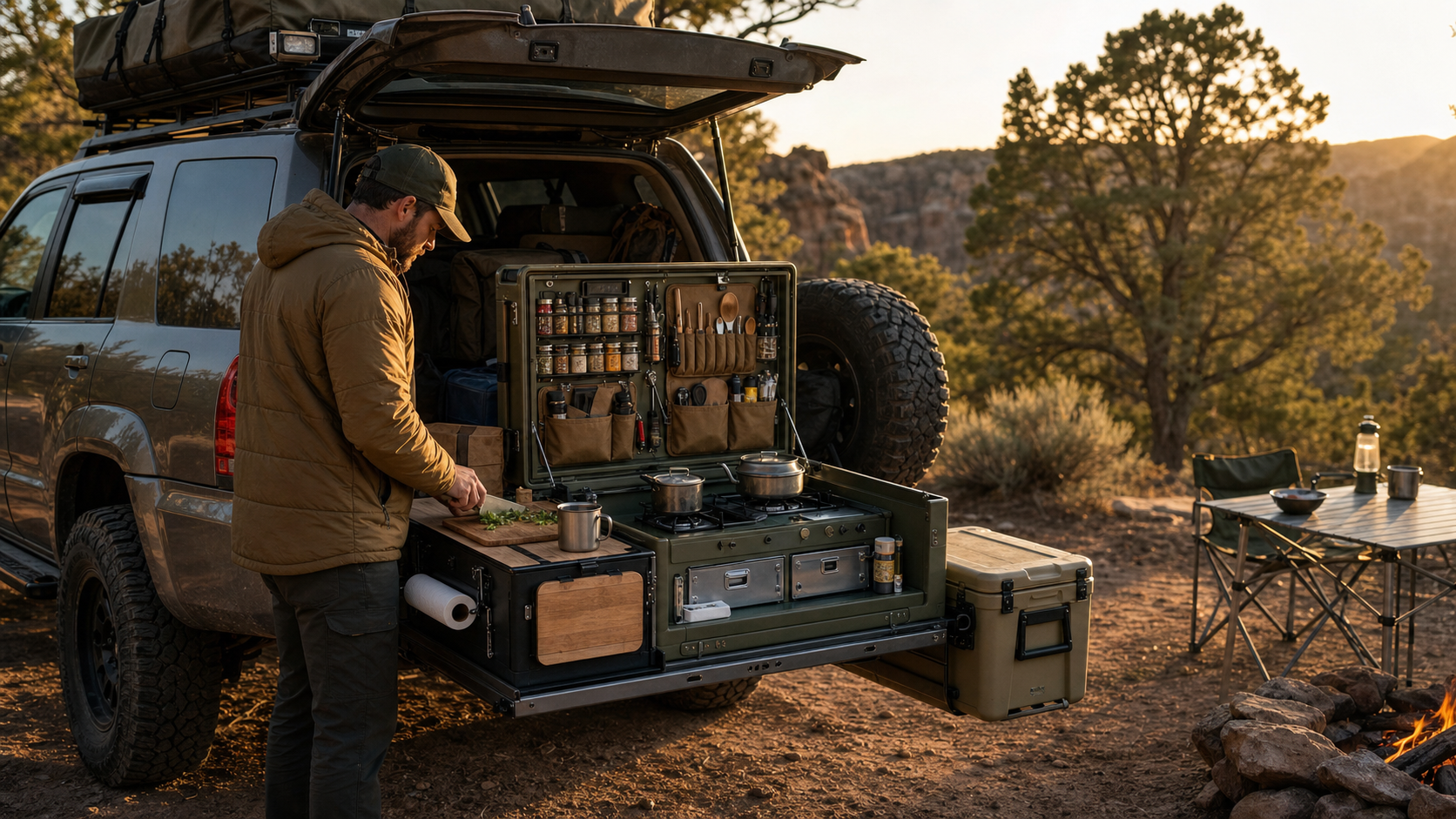
Overland kitchens live a harder life than ordinary campground bins. They bounce over washboard roads, share vehicle space with water and recovery gear, get opened in wind, and often need to work when you are tired, dusty, or losing daylight. That is why a good kitchen box has to do more than hold utensils. It needs to open fast, cook cleanly, and pack away without slowing the whole campsite down.
The easiest way to shop smart is to stop thinking about the box as storage furniture and start thinking about it as a trail workflow. Rugged hard-storage boxes such as Dometic’s GO Hard Storage 50L show why overlanders care about dust resistance, tiedown points, handles, and easy-pull latches. Purpose-built kitchens such as Trail Kitchens’ Compact Camp Kitchen show how much daily usability comes from stove compatibility, fold-out work surfaces, and a footprint that still fits real cargo areas.
The 6 Smart Checks That Matter Most
1. Size The Box Around Vehicle Access, Not Garage Storage
The first check is not capacity. It is access. A kitchen box can look perfect in the garage and still be a bad match once it shares space with a fridge, water jug, bedding, and recovery kit. Measure where the box will ride when the vehicle is fully packed, then think about how it opens. A tailgate-friendly box should not force you to move chairs, cooler lids, or duffels just to make coffee.
This is where real product dimensions help. Trail Kitchens lists its Compact Camp Kitchen at 25 pounds empty with an external size around 25 inches wide, 17 inches deep, and 13 inches tall. Larger fixed slide-out kitchens can push empty weight into the 50-pound range before you add cookware, pantry food, or fuel. If you still use the vehicle for daily driving, removing a loaded kitchen should feel annoying, not impossible.
2. Demand Rigid Structure, Secure Latches, And Real Tie-Down Options
Road vibration exposes weaknesses quickly. Cheap latches back off, loose spice jars chatter themselves open, and soft-sided organizers sag once you add plates, oil, or metal tools. A true overland camp kitchen box should have rigid walls, hardware that inspires trust, and a way to anchor the whole unit so it does not shift during rough miles.
For overland use, dust is often the bigger enemy than rain. A box that survives a calm campsite but lets fine grit into your utensils or stove controls will get old in a hurry. If you prefer modular storage instead of a built-in galley, look for tiedown points, integrated handles, and latch systems you can work with cold or wet hands.
3. Build The Layout Around Stove, Prep, And Cleanup Flow
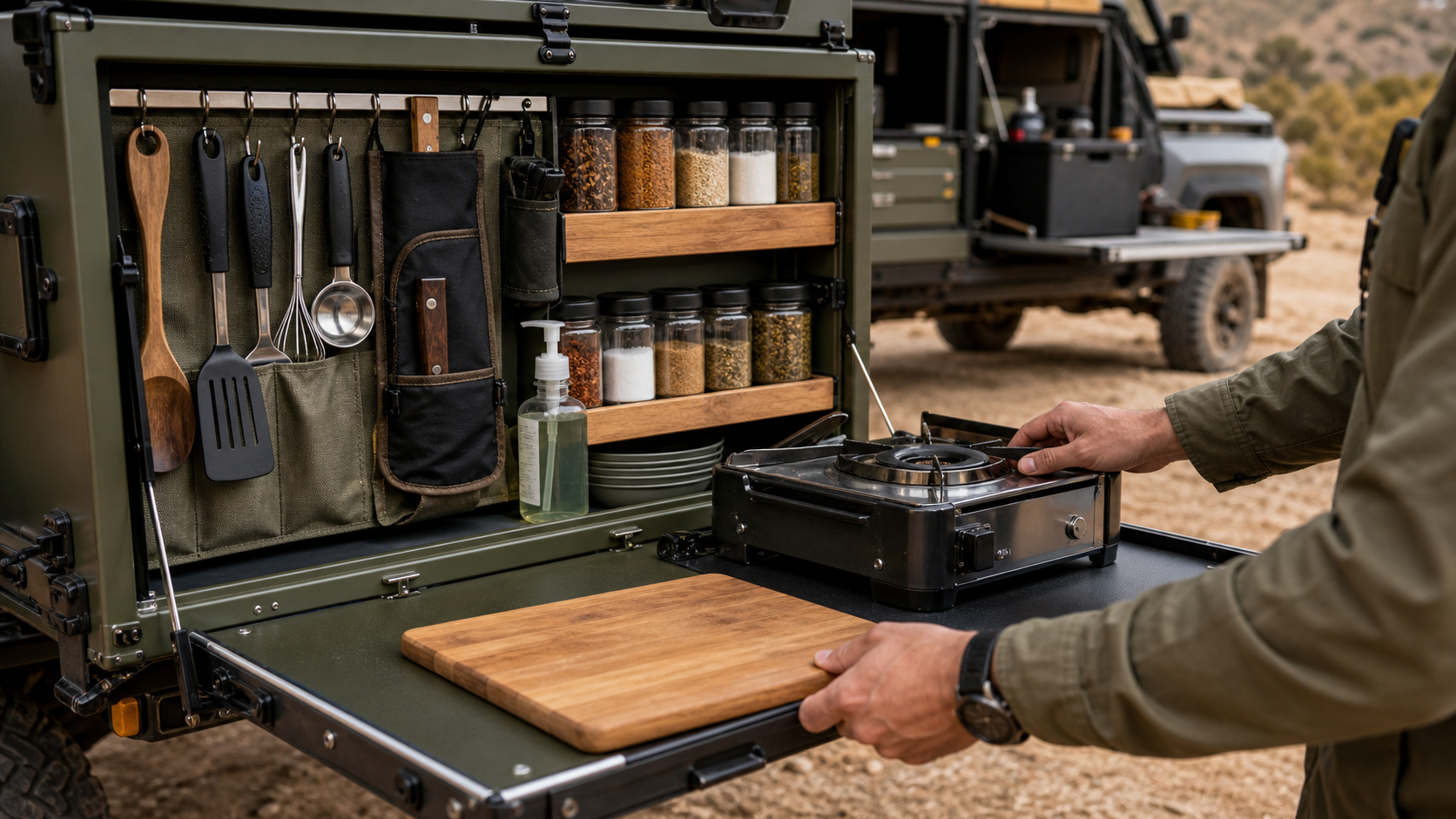
A kitchen box stops being useful the moment it turns basic meal prep into a hand puzzle. The best layouts put the highest-use items first: stove, lighter, pot grip, knife sleeve, spatula, mugs, coffee kit, dish soap, towel, and trash bags. You should not need to empty the pantry tier just to get to the burner or search three pockets for a spoon after dark.
Work surface matters just as much. Trail Kitchens claims more than 60 inches of table surface from its fold-out system, which illustrates a good principle even if you do not buy that exact style: the cooking zone needs a prep area next to it, not six feet away on a wobbly side table. Match the box to the way you actually cook. A compact couple’s coffee-and-pasta setup needs something different from a family camp kitchen that regularly runs a skillet, kettle, and dish basin in the same session.
4. Separate Dry Pantry Gear From Cold Food And Dirty Tools
One of the most common buying mistakes is expecting the box to solve every food-storage problem by itself. It should not. A strong overland camp kitchen box is best used for dry pantry goods, cookware, prep tools, and wash supplies. Perishables still need cold management, and dirty utensils need a place that does not contaminate your clean drawers.
The USDA’s cooler-packing guidance remains practical for overlanders: pack perishables cold, keep them at 40 F or below, separate raw meat from ready-to-eat food, and limit how often the food cooler gets opened. Let the kitchen box handle tools and dry ingredients. Let a cooler or portable camping fridge handle perishables. Keep a small dirty-kit pouch or dish tub for used utensils instead of dropping them back into the main organizer.
5. Treat Wildlife Rules And Clean-Camp Habits As Part Of The Box Design
An organized galley does not cancel food-safety rules or animal attractants. The National Park Service notes in its camp cooking guidance that food storage, odor control, and camp cleanliness directly affect both camper safety and wildlife behavior. In real terms, that means your overland kitchen should make it easy to isolate trash, wipe surfaces, and keep food residue off towels, stove bags, and sleeping gear.
Do not let the polished look of a built-in kitchen trick you into leaving food or dirty cookware where it does not belong. REI’s food-storage overview is a good reminder that food, trash, and scented items should stay secured, never left unattended, and handled according to local bear-box, canister, or vehicle-storage rules.
6. Buy For Reset Speed, Because Cleanup Decides Long-Trip Usability
The final check is the one that gets ignored during shopping and appreciated on day three: how fast the kitchen resets. A box that looks beautiful when opened but takes twenty minutes to close will slowly annoy you out of using it.
Reset speed improves when every category has an obvious home. Dry tools go in one place. Coffee gear lives together. Wash-up items do not overlap with pantry food. A camp kitchen organizer mindset helps here even if your final setup is much tougher than a normal campground tote. Pair the box with a compact camping cooking kit, a collapsible water container, and a portable hand washing station so wet cleanup does not invade the pantry side.
Overland Camp Kitchen Box Comparison Table
| Kitchen Style | Typical Empty Weight | Best For | Main Strength | Honest Tradeoff |
|---|---|---|---|---|
| Soft organizer or tote system | Lightest option | Weekend trips and mixed daily-driver use | Easy to remove and reconfigure between trips | Weakest against dust, rattling, and hard-use stove storage |
| Rigid chuck-box style case | Moderate | Campers who want structure without a permanent install | Cleaner organization and better protection for pantry tools | Can get heavy fast once loaded with cookware and food |
| Portable fold-out kitchen box | Often around the mid-20-pound range empty | Frequent car camping and lighter overland touring | Adds real prep space and keeps the workflow compact | Still needs separate cold-food and wash systems |
| Integrated slide-out galley | Heaviest option | Longer trips and dedicated vehicle-based travel | Fastest setup once the whole rig is dialed in | Most expensive and least flexible for non-camping cargo |
Common Mistakes And Honest Downsides
The most common mistake is buying for visual organization instead of repeated use. Rows of spice jars and laser-cut slots look impressive, but they do not matter if the box is too heavy to move, blocks access to your fridge slide, or takes forever to repack. Another frequent problem is letting the kitchen box absorb too many jobs. When pantry food, pots, dirty towels, fuel canisters, and dish soap all compete for the same space, the system becomes slower and less sanitary with every meal.
There are downsides worth admitting. A rigid overland box protects gear well, but loaded weight adds up fast. Fixed galleys speed up camp life, but they also claim vehicle space full time. The practical answer is to build a kitchen around the meals you actually cook instead of chasing the fanciest layout.
Gear That Pairs Well With An Overland Camp Kitchen Box
An overland kitchen box works better when the rest of camp supports it. A stable foldable camping table is often a bigger upgrade than adding another drawer because it gives hot pans, dish tubs, and serving bowls somewhere safe to land. A fridge or cooler keeps cold food out of the main box. If your overland camp kitchen box is doing its job, it should feel like the dry, organized center of camp while wetter and messier tasks happen just outside it.
Helpful Amazon Search Picks
Affiliate disclosure: As an Amazon Associate, BugfreeCamping may earn from qualifying purchases. That does not change the price you pay.
- Overland camp kitchen box for integrated cargo-area kitchen ideas
- Camping chuck box for rigid pantry-and-utensil organization options
- Two burner camp stove for matching stove size to your box layout
- Collapsible dish tub camping for keeping dirty tools out of the main kitchen box
- Camp spice kit organizer for faster meal prep without loose jars everywhere
FAQ
What should an overland camp kitchen box hold?
It should hold the high-use dry gear that makes meal prep repeatable: stove accessories, utensils, knife sleeve, cutting board, spices, mugs, cookware, dish soap, towels, and trash bags. Cold food and messy cleanup items usually work better in separate systems.
Is a removable kitchen box better than a permanent galley?
For many campers, yes. A removable box is better when the vehicle still needs daily-driver flexibility or when trip styles change often. A permanent galley makes more sense when you overland frequently enough to benefit from faster setup every single trip.
Can I leave food in my overland camp kitchen box overnight?
Only when local rules, wildlife pressure, and your exact campsite allow it. In many areas, food, trash, dirty cookware, and scented items still need to go into approved storage, a hard-sided vehicle, or a bear box rather than sitting in the kitchen setup.
How heavy is too heavy for an overland camp kitchen box?
If you hesitate to lift it out by yourself or you avoid removing it between trips, it is already too heavy for a flexible setup. A slightly smaller system you use often is usually smarter than a giant showcase build that monopolizes the cargo area.
Final Verdict
If you cook often from a vehicle-based campsite, an overland camp kitchen box is worth it when it improves setup speed, protects tools from dust, and makes cleanup realistic before dark. The best systems are not automatically the largest or the most complex. They are the ones that fit the vehicle honestly, match your real meals, and let you reset camp without frustration. Buy for flow, durability, and clean separation of tasks, and your kitchen will become one of the most useful parts of the rig.