
Camping privacy shelter setups solve a real campsite problem: they give you one simple place to shower, change clothes, and manage late-night bathroom routines without turning the whole site into a messy gear pile.
The best models are not the lightest or the fastest on paper. They are the ones that stay stable in wind, feel private in crowded campgrounds, vent heat well enough to stay usable, and pack down without wasting half your cargo room.
Key Takeaways
- Choose a shelter tall enough to stand in and wide enough for clothes, a towel, and a toiletry caddy.
- Floorless designs are usually better for showering and toilet use; removable floors are better for dry changing.
- Ventilation, opaque fabric, and strong tie-out points matter more than novelty extras.
- Use flat, well-drained ground and fully stake the shelter instead of treating it like a disposable pop-up.
- A privacy shelter works best as part of one organized hygiene zone with water, light, and cleanup nearby.
Table of Contents
- Why a camping privacy shelter earns space in the car
- Quick comparison: which style works best
- Camping privacy shelter buying guide: the 6 checks that matter
- How to set it up for cleaner, safer camp use
- Common buying mistakes and realistic downsides
- Helpful add-ons that actually improve the setup
- FAQ
- Final verdict
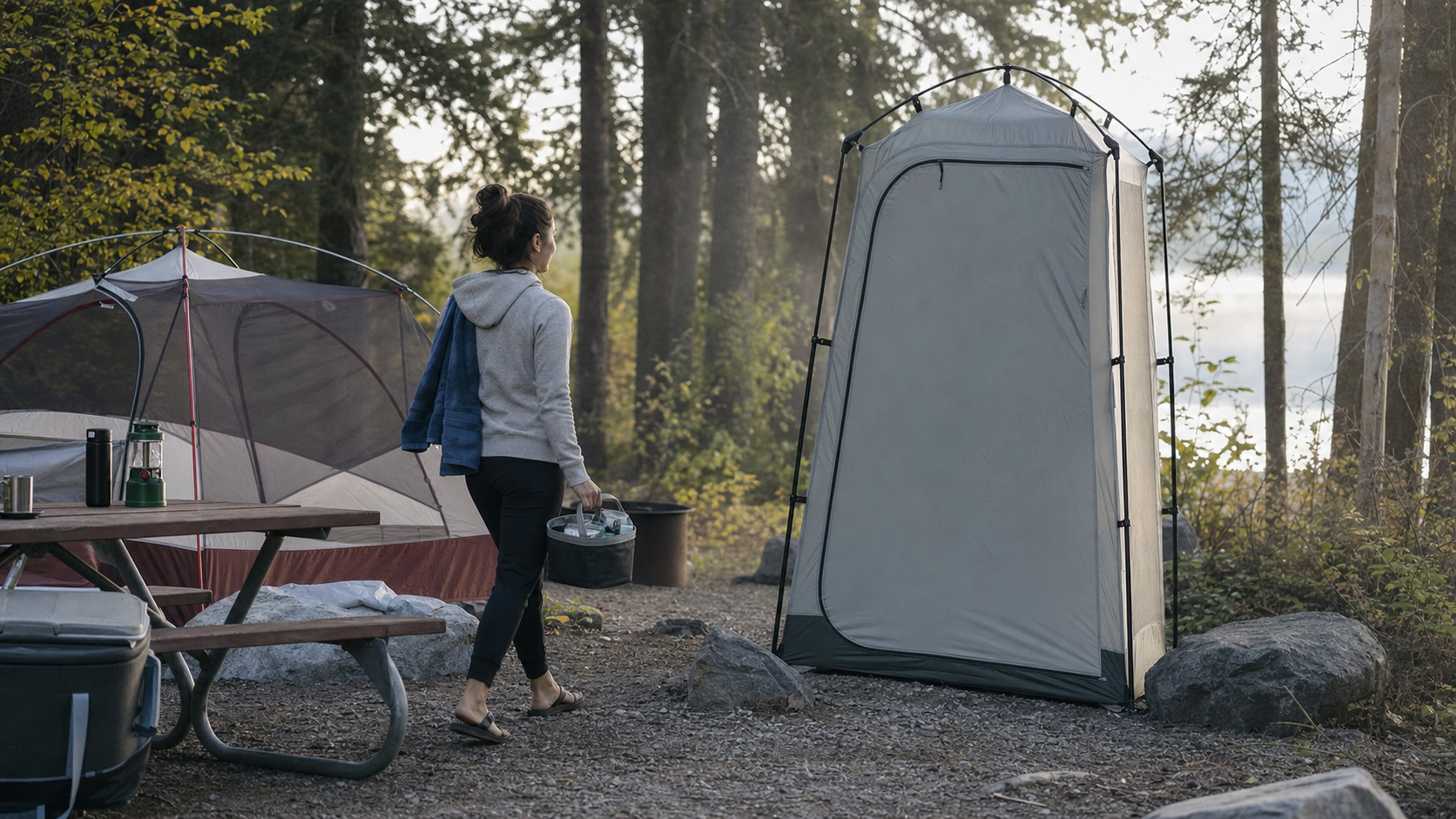
Why a Camping Privacy Shelter Earns Space in the Car
A privacy shelter feels optional until you camp with kids, return from a lake in wet clothes, or share a crowded campground with nowhere easy to rinse off or change. Then it becomes one of the fastest ways to make camp feel cleaner and less stressful.
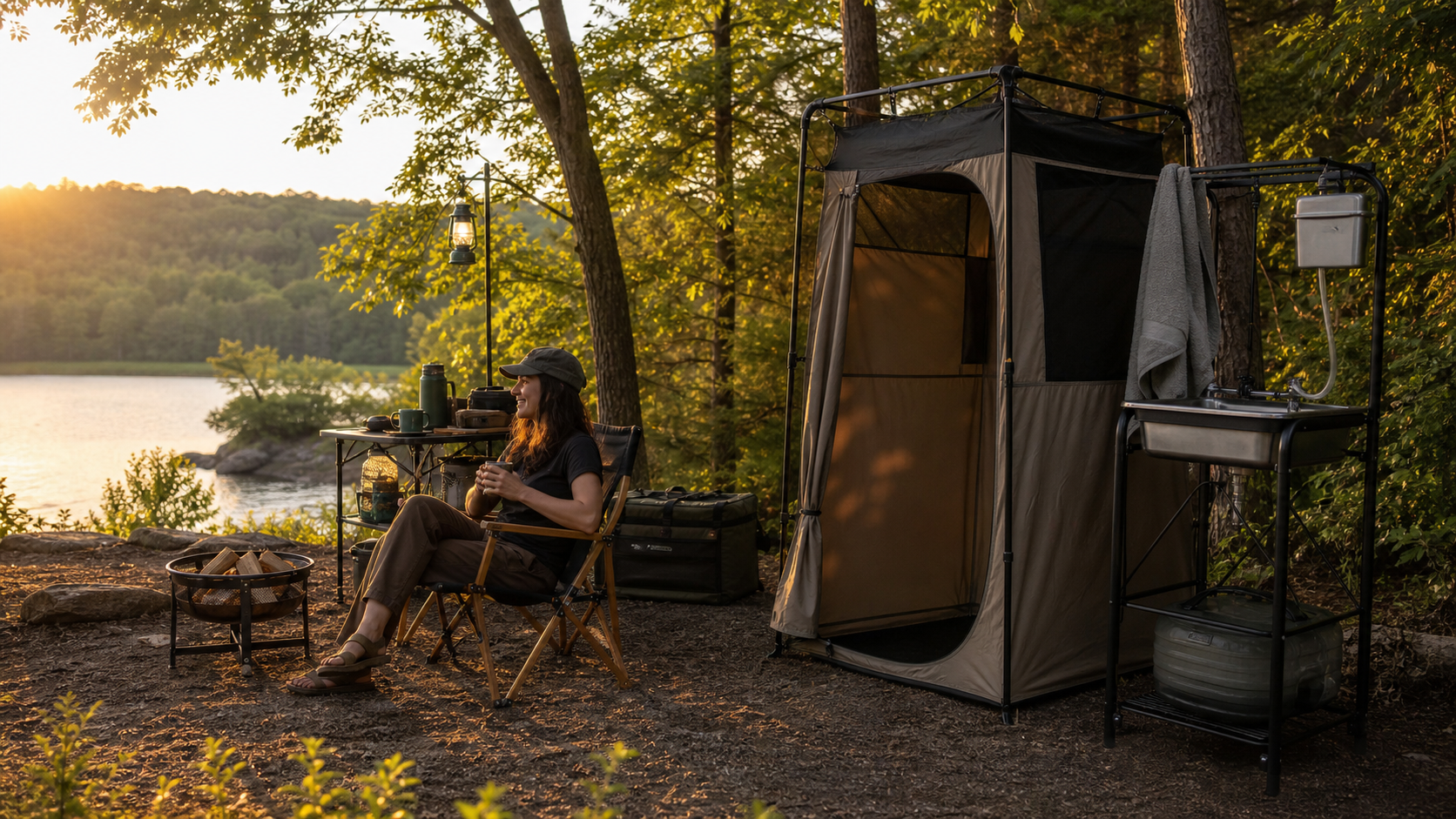
One shelter can cover three jobs: a changing room, a shower enclosure, and a screen around a camp toilet. It pairs naturally with a portable camping shower, a portable hand washing station camping setup, and a collapsible water container camping system so water and cleanup stay in one zone instead of spreading across the picnic table and trunk.
Not every shower tent camping design is worth buying, though. Some pop up quickly but flap badly in wind. Others look roomy online and feel cramped once you bring in a towel, dry clothes, and sandals. The shelters that work best usually balance privacy, airflow, stability, and packability instead of chasing gimmicks.
Quick Comparison: Which Style Works Best
| Shelter style | Best for | Main drawback | What to prioritize |
|---|---|---|---|
| Basic pop-up privacy tent | Short trips and occasional changing use | Usually weaker in gusts and tighter inside | Opaque fabric, real stake loops, manageable fold-down |
| Hub or framed shelter | Frequent car camping and shower use | Heavier and bulkier in the vehicle | Vent windows, stronger corners, more standing room |
| Floorless toilet or shower shelter | Messier sites and shower drainage | Less comfortable for dry changing on dirty ground | Drainage, raised hems, enough height for hanging bags |
| Large dual-room shelter | Family trips and longer stays | Big footprint and longer setup | Two-zone layout and extra guy points |
Camping Privacy Shelter Buying Guide: The 6 Checks That Matter
1. Check standing height and usable floor space
You do not need a huge shelter, but you do need one that is actually usable. Most adults are happier with roughly seven feet of peak height and enough shoulder room to turn around while holding clothes or a towel. OutdoorGearLab praised the Caddis Rapid Privacy Shelter for its roomy interior, storage pockets, and ventilation, which is exactly the kind of practical layout that makes a shelter feel worth packing.
If the shelter will also cover a toilet, make sure there is enough room to sit and stand without brushing wet walls. If it is mostly for changing, think beyond body size and include the space needed for a tote, sandals, and clean clothes.
2. Choose the right floor design for the job
Floorless shelters are usually better for showering and camp toilet duty because muddy water and cleanup are simpler. Removable floors are often better when the main job is changing clothes. A sewn-in floor can feel cleaner at first, but if you actually rinse off inside, it can turn into a wet tub unless the design drains well.
For beach, lake, and dusty campground trips, many campers are better off with a floorless shelter plus a small mat or sandals than with a full-floor shelter that is annoying to clean by day three.
3. Look hard at wind stability and staking points
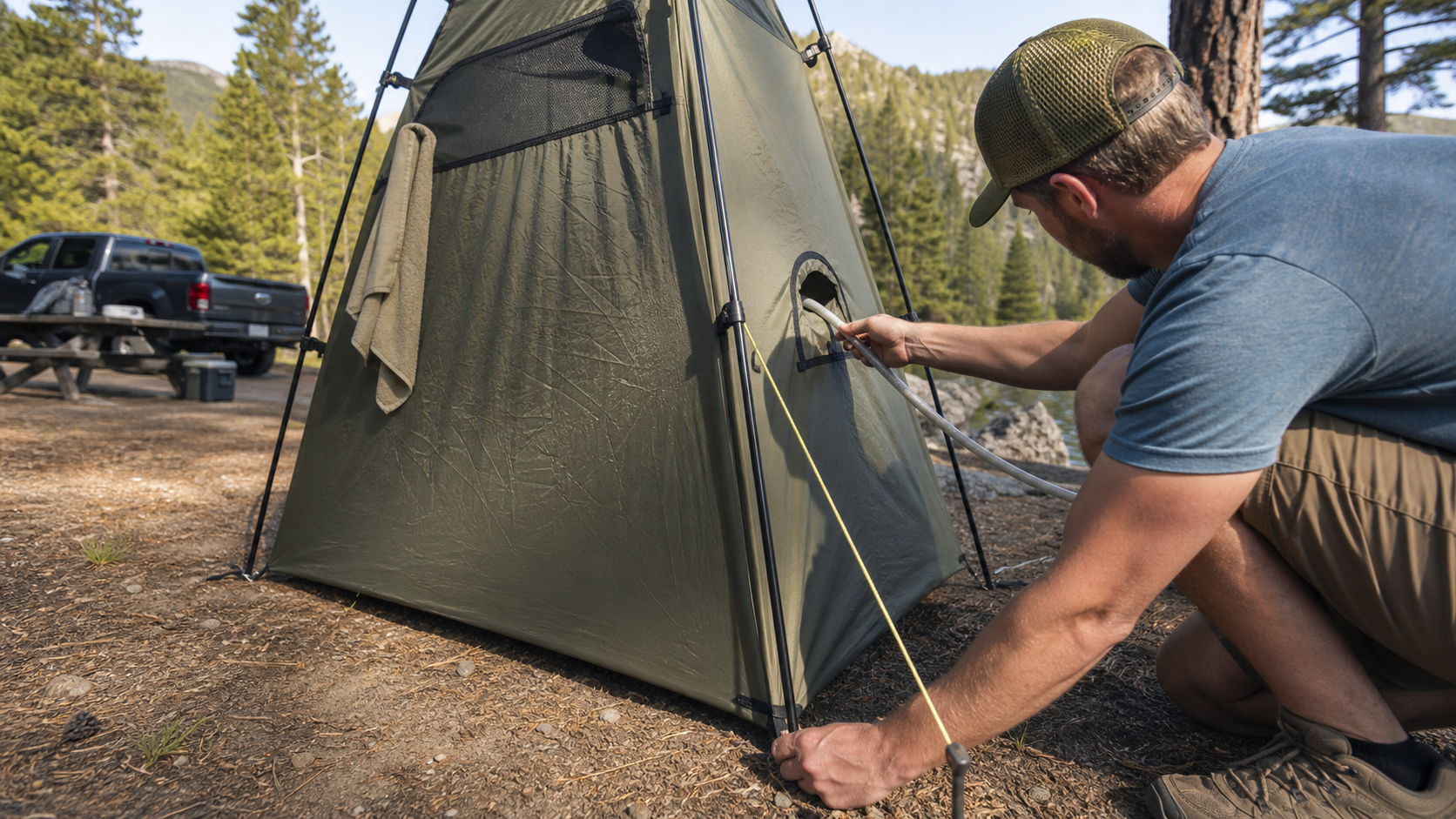
Tall privacy tents catch wind more aggressively than low tents, so weak staking is a real problem. The National Park Service notes that high winds can quickly make outdoor conditions unsafe, which is a useful reminder that these shelters need real tie-out points, reinforced corners, and guylines you will actually use.
For setup, borrow standard tent logic. REI recommends well-drained, wind-buffered ground and orienting openings away from wind-driven rain. If your trips involve open pads, beaches, or exposed desert campgrounds, this check matters more than fast pop-up marketing.
4. Prioritize ventilation and true privacy together
A shelter can fail in two opposite ways: it can be too sheer to feel private, or too sealed up to stay usable in heat. The better models solve both with opaque lower panels, closable mesh windows, and roof vents that let steam escape. OutdoorGearLab specifically called out side windows and mesh ventilation as a major advantage in tested privacy-shelter use.
If your camps are hot and buggy, a camp toilet tent with closable mesh windows is usually a smarter buy than one with solid fabric on every side. For even better airflow after dark, a low-power fan from our rechargeable camping fan guide can help, but it should not replace good vent design.
5. Make sure it supports your water and storage setup
A privacy shelter works best when the inside hardware matches the rest of your kit. If you use a hanging shower bag, look for a roof hook or crossbar that can handle it. If you use a pump shower, a hose port or easy side opening helps keep the door zipped while the hose runs inside. Pockets matter too, because soap, glasses, and a headlamp are much easier to manage off the ground.
This is also where the shelter becomes part of a broader hygiene zone. A nearby portable wash bag, water jug, and towel hook keep the whole routine cleaner and faster.
6. Be honest about packed size and setup speed
Some shelters open quickly and still take up a lot of car space. Others are fine once you practice, but the carry bag is long and awkward in a loaded SUV. OutdoorGearLab highlighted this tradeoff directly: roomy privacy shelters often feel bulky even when setup is easy.
That is not a dealbreaker for car camping. It just means you should buy for the trip style you actually do. For quick overnighters, simplicity wins. For multi-night family trips, a slightly heavier framed shelter often pays for itself in comfort.
How to Set It Up for Cleaner, Safer Camp Use
Placement matters as much as the shelter itself. Set it on flat, drained ground with some breathing room, not in the muddy low spot behind the car. REI’s campsite guidance emphasizes wind-buffered, well-drained areas and avoiding low ground where water pools, which translates directly to privacy shelters.
If you are using the shelter for bathing, Leave No Trace recommends washing at least 200 feet from streams, lakes, trails, and campsites. For toilet use, their waste guidance also stresses staying at least 200 feet from water, camp, and trails where catholes are allowed, while following campground rules first when facilities or pack-out systems are required.
For hygiene, CDC guidance still favors soap and clean running water, with hand sanitizer at 60% alcohol or higher as a backup. For lighting, a focused task light is better than an overly bright lantern; our magnetic tent light guide and camping string lights battery guide both fit this use well.
Finally, treat a privacy shelter like camp gear, not storm refuge. The National Park Service says tents, pavilions, and picnic shelters are not safe during thunderstorms. If thunder starts, move to a hard-top vehicle or enclosed building.
Common Buying Mistakes and Realistic Downsides
The biggest mistake is shopping for “pop-up” speed instead of all-around usability. A shelter that springs open instantly but overheats, leaks privacy, or folds into an impossible coil is not actually convenient. The second mistake is underestimating wind exposure. These shelters are tall, so they need more deliberate staking than people expect.
There are also real downsides. Even the better models take cargo space. Most are overkill for backpacking. Floorless versions can feel dirty if you want a true changing room. And every privacy shelter adds one more thing to set up when you roll in late. The fix is not avoiding the category; it is buying the right style and keeping the rest of the system simple.
Helpful Add-Ons That Actually Improve the Setup
Affiliate disclosure: If you buy through the Amazon links below, Bug Free Camping may earn a commission at no extra cost to you.
These add-ons usually make a privacy shelter more useful instead of more cluttered:
- Camping privacy shelter options on Amazon if you still need the enclosure itself.
- Portable camping shower options for gravity bags, pump showers, and rinse kits.
- Portable camping toilet options if the shelter will double as a bathroom tent.
- Sand and gravel tent stakes for hard-packed or windy campgrounds.
- Collapsible water containers with spigots to keep shower and handwashing water in one place.
FAQ
Is a camping privacy shelter worth it for short weekend trips?
Yes, if you regularly change clothes at camp, camp near beaches or lakes, or want a cleaner bathroom setup. For quick solo overnights, it may be unnecessary. For family car camping, it usually earns its space fast.
Can a shower tent camping shelter also be used with a portable toilet?
Usually yes. Floorless or removable-floor designs tend to work best because cleanup is easier and there is less standing water if you also rinse off inside.
Where should I place a privacy shelter at camp?
Choose flat, drained ground with some wind protection and enough distance from the main cooking area. If you are washing up, stay well away from natural water sources and follow local rules.
What matters more: faster setup or better ventilation?
For most campers, ventilation wins. A slightly slower shelter that stays cooler and feels more private is usually the better long-term buy than a pop-up that becomes stuffy or unstable.
Final Verdict
A camping privacy shelter is worth buying when you choose it like functional campsite infrastructure, not like a novelty tent. Focus on six things: usable standing room, the right floor design, wind stability, real ventilation, support for your shower or toilet setup, and a packed size you can live with. Get those right and the shelter becomes one of the simplest ways to make camp cleaner, calmer, and more comfortable.