
portable camping grill grate setups make sense when you want better campfire cooking without dragging a full backyard grill into the woods. The right grate gives you steadier heat, a safer work surface for pans or direct grilling, and a cleaner way to cook over coals when the campground ring is awkward or missing a usable grate.
That does not mean every folding rack is worth buying. Some are best for cast iron only, some sit too close to the flame, and some work beautifully for two campers but feel cramped the second you add dinner for four. The goal is not to buy the biggest grate you can find. It is to choose one that matches your fire ring, your cookware, and the way you actually cook at camp.
Key Takeaways
- The best portable grill grate is sized for your real fire ring and your actual cookware, not just the product photo.
- Mesh grates and bar grates behave differently; some are built for pans while others are better for direct grilling.
- Stable legs, usable coal clearance, and rust-resistant material matter more than fancy extras.
- Local fire rules can make a great grate useless if wood or charcoal cooking is only allowed in provided rings or is banned outright.
Table of Contents
Why Campers Still Pack One
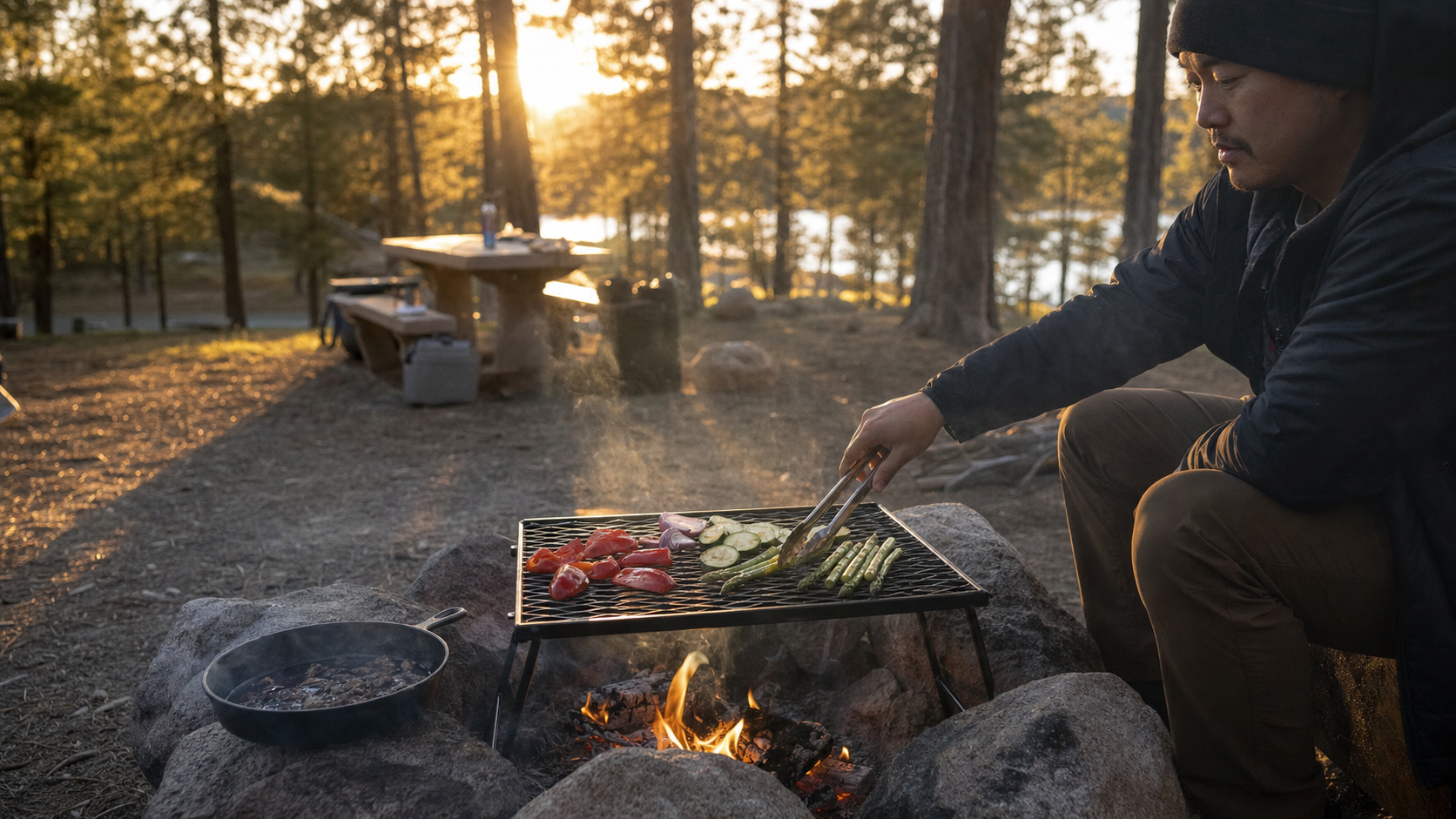
A portable grate earns space in camp when the built-in grate is missing, warped, or simply positioned wrong for the kind of meal you want to cook. It also helps on beaches, dispersed sites, or older campgrounds where the fire ring is usable but the cooking surface is not. Instead of balancing a skillet on rocks or crouching over unstable logs, you get a repeatable surface that lets you manage coals and cookware with less drama.
REI’s campfire paella guide gives one of the clearest real-world examples: if the pit does not already have a grate, bring your own and leave enough room underneath to move logs and hot coals. A good grate is mostly about control, not campfire theater.
If you are building out a better cooking station overall, a grate works best as part of a system. Pair it with a compact camping cooking kit, keep tools organized in a camp kitchen organizer, and keep greasy cleanup items away from dry pantry gear in a waterproof camping storage box. That modular approach makes camp setup faster and teardown much less messy.
Portable Camping Grill Grate: 6 Checks Before You Buy
1. Decide Whether You Need Direct-Food Grilling or Just Cookware Support
This is the first buying filter because not every grate is made for the same job. Some heavy-duty mesh grates are excellent under a cast iron skillet or Dutch oven but are a poor choice for burgers, fish, or smaller vegetables. REI’s listing for the Coghlan’s Heavy Duty Camp Grill is a useful reminder here: it is rugged, folds flat, and supports heavy cookware, but it is not meant for direct food contact.
If your meals are mostly bacon, skewers, sausages, and foil packs, direct-food use may not matter. If you want steaks, burgers, or fillets straight on the grate, choose a stainless bar or food-contact mesh design that says so clearly. This single distinction saves a lot of buyer regret.
2. Match the Surface Size and Packed Shape to Your Actual Campsite
A folding camp grill grate that looks roomy in a product photo can be awkward in a standard campground ring. Measure the fire area you most often use, then compare that number to the grate width and leg spread. If the rack is too wide, it can teeter on the ring. If it is too narrow, you lose the coal-adjustment room that makes fire cooking practical.
The packed shape matters too. Flat-folding legs are ideal for car camping because they slide beside tables, stove cases, or an overland camp kitchen box. Backpackers may still prefer a tiny grill or skip the category entirely, but for vehicle-based trips, a grate that packs flat and does not snag soft gear is much easier to live with.
3. Look for Stable Legs and Enough Strength for Real Cookware
Campfire cooking gets sloppy fast when the grate flexes or the legs splay on uneven rock. A useful rack should feel planted with a full skillet, not just with a couple of hot dogs. Angled legs, wider foot contact, and solid hinge hardware matter more than clever marketing language about being “heavy duty.”
This is especially important if you like cast iron. A loaded pan, coffee pot, or kettle adds far more stress than simple grilling. If the rack only feels trustworthy with ultralight cookware, it is probably not the versatile option most car campers want.
4. Choose Material Based on Cleanup, Not Just Heat Resistance
Most shoppers look at material and think only about heat. Durability matters, but cleanup habits matter just as much. Stainless designs usually resist rust better when they get packed damp after breakfast, while painted or basic steel options may need more drying and occasional oiling to stay pleasant. CAMPINGMOON’s portable grill line, for example, emphasizes 304 stainless construction and adjustable-height designs because corrosion resistance and repeat use are major selling points for real campers.
If you know you are disciplined about drying gear at home, cheaper steel can still work. If you often break camp fast, drive home late, and unload the next morning, paying extra for easier rust resistance is usually the smarter move.
5. Prioritize Coal Control and Heat Height Over Flame Drama
Open-fire cooking works best over steady coals, not tall flames. REI’s campfire basics guide and its recipe content both point back to the same idea: build enough heat, let the wood burn down, and cook with intention rather than chasing giant flames. That means your grate needs usable clearance underneath so you can move coals, pull food off direct heat, or feed one side of the fire without lifting dinner off the rack.
Leave No Trace makes the same practical case from the impact side. Its Minimize Campfire Impacts guidance recommends existing fire rings, small fires, and water-based extinguishing. A grate that only works when the fire is oversized is the wrong tool. A good one lets you cook well while keeping the fire smaller and easier to manage.
6. Check the Rules Before Your Grate Becomes the Whole Dinner Plan
This category is more regulated than many shoppers realize. Current Rocky Mountain National Park fire rules are a good example: fires, charcoal, and grills are only allowed in designated areas where a metal fire ring or grate is provided. Other parks and forests can be stricter, especially in dry conditions.
If you routinely camp where bans or restrictions pop up, keep a backup plan. A propane stove or a portable propane fire pit camping setup may get used more often than a wood-fire grate during hot months. The smartest buyers do not just ask, “Will this grate cook well?” They ask, “Will I actually be allowed to use it where I camp?”
| Grate Style | Best For | Strengths | Tradeoffs |
|---|---|---|---|
| Flat folding mesh grate | Skillets, kettles, foil packs, simple car-camping meals | Packs flat, stable for cookware, usually affordable | Some models are not meant for direct food contact |
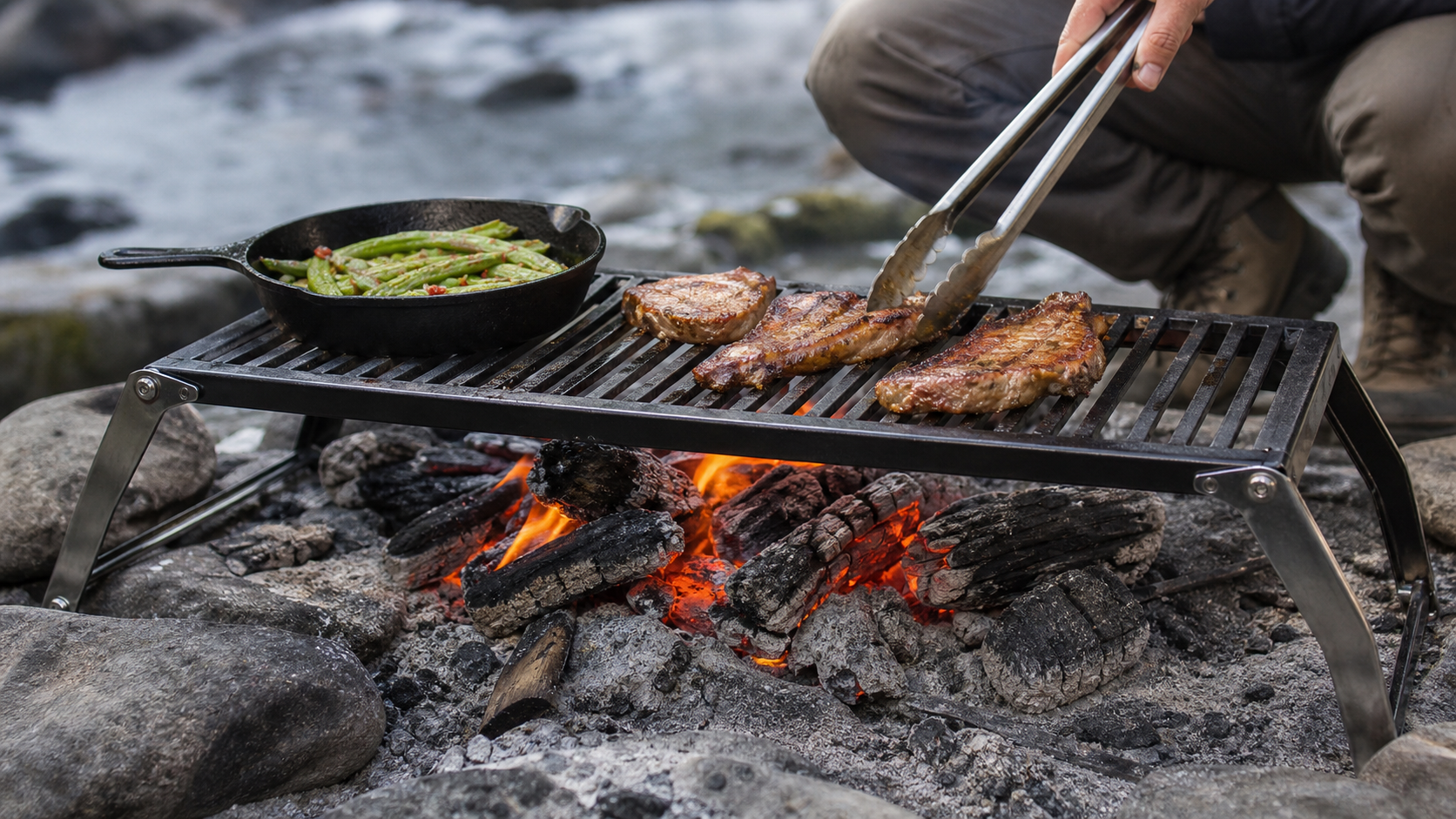
| Stainless bar grate | Direct grilling with burgers, steaks, fish, or vegetables | Better airflow, easier scraping, more direct-grill friendly | Often bulkier or less forgiving with small pots |
| Swing-arm or tripod grill | Basecamp cooking where heat adjustment matters a lot | Excellent heat control, easy to move food off the fire | Heavier, slower to set up, rarely backpack-friendly |
| Park-supplied ring grate | Established campgrounds with good infrastructure | No extra gear to pack, usually very stable | May be dirty, warped, fixed too high, or missing entirely |
Which Grate Style Fits Your Camp Setup
For most car campers, the sweet spot is a medium folding grate that can handle a skillet, a pot, or a few pieces of direct-grill food without turning dinner into a balancing act.
If your trips are more food-focused, a larger direct-grill surface can be worth the extra space. Families who cook full meals over fire will appreciate room for a skillet on one side and vegetables or protein on the other. If your camp menu is mainly coffee, foil packets, and one-pan dinners, the lighter compact option is usually the better call.
For cleanup-heavy trips, keep your fire gear system separate from your wash gear. That is where a portable hand washing station camping setup helps, because you can rinse tongs, wipe down the grate, and keep greasy tools from invading the rest of your kitchen tote.
Best Ways to Pack and Use It
Pack the grate where you can grab it before the fire is fully built. A slim slot in your vehicle or kitchen bin works well, and a cheap fabric sleeve or towel wrap keeps soot off cleaner gear.
At camp, build the fire first, then let it settle. Do not drop the grate over tall flames just because the photo opportunity looks good. Use one side of the fire ring for hotter coals and the other side for gentler heat. That setup gives you an instant hot zone and a cooler zone, which is much easier for real cooking than one roaring pile of wood.
After dinner, clean while the grate is still warm enough to release residue but cool enough to handle safely. The National Park Service’s Cooking in Camp guidance recommends a wash, rinse, and sanitize workflow for dishes and utensils. That same mindset works here: scrape, wash, dry, and isolate the dirty grate before it rides home next to dry food or sleeping gear. If you already carry a collapsible water container camping setup, keep a little extra water reserved for this cleanup job.
Common Buying Mistakes
The biggest mistake is buying a grate because it looks rugged, then discovering it is meant only for cookware support. The second biggest mistake is assuming bigger is always better. Oversized grates become awkward on standard rings, need more coals to perform well, and take longer to clean when you are tired and ready for bed.
Another mistake is ignoring how the grate rides home. Sooty metal and grease splatter can make a mess of chairs, sleeping bags, and pantry bins if you do not plan a dedicated storage spot. Keep a small tarp bag, towel wrap, or separate compartment ready so the dirty gear stays dirty and everything else stays usable.
Finally, many campers overestimate how often wood-fire cooking will be convenient. If you arrive late, camp in wet weather, or visit places with frequent restrictions, a portable grill grate may be a supporting tool rather than your main cooker. That is still a worthwhile use case.
Helpful Add-Ons Worth Packing
Affiliate disclosure: Some of the product links below are Amazon affiliate search links. If you buy through them, BugFreeCamping may earn a commission at no extra cost to you.
A few simple add-ons make a grate much easier to use in the field:
- Compare portable camping grill grate options on Amazon if you want to see different sizes and leg styles side by side.
- Browse folding camp grill grate models for flatter-pack designs that work better in vehicle kitchens.
- Look at stainless campfire grill grate options if rust resistance matters more than lowest price.
- Check campfire tripod grills if you want more heat-adjustment control for basecamp cooking.
- Add a cast iron skillet for camping if your main use is skillet meals, breakfast, or one-pan dinners over coals.
Long tongs and heat-resistant gloves are worth packing too. They sound obvious, but they are the difference between calm coal management and poking dinner around with the wrong tool while your wrist gets too close to the ring.
FAQ
Can I cook directly on any portable camping grill grate?
No. Some camp grates are built mainly to support cookware and are not intended for direct food contact. Always check the product description before assuming it can handle burgers, fish, or vegetables straight on the surface.
How high should a portable camping grill grate sit above the coals?
There is no perfect single number, but you want enough room to move coals and reduce flare-ups. In practical campfire cooking, moderate clearance and controllable coals matter more than putting the grate as close to the flames as possible.
Is a folding camp grill grate good for backpacking?
Usually only the lightest, smallest versions make sense for backpacking. Most portable camping grill grate designs are better for car camping, canoe camping, or other trips where a little extra weight is acceptable.
What if my campground already has a built-in grate?
Use the built-in grate if it is clean, stable, and positioned well. Pack your own grate as a backup when the campground hardware is unreliable, too high above the coals, or unsuitable for the cookware and meal plan you have in mind.